· Travel · 6 min read
Ancient Jewish Sites in Morocco: Atlas to Coast Guide
Follow Morocco's oldest Jewish trail, from Atlas shrines and desert mellahs to Fes, Chefchaouen and Essaouira.
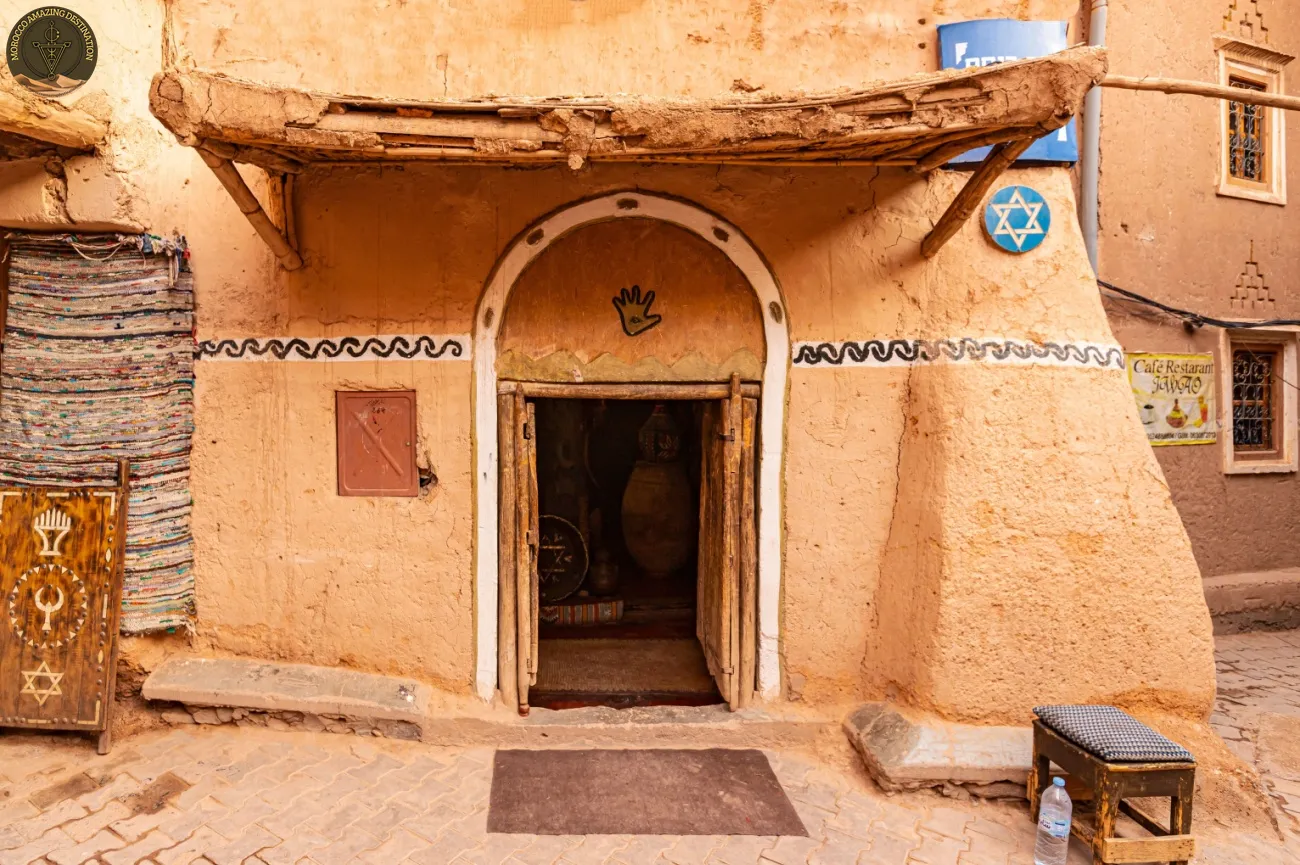
Morocco’s Jewish story did not start in the famous city quarters. It began in mountain villages and caravan ports, close to two thousand years ago. The ancient Jewish sites Morocco keeps today run from Atlas shrines and desert ruins to walled quarters in Fes and cemeteries by the sea. If you want the oldest layer of that history, follow the villages and the trade roads.
In this guide, we will trace that thread from Berber roots through the desert edge to Fes, the blue city and the coast, and explain how you can visit them.
Berber Roots and Mountain Villages: Where the Story Starts
Long before the walled quarters, Judaism took root among Amazigh communities in the Atlas. Hebrew traces at Volubilis point to an early presence, and village tradition holds that Berber groups adopted the faith centuries before Islam arrived. This is the deepest layer of Jewish Berber history Morocco still shows on the ground.
The clearest stop is Ourigane, home to the shrine of Rabbi Haim ben Dioune. An annual spring pilgrimage still gathers there, and the quiet cemetery nearby keeps older stones. Walk with a local guide, keep voices low, and treat the shrine with the care its visitors expect.
Key spots to remember:
- Ourigane shrine: small white tomb of Rabbi Haim ben Dioune, reached by mountain road.
- Village cemeteries: weathered stones outside several Atlas hamlets, often locked, so ask locally.
- Volubilis traces: Roman-era town with Hebrew marks that hint at early community life.
Most families left these villages decades ago, so guardians and neighbors now keep the memory. That gives the mountain stops a slower feel than city sights, and many travelers find them the most moving part of the route.
Desert Edge: Sijilmasa, Rissani and the Draa Mellahs
South of the Atlas, the caravan roads prospered, and Jewish merchants prospered with them. From the 8th century, Sijilmasa near present-day Rissani served as a trans-Saharan gold port, and its traders linked the Maghreb with lands below the desert. Today the ruined city rests in the Tafilalt palm groves, mostly low walls and outlines west of Rissani.
Further west, the Draa Valley holds the least visited quarters of this route. The Mellah Morocco Jewish quarter here took the form of a walled section inside an earthen ksar. Tamnougalt near Agdz keeps a large mellah inside one of the valley’s oldest kasbah complexes, on the old road toward Timbuktu. Near Zagora, Amezrou was known for silversmiths whose jewelry shaped the valley’s craft.
What to expect:
- Sijilmasa ruins: open ground and low remains, best read with a guide who knows the layout.
- Tamnougalt ksar: earthen lanes and courtyard houses with a clear old mellah section.
- Amezrou kasbah: former silversmith quarter where the craft story still lives on.
These stops need a car and time, which keeps crowds away. Pair them with a night near the dunes, and the desert edge becomes the oldest-feeling part of the trip.
Inland Memory: Fes and Sefrou, Little Jerusalem
Inland, the story moves behind walls. In 1438 the community of Fes was settled in a protected quarter beside the palace, and that quarter gave every later Jewish district in the country its name. The Ibn Danan synagogue, with its carved wooden ark and mikveh, ranks among the oldest houses of prayer in Morocco.
A short drive away sits Sefrou, once called Little Jerusalem for the size of its community at a Middle Atlas trade crossroads. The Em Habanim network of schools and an orphanage taught local Jewish children for about five decades. Its old mellah lanes can still be walked in an afternoon. For the wider community story behind these quarters, read our guide to Jews in Morocco.
Fes also holds Slat al-Fassiyin and a walled cemetery with centuries-old tombs. Come in the morning, when the lanes are calm and guardians have time to talk.
Blue City and Atlantic Coast: Chefchaouen and Essaouira
Two very different endpoints close the route. Chefchaouen in the Rif sheltered Jews fleeing Iberia, and one leading theory credits 1930s Jewish painters with the blue wash, reading the color as sky symbolism. Historians still debate the origin, so read it as local tradition while you wander the lanes.
Essaouira tells a firmer story. Under its old name Mogador, the port was opened to European trade and Jewish merchant families settled by order, until the two communities stood nearly equal in number. The Essaouira Jewish history Chaim Pinto thread runs through the rabbi’s synagogue and home, still visited each year for the September hiloula.
What to see:
- Chaim Pinto synagogue: prayer rooms joined to the rabbi’s former home.
- Bayt Dakira: memory space tracing Jewish life from birth to marriage.
- Old cemetery: carved seaside tombstones that break with convention.
- Mellah lanes: former merchant streets behind the port walls.
The Museum of Moroccan Judaism in Casablanca, housed in a former orphanage, holds objects from many of these same communities. If you want the full city-by-city touring angle after this ancient trail, see our Jewish heritage tours guide.
Visiting With Respect: What to Know Before You Go
These are quiet places, and small habits matter. Dress modestly at shrines and cemeteries, covering shoulders and knees. Many synagogues close on Shabbat and holidays, so plan those stops for weekdays. Guardians often hold the keys, and a small tip thanks them for opening doors and sharing stories.
Ask before taking photos inside prayer rooms or of tombs, and accept a refusal with grace. Travel in small groups where you can, keep voices down at pilgrimage sites, and carry water and sun cover for the desert-edge stops. A private driver and a local guide remove most friction, since opening hours shift and some lanes are hard to find alone. If one door stays locked, treat it as part of the day and move on; the lanes themselves tell plenty.
Morocco’s oldest Jewish layer rewards travelers who leave the main squares behind. Two private routes cover it well: the 8-Day Imperial Cities and Desert Tour from Casablanca, which pairs Fes with the Rissani desert edge, and the shorter Morocco 7-Day Imperial Cities Desert Tour for Fes, Sefrou and Sahara-edge memory in one loop. Both run with a private driver and local guides, at your pace.
We can customize a tour to match your needs - design your perfect itinerary
If you found this helpful, add us as your preferred source on Google.
Frequently Asked Questions
Where are the oldest Jewish sites in Morocco?
The oldest layer sits outside the big cities: Atlas villages such as Ourigane with its pilgrimage shrine, the Sijilmasa ruins near Rissani, the Draa Valley mellahs of Tamnougalt and Amezrou, and the Ibn Danan synagogue in Fes.
What is a mellah in Morocco?
A mellah is a historic walled Jewish quarter. The name comes from Fes, where the community was settled beside the palace in 1438, and every later quarter in the country kept the same name.
Why is Chefchaouen painted blue? Is it Jewish?
One leading theory credits Jewish painters in the 1930s with the blue wash, reading the color as sky symbolism. Historians still debate the origin, so it is best treated as tradition rather than settled fact.
Which Essaouira Jewish sites can visitors see today?
Visitors can see the Chaim Pinto synagogue joined to the rabbi's former home, the Bayt Dakira memory space, the old seaside cemetery with its carved tombstones, and the former merchant lanes of the mellah.
Ready for an Adventure?
Have questions? Feel free to contact us using the form below. We're here to help!