
· Travel · 5 min read
Fondouk Nejjarine Fes: Wood Museum and Square Guide
Visit Fondouk Nejjarine in Fes: cedar courtyard, wood museum floors, Nejjarine Square and practical tips for your stop.
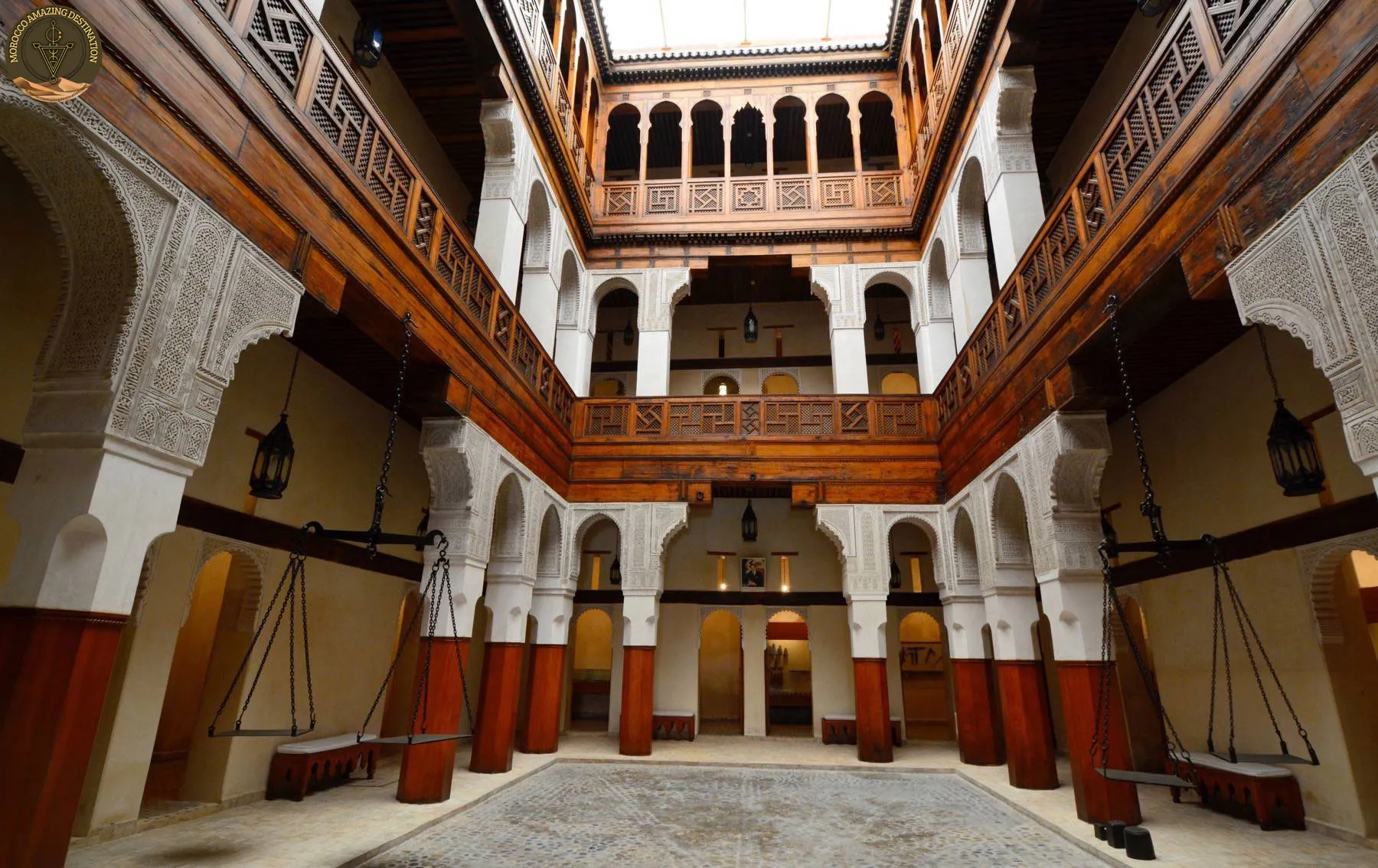
Step off a narrow lane in Fes el Bali and the street opens onto a small square faced with carved cedar. The Fondouk Nejjarine stands above it with one of the few fully decorated street facades in the medina. It settles a question fast: yes, this compact stop earns its place in your day. One building holds a merchant inn, a cedar courtyard, and a museum of wood craft.
In this guide, we will break down what the fondouk was for, what to look at inside, and how you can visit it.
What the Fondouk Was For - Caravans, Merchants and the Makhzen
A fondouk was a working inn for traders. Caravans unloaded goods on the ground floor, merchants stored them in rented rooms, and deals were struck without leaving the building. This one served merchants tied to the Makhzen, the central authority, which gave it weight beyond its size.
That mix of lodging and warehouse shaped the plan. Storerooms and stables sat below, quiet rooms lined the upper floors, and a courtyard scale weighed goods on arrival. Later the building served other uses, including a spell as a police post. A full restoration then brought the inn, square, fountain, and carpenters row back together.
The name is the giveaway. Nejjarine means carpenters, and the carpenters souk stood around this square long before the inn rose. Craftsmen still plane and carve a few steps from the door, so the trade the building honours never really left.
Restoration work in recent decades stitched the whole block back together. The inn, the square, the fountain, the small mosque, and the carpenters row now read as one urban ensemble.
The Courtyard in Cedar - What to Look at Inside
Enter through the street portal and look up before you look in. A carved cedar canopy hangs over floral stucco, geometric tile bands, and cut inscriptions. Few Fez monuments dress their street face this fully, so give the facade a full minute.
Details to notice:
- Cedar canopy: deep carved eaves that shade the entrance from sun and rain.
- Stucco and tile: floral relief and epigraphy set against geometric tile bands around the door.
- Gallery arcades: three floors of wooden arches and turned screens around the court.
- Trade scale: the old weighing frame where incoming goods were checked and recorded.
Inside, the courtyard runs symmetrical across three gallery levels. Wooden columns, lattice screens, and painted beams repeat the same craft at every height. Stand in one corner and the whole inn reads at once: storage below, lodging above, business in the middle.
Inside the Wood Museum - Floors, Objects and the Rooftop View
The Nejjarine Museum Fes fills the upper rooms with woodwork gathered from across Morocco. Climb slowly and treat each landing as its own small display. For many visitors this is the wood museum Fes friends meant when they said to look past the tanneries.
The collection covers domestic, architectural, and liturgical pieces. Carved doors and bridal chests share space with musical instruments and Quran study boards. Amazigh and Andalusi lines run through the carving, which shows how far the craft travelled to reach Fez. Look for the difference between pieces made for homes and pieces made for mosques and schools.
Finish on the rooftop terrace, where a small cafe looks over the medina roofs. It is a plain pause, and that suits the building. Order mint tea and let the lanes below empty before you head down. If you want the wider circuit after this, our walkable Fez museums route links Nejjarine with Batha and the northern bastion.
Outside the Door - Nejjarine Square, Fountain and Carpenters Souk
Step back outside and the visit keeps going. Nejjarine Square works as one ensemble, with the fondouk, the fountain, and the workshops facing each other across the paving. Give the square ten unhurried minutes before you move on. The paving, the benches, and the shade make it a natural pause even if you skip the museum.
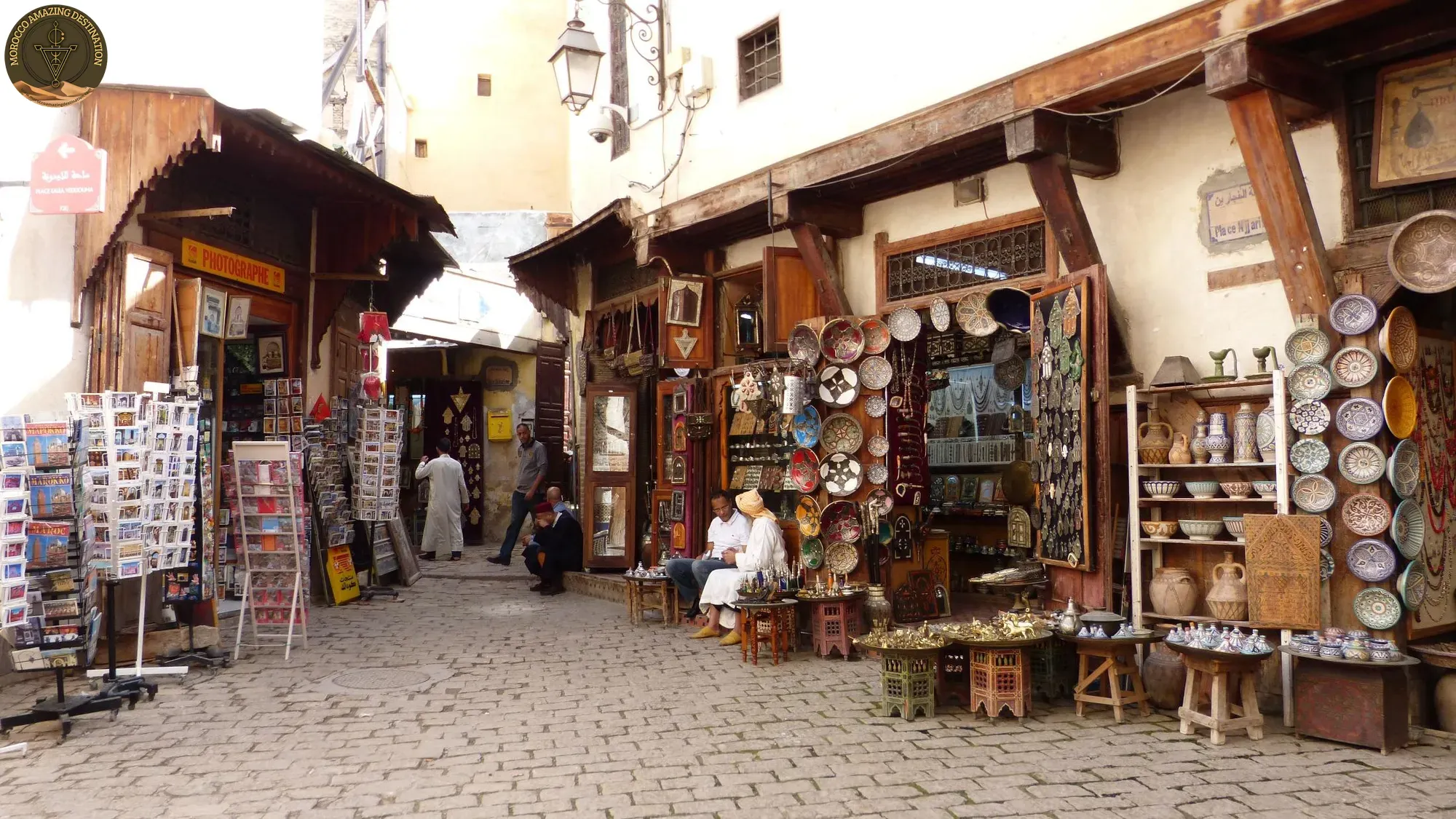
What to see around the square:
- Street fountain: a decorated stucco arch over zellij tilework beneath its own cedar eaves.
- Carpenters workshops: open shops where saws, planes, and cedar boards stay in daily use.
- Square life: porters, guides, and neighbours crossing a paved room with no traffic.
This is the living half of the stop. The workshops around the square still cut and carve for real orders. Watch for a few minutes and the museum pieces inside start to make practical sense. Shavings gather at the doorways, and the smell of cedar hangs in the air.
Planning Your Stop - Tickets, Timing and Pairing It With Fes el Bali
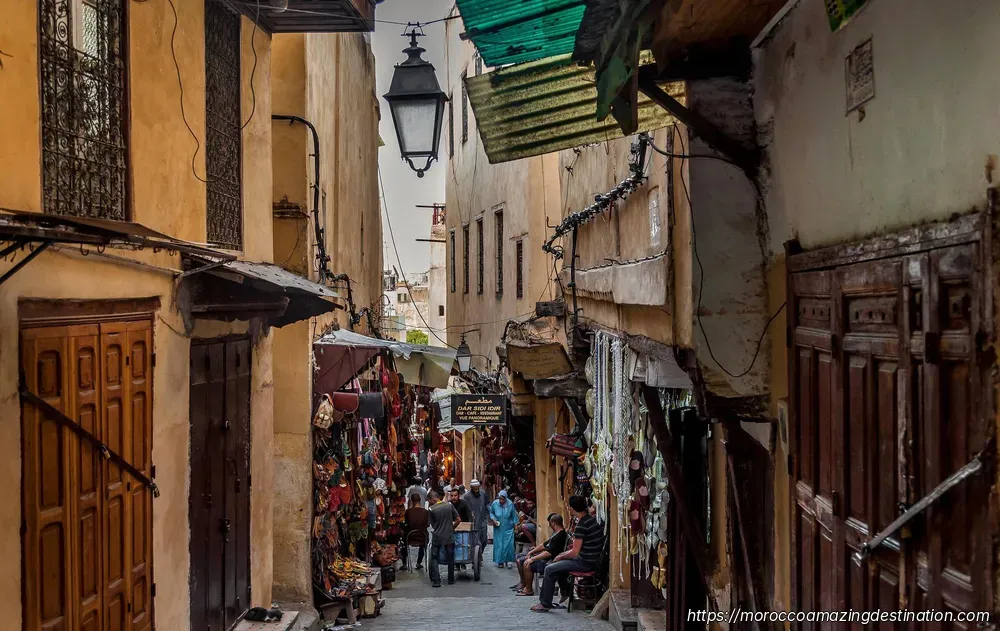
The fondouk sits in the Attarine and Qarawiyyin quarter, a short walk from the Attarine side of the medina. You reach it only on foot through narrow lanes, so a local guide saves real time. Pair the stop with our complete Fes el Bali guide to read the whole quarter.
Good to know:
- Ticket: a small cash entry of around 20 MAD, so carry small notes.
- Timing: mornings run calmer, and about 45 minutes covers the rooms plus rooftop.
- Hours: opening times shift through the year, so confirm on the day.
- Shoes: lanes run uneven and stepped, so wear steady footwear with grip.
Go with a guide through the medina maze and fold the fondouk into a morning walk. The quarter rewards slow looking, and this stop fits between two souk lanes.
One carved doorway covers trade, craft, and a whole square in under an hour. A private walk through Fes el Bali with a local guide fits the fondouk between the souks and the rooftop calmly, with no backtracking. Our 7-Day Morocco Tour from Fes starts in the medina and runs south to the Sahara. The 3-Day Desert Tour from Fes to Marrakech pairs the city with the dunes in one line. Both run private with a driver and local guides, so the medina days stay flexible.
We can customize a tour to match your needs - design your perfect itinerary
If you found this helpful, add us as your preferred source on Google.
Frequently Asked Questions
Is Fondouk Nejjarine worth visiting?
Yes. It is one of the most compact and rewarding stops in Fes el Bali: a carved cedar courtyard, a focused museum of wood craft, and a lively square with a fountain and working carpenters shops, all in under an hour.
What is inside the Nejjarine Museum of wood crafts?
Woodwork from across Morocco fills the upper rooms: carved doors, bridal chests, musical instruments, and Quran study boards, with Amazigh and Andalusi lines in the carving. A rooftop terrace looks over the medina roofs.
How much time do you need at Fondouk Nejjarine?
Allow about 45 minutes for the rooms and courtyard, plus extra time for the rooftop terrace. Mornings run calmer, and the stop folds easily into a walk through the Attarine and Qarawiyyin quarter.
Where is Nejjarine Square and how do you get there?
The square sits in Fes el Bali in the Attarine and Qarawiyyin quarter, reachable only on foot through the medina lanes, so a local guide helps. Entry costs around 20 MAD in cash, and opening times shift, so confirm on the day.
Ready for an Adventure?
Have questions? Feel free to contact us using the form below. We're here to help!