· Travel · 6 min read
How Many People Live in Morocco? Population, Cities & Demographics Guide
Discover how many people live in Morocco and explore its demographics, largest cities, population growth, and urban-rural distribution in this complete guide.
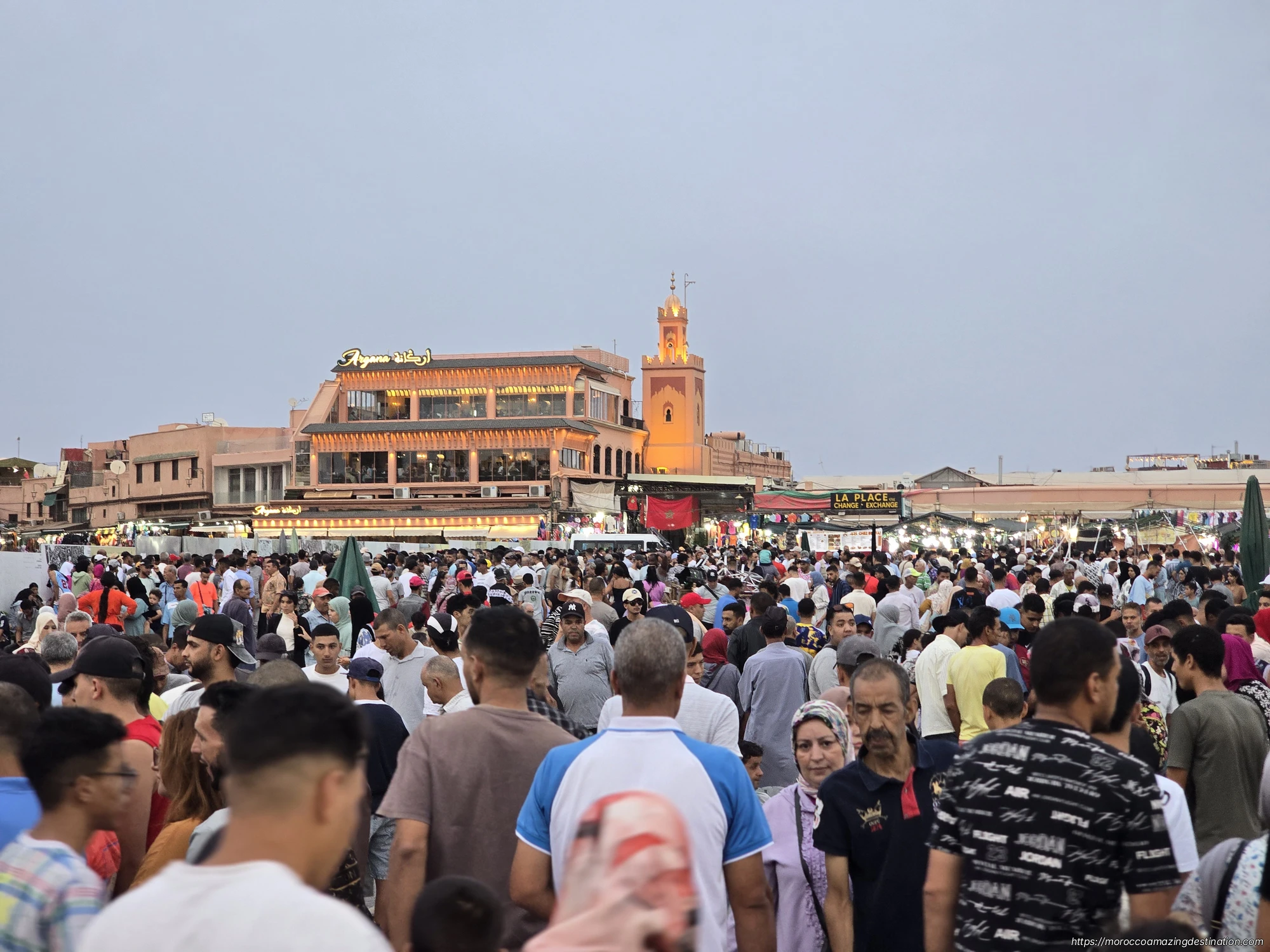
How Many People Live in Morocco?
How many people live in Morocco is one of the most frequently asked questions by travelers, researchers, and anyone curious about North Africa. With an estimated population of approximately 38 million inhabitants, Morocco stands as the fourth most populous Arab country and one of Africa’s most dynamic nations.
Understanding Morocco’s population goes beyond a single number. It tells the story of a rapidly urbanizing country, a young demographic profile, and a society where ancient Amazigh traditions coexist with modern Mediterranean lifestyles. This guide covers everything you need to know about Morocco’s people, cities, and demographic landscape.
Morocco’s Current Population and Global Ranking
The latest estimates place Morocco’s population at around 38 million, making it the 39th most populous country in the world and the 4th in the Arab world after Egypt, Algeria, and Sudan. To put this in perspective, Morocco has roughly the same number of inhabitants as Canada, Poland, or Afghanistan.
The population has grown steadily over the decades, driven by a combination of natural growth and declining mortality rates. The annual growth rate currently hovers around 1.1%, a significant slowdown compared to the 2.5% rates seen in the 1970s and 1980s, reflecting Morocco’s demographic transition toward lower fertility rates.
Key population figures at a glance:
- Total population: ~38 million
- Global ranking: 39th
- Arab world ranking: 4th
- Africa ranking: 11th
- Annual growth rate: ~1.1%
- Median age: approximately 29 years
- Life expectancy: around 77 years
Largest Cities in Morocco by Population
Morocco’s largest cities are concentrated along the Atlantic coast and in the interior plains. Urbanization has accelerated dramatically since independence, transforming coastal towns into sprawling metropolitan regions.
| City | Estimated Population (Metropolitan Area) |
|---|---|
| Casablanca | 3.7 million |
| Rabat-Salé | 1.9 million |
| Fes | 1.2 million |
| Marrakech | 1.0 million |
| Tangier | 950,000 |
| Meknes | 700,000 |
| Agadir | 600,000 |
| Oujda | 500,000 |
| Kenitra | 450,000 |
| Tétouan | 400,000 |
Casablanca dominates as the undisputed economic powerhouse. It is the largest city in the Maghreb region and one of Africa’s most important financial centers. Despite not being the political capital, Casablanca houses the headquarters of most Moroccan and international companies operating in the country.
Rabat, the political and administrative capital, forms a twin-city dynamic with neighboring Salé, housing the royal palace, parliament, and foreign embassies. The city consistently ranks among the cleanest capitals in Africa.
Fes and Marrakech remain the country’s most culturally significant cities. Fes is home to the world’s oldest university and one of the largest car-free urban areas on Earth, while Marrakech attracts millions of visitors annually with its legendary medina and Jemaa el-Fnaa square.
Tangier, perched at the strategic meeting point of the Atlantic and the Mediterranean, has experienced a remarkable economic renaissance in recent years, emerging as a major industrial and logistics hub.
Urban vs Rural Population Distribution
Approximately 65% of Morocco’s population lives in urban areas, a dramatic shift from the 1950s when over 70% of Moroccans lived in the countryside. This rural-to-urban migration has reshaped the country’s demographic map, with the Atlantic coastal corridor between Casablanca and Kenitra absorbing much of the growth.
Rural areas, concentrated in the Rif and Atlas mountain regions, tend to have:
- Higher fertility rates
- Lower average income
- Limited access to healthcare and education
- A greater proportion of Amazigh-speaking communities
The Moroccan government has launched initiatives to improve infrastructure in rural regions, including the construction of roads, schools, and health clinics. However, the pull of urban economic opportunity continues to drive internal migration.
Age Structure: A Young Country
Morocco has a relatively young population, with a median age of approximately 29 years. Over 26% of Moroccans are under the age of 15, which presents both opportunities and challenges:
- Opportunity: A large working-age population entering the labor market, potential demographic dividend
- Challenge: Ensuring adequate education, employment, and housing for a growing youth population
The youth bulge has fueled Morocco’s entrepreneurial energy, visible in the tech startups emerging in Casablanca’s Casa Nearshore park and the creative scenes in Marrakech and Rabat.
Ethnic and Linguistic Diversity
Morocco’s demographics are rooted in a rich ethnic tapestry. The majority of Moroccans are of Arab and Amazigh (Berber) descent, reflecting centuries of cultural fusion:
- Arab-Amazigh: 60-70% — Individuals of mixed Arab and Amazigh ancestry, the dominant cultural group
- Amazigh: 30-40% — The indigenous people of North Africa, with distinct linguistic groups including Tashelhit, Tamazight, and Tarifit
- Sub-Saharan Africans: A growing minority, particularly in southern cities
- European descendants: Small communities, primarily in Tangier and Casablanca, dating from the French and Spanish protectorates
Both Arabic and Tamazight are official languages of Morocco, with French widely used in business, education, and diplomacy. Spanish remains influential in the northern regions.
Historical Population Growth
Morocco’s population has more than tripled since 1960, when it stood at approximately 12 million. Here is a snapshot of the growth trajectory:
- 1960: ~12 million
- 1970: ~15 million
- 1980: ~19 million
- 1990: ~24 million
- 2000: ~28 million
- 2010: ~32 million
- Present: ~38 million
The fertility rate has declined from over 7 children per woman in the 1960s to around 2.3 children per woman today, reflecting increased access to education, family planning, and economic development.
Projections suggest Morocco’s population will continue growing, reaching approximately 42-45 million by 2050, though the rate of growth is expected to continue slowing.
Population Density and Regional Disparities
With a land area of approximately 446,550 square kilometers (excluding Western Sahara), Morocco has an average population density of about 85 people per square kilometer. However, this figure masks significant regional variation:
- The Atlantic coast concentrates over half the population in less than 15% of the territory
- The Sahara and pre-Saharan regions are sparsely populated, with fewer than 5 people per square kilometer in some areas
- The Rif and Atlas mountain ranges sustain moderate rural population densities of 30-50 per square kilometer
- Cities like Casablanca reach densities exceeding 20,000 people per square kilometer in central neighborhoods
This uneven distribution creates challenges for resource allocation but also means Morocco offers both vibrant urban energy and vast, untouched natural landscapes — often within a few hours’ drive of each other.
What These Numbers Mean for Travelers
For visitors, understanding how many people live in Morocco and where they are concentrated helps shape a better travel experience. The bustling medinas of Fes and Marrakech represent the human intensity of urban Morocco, while the quiet villages of the Atlas Mountains and the vast emptiness of the Sahara reveal the country’s geographic extremes.
The warmth of Moroccan hospitality — rooted in the Amazigh value of welcoming strangers — means you will encounter genuine human connection whether you are in a crowded souk with thousands of shoppers or a remote desert camp under the stars.
Explore Morocco’s Cities on a Guided Tour
The best way to experience Morocco’s urban diversity is through a well-planned tour that connects its most fascinating population centers. From the economic buzz of Casablanca to the imperial grandeur of Fes and the timeless medina of Marrakech, an organized journey reveals the human scale behind the statistics.
8-Day Imperial Cities and Sahara Desert Tour from Casablanca — This comprehensive tour takes you through Morocco’s most historically significant cities, including Casablanca, Rabat, Meknes, Fes, and Marrakech. Along the way, you will witness firsthand how Morocco’s urban population lives, works, and thrives across different regions.
Unforgettable Morocco Imperial Cities and Desert Tour: 7 Days of Adventure — Discover the vibrant imperial cities and the majestic Sahara Desert in one week. This tour combines urban exploration with desert adventure, offering a complete picture of Morocco’s demographic and geographic diversity.
If you found this helpful, add us as your preferred source on Google.
Frequently Asked Questions
How many people live in Morocco in total?
Morocco's population is estimated at approximately 38 million people, making it one of the most populous countries in Africa and the Arab world.
What is the largest city in Morocco by population?
Casablanca is the largest city in Morocco with over 3.7 million inhabitants in its metropolitan area. It is the country's economic and business hub, though Rabat is the political capital.
Where do most Moroccans live — in cities or rural areas?
Around 65% of Morocco's population lives in urban areas, with a steady trend of rural-to-urban migration. The largest urban concentration is along the Atlantic coast between Casablanca and Kenitra.
What is the ethnic composition of Morocco's population?
Morocco's population is predominantly of Arab and Amazigh (Berber) descent, with an estimated 60-70% Arab-Amazigh, 30-40% Amazigh, and a small minority of sub-Saharan African and European origin.
- morocco-population
- morocco-demographics
- morocco-largest-cities
- morocco-urban-rural
- morocco-travel
- morocco
Ready for an Adventure?
Have questions? Feel free to contact us using the form below. We're here to help!