
· Travel · 6 min read
How to Ride a Camel in Morocco: A First-Timer Guide
Learn how to ride a camel in Morocco: mounting, the two-lurch stand-up, saddle posture, what to wear and how long a first ride should last.
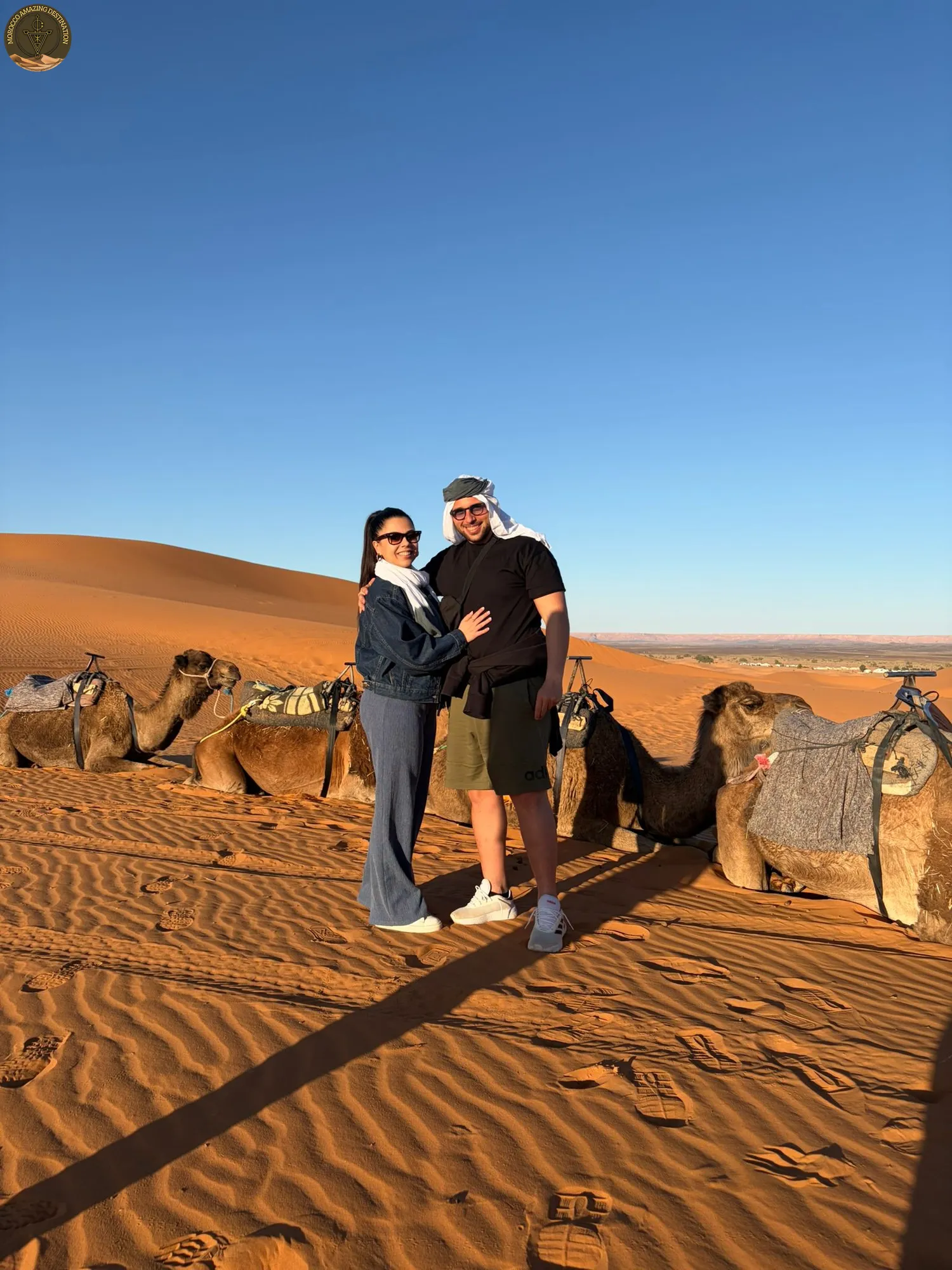
A camel is already kneeling in front of you, a guide holds the halter rope, and your only task is to get into the saddle without ending up in the sand. Learning how to ride a camel in Morocco comes down to two minutes of choreography followed by a long, slow sway your body can settle into. The animal rises hindquarters first, so you pitch forward and then back, while one hand on the front post keeps you upright. After that it is rhythm, the right trousers and knowing when to ask for a stop.
In this guide we will cover the mount and dismount, the first fifteen minutes in the saddle, the clothing that actually helps, the camel riding tips our guides repeat before every departure, and how long a first ride should last.
Mounting a Camel: Saddle, Stirrup and the First Grip
The camel you meet in Morocco is a one-humped dromedary. Adults stand about 1.8 to 2 metres at the shoulder, and the hump lifts the total to roughly 2.2 metres, so your eye line from the saddle sits close to three metres above the sand.
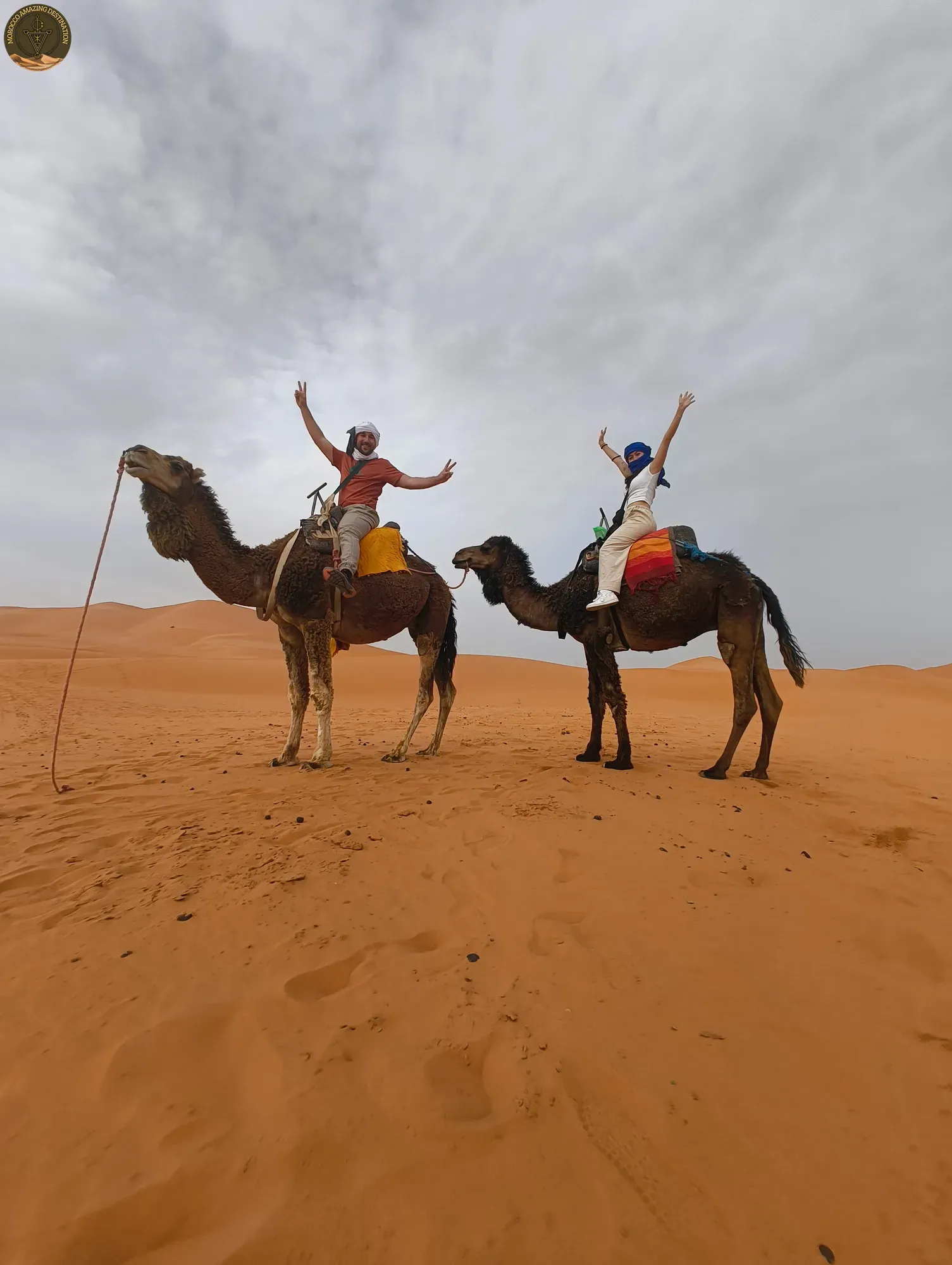
A tourist saddle is a padded frame laid over striped wool blankets, with a raised front post to hold and sometimes a low backrest. Your guide keeps the rope halter and walks ahead of the animal. Ask the guide to set the stirrup length before you climb, because a stirrup left for a taller rider leaves your leg dangling all afternoon.
Put your foot in, swing the free leg across, then sit just behind the post with your weight on both seat bones. Children often share an adult’s saddle or ride on a lead rein, and your operator decides which.
The Camel Stand-Up: Two Lurches, Then the Dismount
The rise startles most first-timers, and it is over in seconds. The hindquarters push up first and your chest tips toward the post. Then the front legs straighten and you swing back. Move with the animal instead of bracing against it.
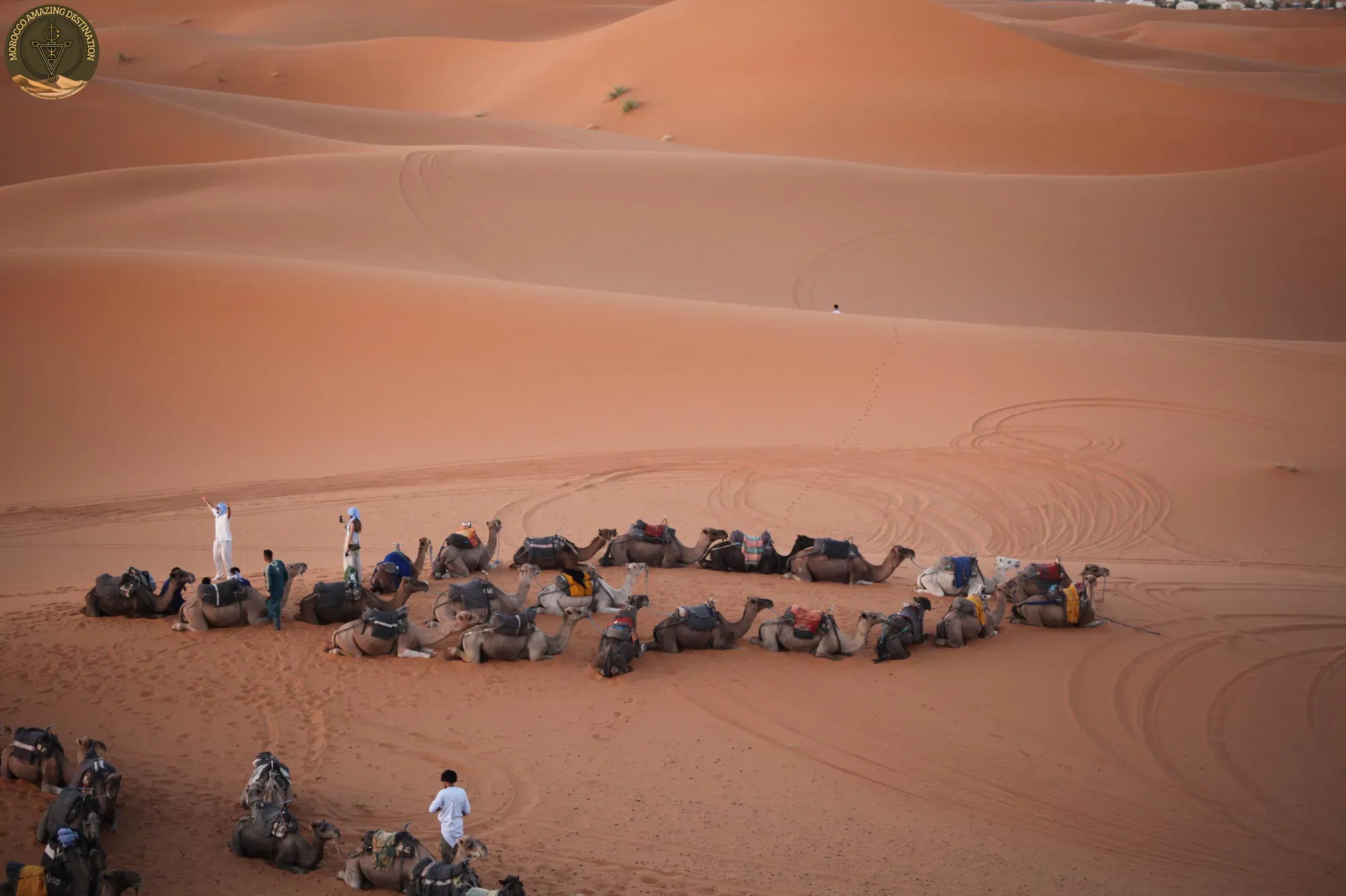
- Rear legs lift: let your chest come forward and keep the spine loose.
- Front legs extend: allow your shoulders to travel back, no straight-arm grip.
- Hands during the lift: leave the phone in a zipped pocket until the camel is level.
- Dismount: the front folds first, then the hindquarters, so expect two dips.
A dismount is the same sequence run backwards. Lean back as the front drops, forward as the back lowers, then step down onto sand. A fall from camel height is a long fall, so stay seated until the guide says otherwise.
The First Fifteen Minutes on a Camel: Rhythm, Posture and Hands
Once the animal is walking, the motion makes sense. A camel paces at roughly 4 km/h, lifting both legs on one side together, so your hips roll from side to side. Riders who try to rise and fall as they would on a horse fight the gait and tire within minutes.
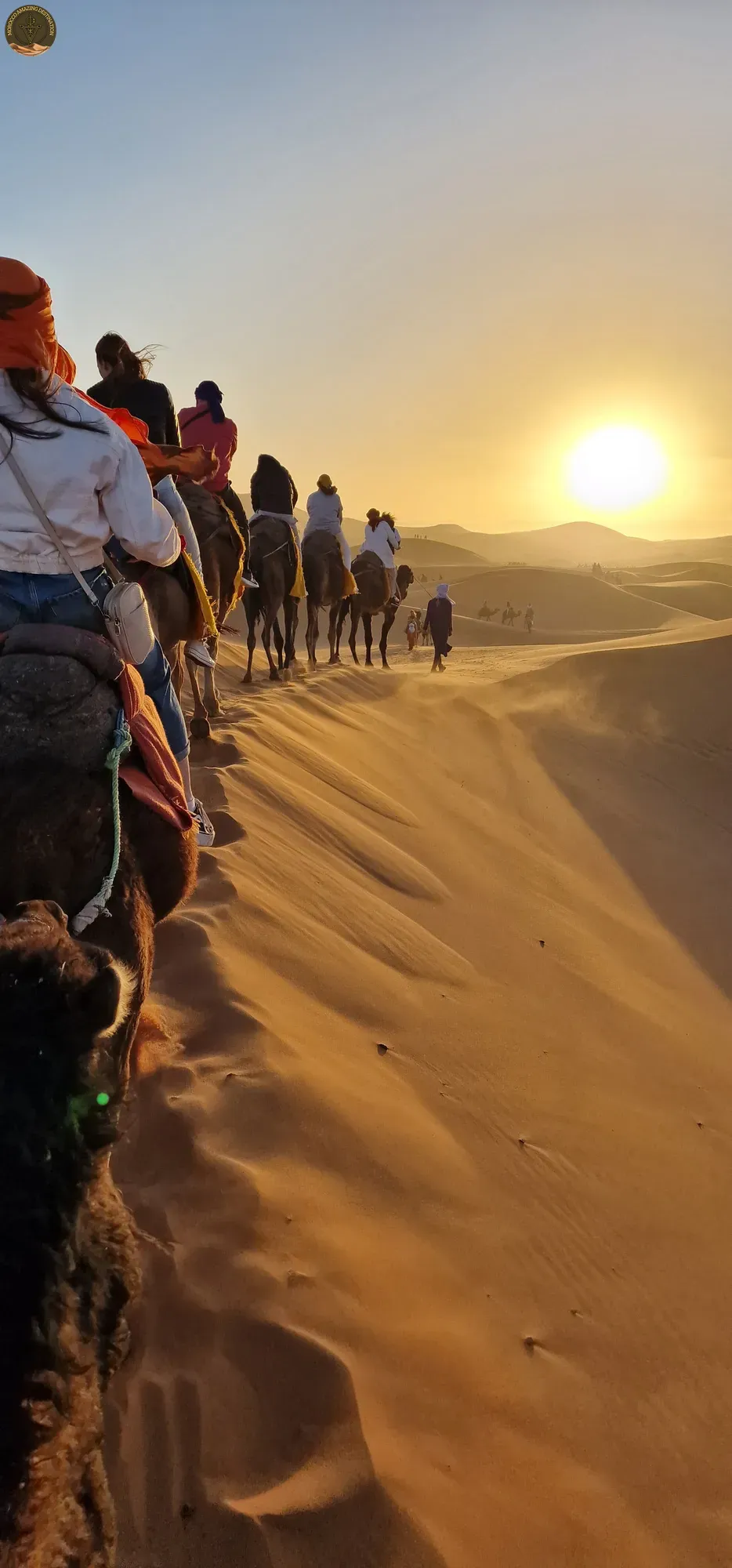
Sit tall, let the sway happen, and keep your hands light on the post. Your lower back braces whether you notice it or not, so shift one leg slightly forward every 10 to 15 minutes to change the pressure points.
For photographs, keep one hand on the post and use a wrist or neck strap. Shoot across the caravan line rather than down the camel’s neck, and ask your guide to pause instead of standing up in the stirrup.
What to Wear on a Camel: Trousers, Socks, Shoes, Scarf
The short list for what to wear on a camel ride Morocco is mostly about friction. Long, loose trousers keep bare calf away from a wool blanket, and socks fill the gap that opens when trousers creep up as you ride. Closed shoes with a little tread beat sandals, since your feet sit in a stirrup and the stops happen on hot sand.
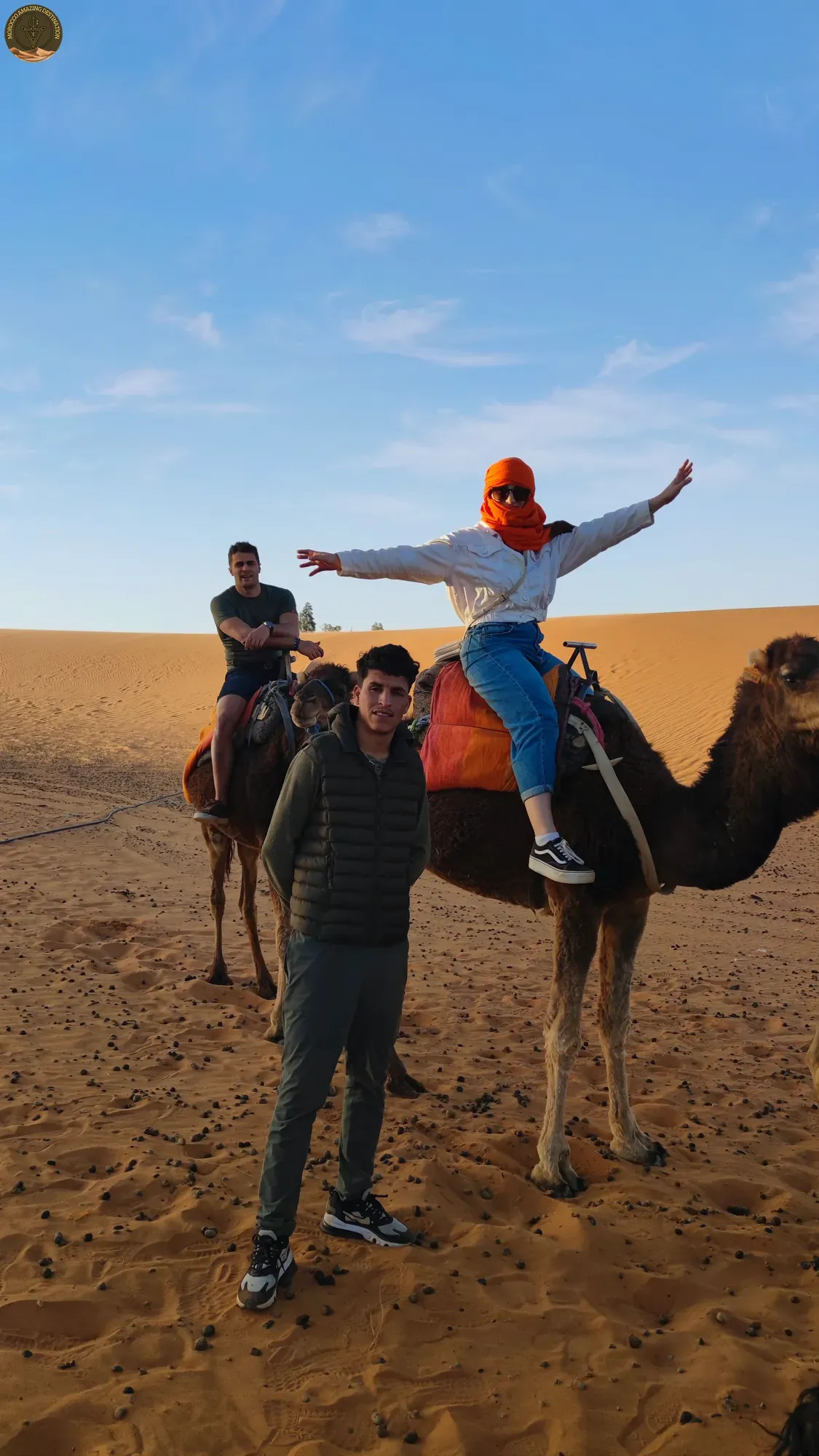
A few things work against you:
- Slippery leggings: thin synthetic fabric slides on the saddle and creases within the hour.
- Flowing skirts: loose fabric near a stirrup or a halter rope tangles.
- Dangling jewellery: bangles and long earrings catch on the post and the blankets.
- Loose sandals: they slip out of the stirrup and let sand under your sole.
Sunglasses need a retainer, and a cross-body bag stays where you put it while a shoulder bag slides. Where you sleep after the ride is a separate question, and our guide to Morocco desert camps and camel treks covers the camp side.
How Long to Ride a Camel, and Who Should Ride Shorter
Most first-timers feel the saddle’s width between 20 and 30 minutes, in the inner thighs and the hip flexors. A dromedary’s back is broader than a horse’s, so the legs sit further apart than you expect. An hour is a comfortable first ride for most adults. Beyond that, plan a stop or a stretch of walking beside the animal.
Say something early. Guides would rather pause for five minutes or hand you the rope for a while than watch a rider go quiet and stiff. Hassan and Hamid, who brief our riders before departure, treat a request to stop as routine.
Shorten the ride or skip it if any of these apply:
- Pregnancy: ask your operator first, then keep the ride short and slow.
- Recent abdominal, hip or knee surgery: the saddle position loads those areas directly.
- Severe back problems or poor balance: mention both when you book.
- A genuine fear of heights: start with a short loop and see how it feels.
Weight limits vary by animal and operator, so ask before you book.
A camel ride goes better with a little preparation: one step into the stirrup, a hand on the post, loose hips and trousers that do not slide. The rest you will learn in the first quarter of an hour, with a guide walking ahead of you.
Our 4-Day Morocco Desert Tour from Marrakech crosses the Atlas to Ait Benhaddou, the Dades Valley and the dunes at Merzouga. The 3-Day Desert Tour from Fes to Merzouga reaches the same sand with the Middle Atlas on the way. We can customize a tour to match your needs - design your perfect itinerary
If you found this helpful, add us as your preferred source on Google.
Frequently Asked Questions
Does it hurt to ride a camel?
Most riders notice the width of the saddle somewhere between 20 and 30 minutes, mostly in the inner thighs, the hip flexors and the lower back. It is the dull ache of a broad seat and a constant low brace, and the fix is simple: shift a leg, ask for a five-minute stop, or walk a stretch beside the camel. Anyone with a back, hip or knee problem should mention it to the guide and keep the first ride short.
How long should a first camel ride be?
About an hour is comfortable for most adults, and many travellers are happy with 90 minutes once they have found the rhythm. Past that point, plan a stop or walk a stretch on foot. First-timers usually know within the first 20 minutes whether they want a shorter loop.
What should I wear on a camel ride in Morocco?
Long, loose trousers, socks and closed shoes with a little tread. Trousers keep bare calf away from a wool blanket, socks cover the gap that opens as you ride, and closed shoes are safer in a stirrup and on hot sand at the stops. Add a scarf for sun and sand, a retainer for sunglasses and a cross-body bag. Leave slippery leggings, flowing skirts and dangling jewellery at the hotel.
Can children ride a camel in Morocco?
Yes, children ride regularly and many remember it as the best part of the trip. Minimum age, weight limits, and whether a child rides alone or shares an adult's saddle are set by the operator, so ask before booking. Small children usually sit in front of a parent or travel on a lead rein beside an adult.
Ready for an Adventure?
Have questions? Feel free to contact us using the form below. We're here to help!