· Travel · 8 min read
Marrakech: The Imperial City That Gave Morocco Its Name
Discover how Marrakech gave Morocco its name. Explore the Berber etymology, Almoravid history, and the enduring legacy of the Red City that named a nation.
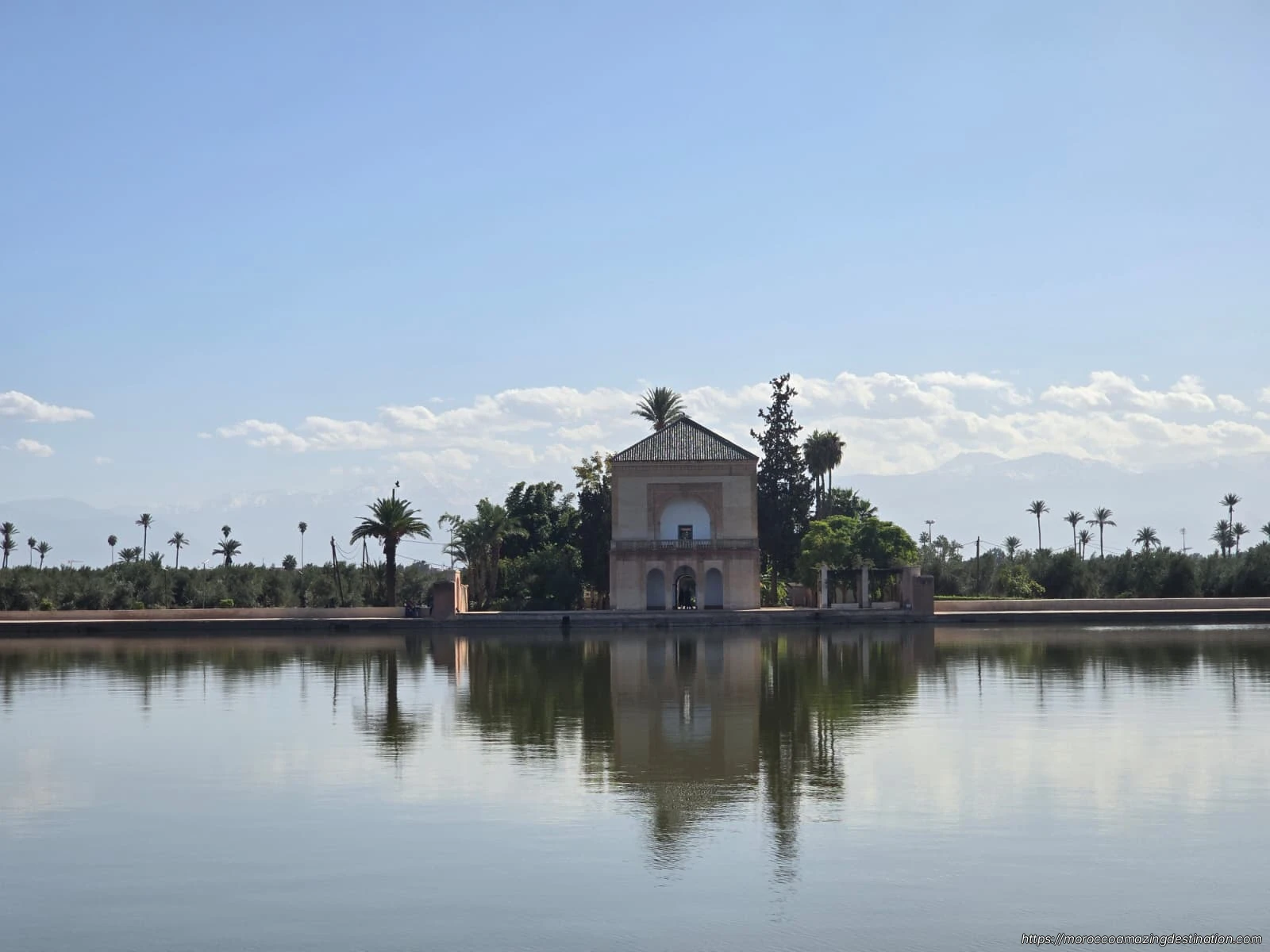
Have you ever wondered how Morocco got its name? The answer lies in a single city — Marrakech. This vibrant imperial city did not just shape the history of North Africa; it literally gave its name to an entire country. The very word “Morocco” derives from “Marrakech,” and this fascinating etymological journey begins over a thousand years ago with the Berber phrase Amur n Akush, meaning “Land of God.” If you want to discover the city that gave Morocco its name, step into the ochre-hued streets of the Red City and trace the story of how one capital came to define a nation.
The Origin of the Name: How Marrakech Became Morocco
The connection between the city that gave Morocco its name and the modern country is a story of language, empire, and medieval exploration. When the Almoravid dynasty founded Marrakech in 1070 under the leadership of Yusuf ibn Tashfin, they named their new capital Murrākush (مراكش). This Arabic name was itself an adaptation of the indigenous Berber (Tamazight) term Amur n Akush, which translates to “Land of God.”
As the city grew in power and prestige, it became the dominant political and commercial center of the Maghreb. Medieval European travelers, merchants, and diplomats who ventured into North Africa encountered Marrakech as the seat of power and naturally began using the name of the capital to refer to the entire realm.
Over the centuries, linguistic evolution took its course:
- French: Marrakech → Maroc
- English: Marrakech → Morocco
- Spanish: Marrakech → Marruecos
- Italian: Marrakech → Marocco
- Portuguese: Marrakech → Marrocos
- German: Marrakech → Marokko
Each of these languages preserves a direct phonetic link to the original Berber name. In fact, Morocco is one of the few countries in the world named after a city rather than a geographic feature, a people, or a historical figure. The Morocco name origin is a testament to Marrakech’s unparalleled importance throughout the Middle Ages.
The use of “Marrakech” to denote the entire country was formalized in European cartography as early as the 12th century. Maps from the period label the region as “Regnum Marrochium” (Kingdom of Marrakech) or simply “Maroc,” cementing the identification of city and country in the European imagination.
Marrakech: The Imperial Capital That Ruled an Empire
To understand why this city earned the distinction of giving its name to Morocco, we must explore its origins as an imperial powerhouse.
The Founding of the Red City
Marrakech was founded in 1070 by the Almoravids, a Berber dynasty that emerged from the Sahara. Under Yusuf ibn Tashfin, the Almoravids unified vast territories spanning from present-day Senegal in the south to the Iberian Peninsula in the north. Marrakech was deliberately chosen as the capital — situated at the crossroads of trans-Saharan trade routes and the fertile plains of the Haouz region, it was ideally positioned to command an empire.
The city’s construction marked a turning point in Maghrebi history. Unlike earlier regional powers that built upon existing Roman or Phoenician settlements, the Almoravids created Marrakech from scratch, making it the first truly indigenous imperial capital of the region. They built the city’s first mosques, palaces, and the extensive network of underground irrigation channels known as khettara that turned the arid plain into an oasis of palm groves and gardens.
The Koutoubia Mosque and the Almohad Legacy
Less than a century after the Almoravids, the Almohad dynasty conquered Marrakech in 1147 and elevated it to even greater heights. Under Almohad rule, the Koutoubia Mosque was constructed — a masterpiece of Islamic architecture whose 77-meter minaret remains the city’s most recognizable landmark and the model for later minarets including the Giralda of Seville and the Hassan Tower of Rabat.
The Almohads also expanded the city’s famous red walls, built using locally sourced rammed earth and sandstone that gives Marrakech its enduring nickname: the Red City. These fortifications stretch for over 19 kilometers, punctuated by majestic gates such as Bab Agnaou, which served as the royal entrance to the kasbah.
At its zenith under the Almohads, Marrakech was one of the largest and most sophisticated cities in the world, home to scholars, poets, and philosophers like Ibn Rushd (Averroes) and Ibn Tufail — figures whose works would later influence the European Renaissance.
The Decline and Rebirth of a Legendary City
Following the Almohad decline, Marrakech lost its status as the permanent capital as newer dynasties — the Marinids, the Wattasids, and later the Alaouites — established their seats in Fes, Meknes, and ultimately Rabat. Yet Marrakech never lost its symbolic power.
The Saadian dynasty (1510–1659) revived Marrakech as the imperial capital in the 16th century, ushering in a golden age that left some of the city’s most stunning monuments. The Saadian Tombs, sealed behind walls for centuries and only rediscovered in 1917, showcase the exquisite craftsmanship of this era with their intricate zellige tilework, carved cedar ceilings, and Italian Carrara marble columns. The nearby El Badi Palace, built by Sultan Ahmad al-Mansur, was once one of the most lavish palaces in the world — “The Incomparable” — adorned with gold, onyx, and marble looted from across the known world.
Though the Alaouite Sultan Moulay Ismail later stripped El Badi of its treasures to build his own palace in Meknes, the haunting ruins remain a powerful reminder of Marrakech’s former glory.
In 1985, UNESCO recognized the medina of Marrakech as a World Heritage Site, affirming its status as “an outstanding example of a living Islamic city” whose architecture and urban fabric reflect centuries of cultural and political centrality.
Marrakech Today: The Heartbeat of Modern Morocco
Although Rabat has been the official capital of Morocco since 1912, Marrakech continues to be the soul and cultural heart of the country. The city welcomes millions of visitors annually — drawn by the sights, sounds, and scents that have defined it for nearly a millennium.
Jemaa el-Fnaa: The Pulse of Africa
At the center of it all is Jemaa el-Fnaa, the legendary square that UNESCO declared a “Masterpiece of the Oral and Intangible Heritage of Humanity.” By day, it fills with orange juice vendors, snake charmers, henna artists, and traditional water sellers in fringed hats and polished brass cups. As dusk falls, the square transforms into a vast open-air dining hall with dozens of food stalls sending columns of aromatic smoke into the night sky, while storytellers, musicians, and acrobats entertain crowds from every corner of the globe.
Jemaa el-Fnaa has been the city’s beating heart — and by extension, Morocco’s — since the 11th century. Standing there, surrounded by the chaotic spectacle that has captivated visitors for a thousand years, you feel the weight of history.
Beyond the Square
The souks of the medina form a labyrinthine network of alleyways where artisans practice crafts passed down through generations: leatherworkers, metalworkers, carpet weavers, dyers, and woodcarvers — each guild in its own souq, each alley a river of color, texture, and noise. This is not a museum; it is a living, breathing economy that functions much as it has for centuries.
The Ben Youssef Madrasa, a 14th-century Islamic college recently restored, is a masterpiece of Moroccan architecture with its central courtyard of carved cedar, stucco, and zellige tilework. The Majorelle Garden, with its iconic cobalt-blue villa and exotic botanical collection, offers a serene contrast to the medina’s intensity and stands as a reminder of the French painter Jacques Majorelle and later Yves Saint Laurent, who called Marrakech home.
For those seeking to understand the true scale of the city’s influence, a short drive takes you to the Agafay Desert at the city’s doorstep or to the towering peaks of the High Atlas Mountains, visible on the horizon as Marrakech’s eternal backdrop.
Why You Should Visit the City That Named a Nation
There are few places on Earth where you can trace a country’s name, history, and identity to a single point on the map. Marrakech is that rare city — the city that gave Morocco its name — and its story is woven into every stone, every alley, every call to prayer echoing from its minarets.
Whether you come for the history, the food, the architecture, or the sheer sensory overload of the medina, Marrakech offers an encounter with over a thousand years of Amazigh, Arab, and African culture that has shaped not just Morocco but the world. From the Almoravid foundations to the UNESCO-protected present, Marrakech remains what it always was: the Land of God, the city that named a nation.
If you are planning your trip to the city that gave Morocco its name, consider exploring beyond the medina walls with carefully crafted itineraries that showcase the best of the Red City and its surroundings.
4-Day Morocco Desert Tour from Marrakech — Ait Ben Haddou, Dades Valley & Merzouga: Journey from the imperial city into the vast Sahara Desert, crossing the High Atlas Mountains, exploring the UNESCO-listed kasbah of Ait Ben Haddou, and sleeping under a canopy of stars in the dunes of Merzouga. Explore the tour →
8-Day Morocco Tour: Marrakech, Sahara Desert & Essaouira Adventure: Dive deep into the magic of Morocco with an immersive 8-day journey that begins in Marrakech and takes you through the desert, the mountains, and the windswept Atlantic coast of Essaouira. Discover the adventure →
If you found this helpful, add us as your preferred source on Google.
Frequently Asked Questions
Why is Morocco named after Marrakech?
Morocco is named after Marrakech because the city was the capital of the Almoravid and Almohad empires from the 11th century onward. European travelers and merchants used the name of the capital city — Marrakech — to refer to the entire kingdom. Over centuries, 'Marrakech' evolved into 'Maroc' in French, 'Morocco' in English, and 'Marruecos' in Spanish.
What does 'Amur n Akush' mean?
'Amur n Akush' is a Berber (Tamazight) phrase meaning 'Land of God.' This is believed to be the original name from which 'Marrakech' derives. The Almoravids adapted it into the Arabic 'Murrākush' (مراكش), which eventually gave rise to the modern name of the city and, in turn, the country of Morocco.
When was Marrakech founded?
Marrakech was founded in 1070 by the Almoravid dynasty under the leadership of Yusuf ibn Tashfin. It quickly grew into a major political, cultural, and economic hub, becoming the capital of a vast empire that stretched from present-day Senegal to Spain. The city celebrated its 950th anniversary in 2020.
Is Marrakech still one of Morocco's imperial cities?
Yes, Marrakech is one of Morocco's four imperial cities, alongside Fes, Meknes, and Rabat. Each of these cities served as the capital of Morocco at different points in history. Today, Marrakech remains a UNESCO World Heritage site and one of the most visited cities in Africa, drawing millions of travelers to its medina, souks, and historic landmarks.
Ready for an Adventure?
Have questions? Feel free to contact us using the form below. We're here to help!