· Shopping · 6 min read
10 Must-Visit Souks in Morocco for an Authentic Shopping Adventure
A guide to the best souks in Morocco: Marrakech and Fes craft quarters, dirham price bands, timing, etiquette and shipping.
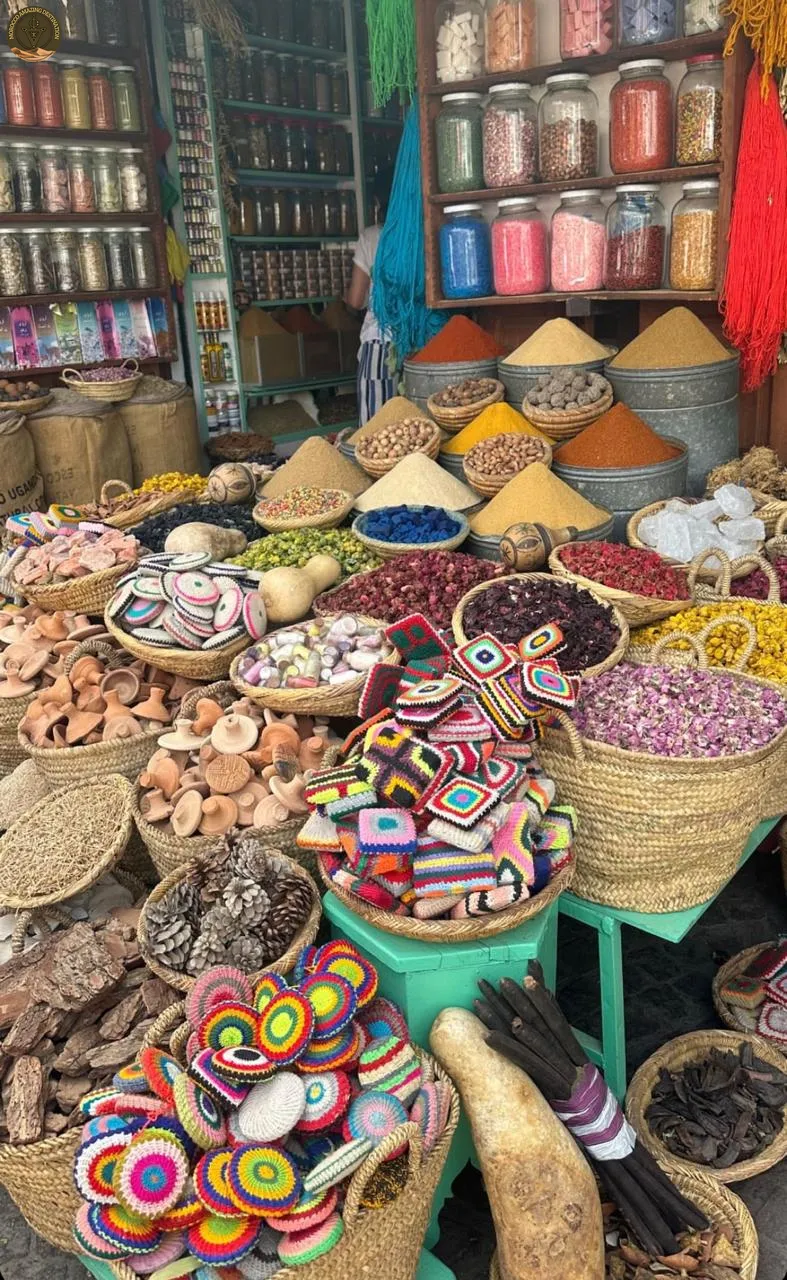
A souk is a working market before it is a shopping stop. Trades still cluster in the lanes they have held for centuries, and the smell of cedar or hot brass tells you what the next alley sells before you see it. Ask travelers where the best souks in Morocco are and the answers split between Marrakech’s dense grid and the older, slower quarters of Fes.
This guide names the quarters worth your time across four cities. It covers the hours and price bands that keep a first visit calm, plus Morocco souk etiquette and the questions worth asking before you ship anything home.
Marrakech: Six Souks Worth Your Morning
The market north of Jemaa el-Fna reads as a grid once you follow it by trade. Souk Semmarine is the wide covered spine and the easiest entry point, mixing kaftans, scarves and babouches. Souk Cherratine next door is the leather quarter.
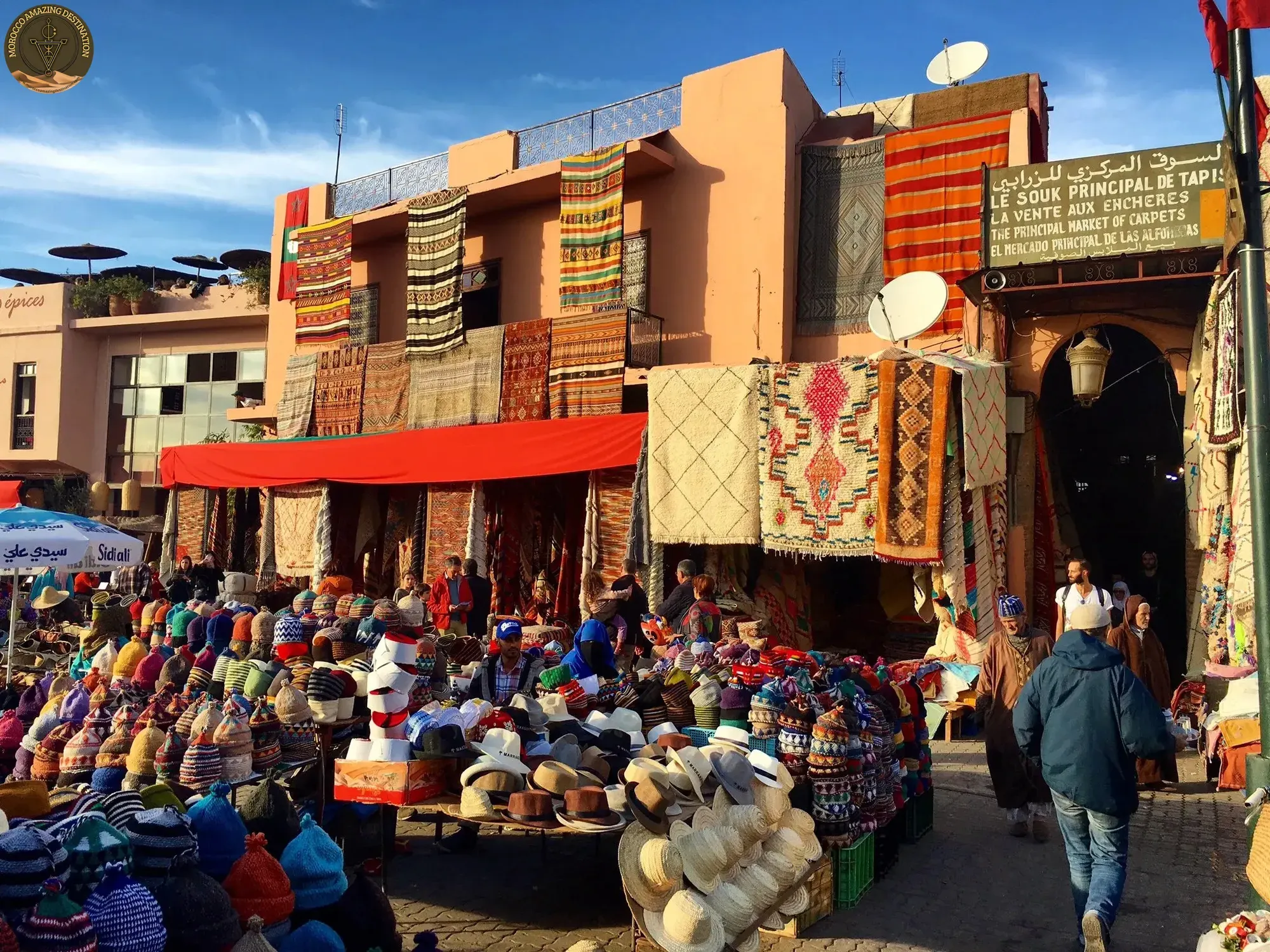
West of that spine, Souk Zrabi was the historic carpet auction square. A small wool rug starts near 800 MAD and a room-size piece from 3,000 MAD. Souk Sebbaghine, the dyers’ lane, has wool skeins drying overhead. Souk Haddadine belongs to the blacksmiths, where pierced lanterns run roughly 80-200 MAD small and 250-600 MAD large. Rahba Kedima is the open spice square, with cumin and paprika at 10-30 MAD per 100 g and saffron at 30-50 MAD per gram.
Weekday mornings between 9:30 and 11:30 are the calmest hours to compare three stalls on the same item. From about 17:00 the medina fills with the best light and the worst crowds. For a street-by-street route, see our guide to the best souks in Marrakech.
Fes el-Bali: Craft Quarters That Still Make What They Sell
Fes is the more traditional market and often cheaper for leather and pottery, which is why the Fes medina souks reward a slower visit. Tala’a Kebira is the main artery from Bab Boujloud into the heart of el-Bali, a UNESCO World Heritage site. Kissaria al-Kifah is the historic covered market for textiles and jewelry, where prices are firmer and haggling moves less.
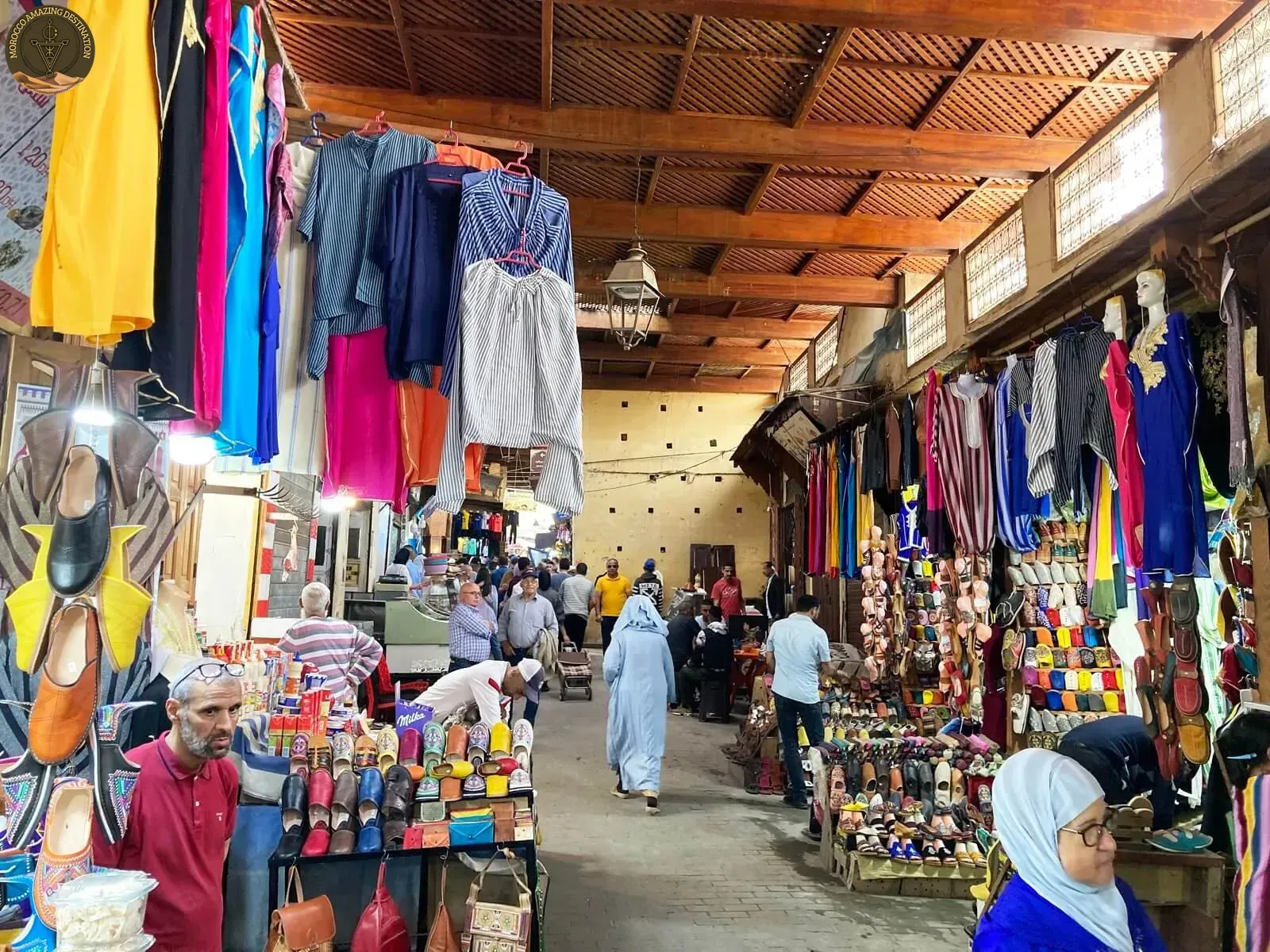
Souk el-Attarine handles spices and perfumes. Place Seffarine is the coppersmiths’ square, and you hear the hammering before you see it. Souk Nejjarine is the carpenters’ quarter, with the wood arts museum housed in an 18th-century funduq. The Chouara tannery is viewed from a terrace above the vats. The leather shops attached to it pay a commission to whoever walks you in.
A blue Fes pottery plate runs 80-250 MAD and a cooking tagine 100-200 MAD. Leather weekend bags sit at 350-800 MAD, babouches at 100-200 MAD. Many workshops close around Friday midday prayer and stay quiet into the early afternoon. Sunday is patchier than a weekday.
Essaouira and Chefchaouen: Smaller Souks, Softer Selling
Essaouira is the gentlest first souk, with straight lanes and fewer touts. Its craft is thuya wood, the fragrant local timber turned into boxes, chess sets and puzzle boxes, with lidded boxes at 80-250 MAD. Cooperative argan runs 120-180 MAD per 100 ml, while mass-market bottles sell for less, so buy where you can watch the pressing.
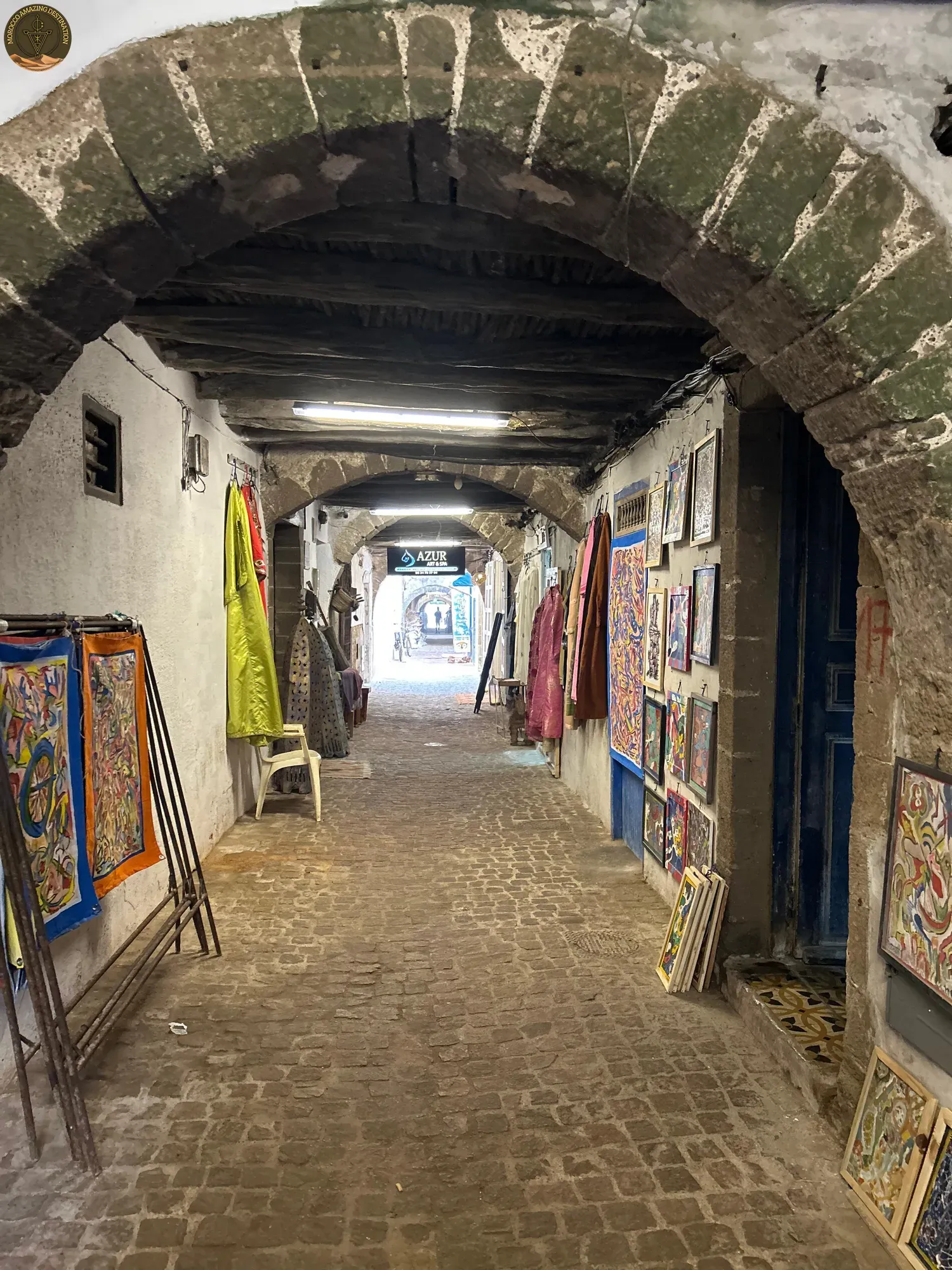
Souk Jdid is the everyday food and household market rather than a souvenir stop. The Chefchaouen souk gathers around Plaza Uta el-Hammam and the main lane, and the specialty there is Rif mountain weaving. Because Chefchaouen is a day-trip target from Tangier, roughly 11:00 to 16:00 brings the coach wave; shop before 10:00 or after 17:00 for calm lanes.
- Wool blankets in Chefchaouen run roughly 250-600 MAD, with jebli cloaks and woven baskets alongside.
- A thuya box or a small argan bottle travels home in hand luggage. Both towns suit smaller purchases and gentler haggling than Marrakech.
Weekly Rural Markets: Amizmiz and the Khemis Rhythm
Amizmiz holds its weekly souk on Tuesday. The town sits in the High Atlas foothills south of Marrakech, and this is a working market. You will find livestock, produce, tools, plastic goods, some blankets and pottery, donkeys and pick-up trucks.
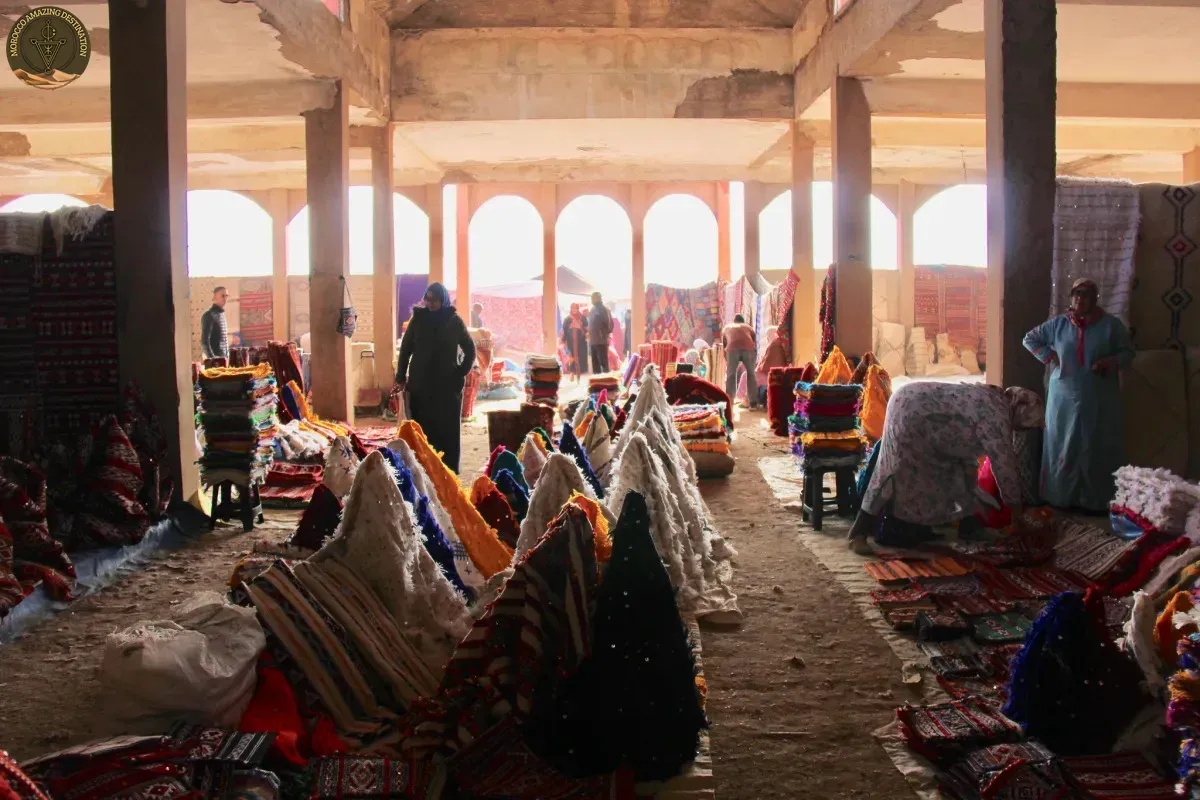
There is no card terminal and no fixed-price shop to anchor a price against. The naming convention helps elsewhere: Souk el Khemis means Thursday market, and many Moroccan towns take their name from the day their market falls. Near the desert, Rissani in the Tafilalt runs the equivalent big rural market on the road to Merzouga.
Arrive between 8:30 and 9:00, carry small notes and expect to pay cash:
- Ask before photographing people at the stalls.
- Do not handle the animals being sold.
- Go to watch the trading; a purchase is a bonus.
Prices, Etiquette and Getting It Home
For scale, 100 MAD is about 10 euros or 10 dollars, which makes stall prices easy to judge. Bargaining follows a loose convention. Open at 40-50% of the first price and expect to settle near 60-70%, staying friendly and walking away politely if it does not land. Our haggling guide covers the steps.
Haggling is out of place at the government-run Ensemble Artisanal fixed-price craft shops, which double as a useful anchor for rug and leather prices. Pay in cash dirhams, carry 20, 50 and 100 notes, and treat mint tea as hospitality rather than a contract. A few things are worth refusing:
- Rugs aged with chemicals and sold as antiques.
- Argan oil poured from unmarked barrels.
- Silver sold as Berber work with no stamp.
Rugs and ceramics usually ship. Ask for a written quote, a tracking number and a clear answer on who pays duty before you pay. Check your own customs allowance and keep the receipts. Anything genuinely a century old needs export paperwork, so assume an antique is a reproduction until the seller produces it.
Shopping in Morocco souks is easier once you know the rough going rate and get there before the crowds. What you carry home was probably made a few streets from where you bought it.
8-Day Morocco Tour: Marrakech, Sahara Desert & Essaouira Adventure pairs the Marrakech souks with a guided walk through the Essaouira medina. 5 Days In Morocco: Chefchaouen & Imperial Cities From Tangier adds the Fes craft quarters and the Chefchaouen lanes, with a private guided souk visit built into the route.
We can customize a tour to match your needs - design your perfect itinerary
If you found this helpful, add us as your preferred source on Google.
Frequently Asked Questions
What is a souk in Morocco?
A souk is a traditional market in a Moroccan medina, usually organized by trade, so you find whole lanes of leather, carpets, metalwork or spices. Some are daily, some weekly, and the largest sit inside UNESCO-listed medinas such as Marrakech and Fes.
How much cash should I carry in the souks, and can I pay by card?
Carry small notes, 20, 50 and 100 dirhams, because stallholders rarely have change for a 200. Most souks are cash only, and 100 MAD is about 10 euros or 10 dollars, which makes prices easy to judge. Larger dealers and rug shops usually accept cards, but ask before you settle a price.
What are the best souks to visit in Marrakech?
Start with Souk Semmarine for kaftans and babouches, then Souk Cherratine for leather, Souk Zrabi for carpets and Souk Haddadine for lanterns. Rahba Kedima handles spices, with cumin and paprika at 10-30 MAD per 100 g. Weekday mornings from 9:30 to 11:30 are the calmest hours for comparing.
Are the souks in Fes different from Marrakech?
Fes is more traditional and generally cheaper for leather and pottery, with whole quarters devoted to one craft, from Place Seffarine's coppersmiths to Souk Nejjarine's carpenters. Many workshops close around Friday midday prayer and stay quiet into the early afternoon, so a weekday visit sees more open doors.
Ready for an Adventure?
Have questions? Feel free to contact us using the form below. We're here to help!