
· Travel · 5 min read
Merja Zerga Birdwatching Guide: Morocco's Atlantic Lagoon
Merja Zerga birdwatching, planned around the tide: winter duck and wader counts, the marsh owl, boats at Moulay Bousselham and driving times.
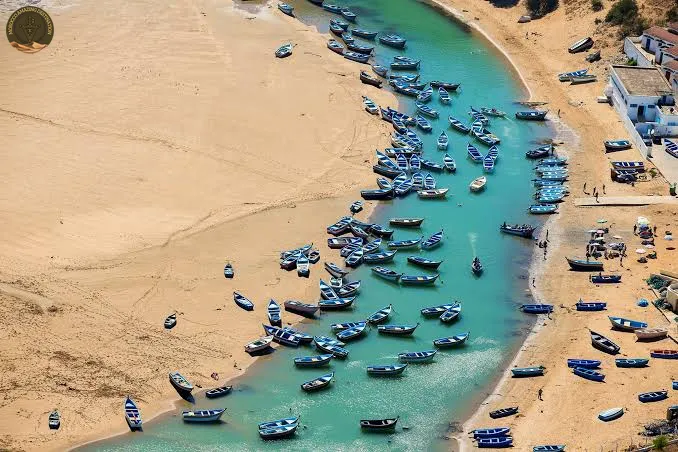
Most travelers who add Merja Zerga to a Morocco itinerary arrive at the wrong hour. The lagoon is tidal: at high water the mudflats that feed tens of thousands of birds sit under the surface and the bay looks empty. Come at low tide, early, in winter, and the water fills with birds.
Plan Merja Zerga birdwatching around the tide and you do not need specialist knowledge to see the birds. This guide covers what the site legally is, when the tide and the season work in your favour, and which species you can honestly expect. It also covers where to watch from and how the lagoon fits a Rabat to Tangier drive.
A Ramsar Lagoon on the East Atlantic Flyway
Merja Zerga lies about 70 km north of Kenitra, in a depression behind the dunes and almost cut off from the Atlantic. A sandstone bar separates it from the ocean and breaks at its northern edge into a channel. Seawater supplies most of the basin, and fresh water arrives from the Oued Drader. Average depth is 1.5 m, and roughly 30 per cent is open water.
A ministerial decree made it a permanent biological reserve. Morocco listed it as a Ramsar wetland of international importance under site number 206. The site is also an Important Bird Area and a Key Biodiversity Area. Travel writing often calls it a national park; it is not one.
The lagoon sits on the East Atlantic Flyway, the migration corridor that links breeding grounds in Arctic and northern Europe with wintering sites in West Africa. Merja Zerga takes its alternative name, the Moulay Bousselham lagoon, from the village at its mouth.
Time It Right: Tide First, Season Second
At low tide the mudbanks emerge and feeding starts; at high tide the same birds raft up and roost out of sight of land. Build the visit around a low tide in the first hours of daylight.
Winter is the peak. Between October and March the lagoon holds 15,000 to 30,000 ducks across 11 species and similar numbers of coot. Wader counts run from 50,000 to 100,000 across 19 regular species, with 1,000 to 2,000 greater flamingos. Those counts make Merja Zerga the most important waterbird wetland on Morocco’s Atlantic coast.
- Winter, from October to March, brings the counts above and the largest flamingo groups.
- March and September to October are for passage birds in breeding plumage.
- Summer leaves the residents, and the beach takes over as the main attraction.
The fields keep a parallel calendar. The Loukkos plain between Larache and Moulay Bousselham holds about two-thirds of Morocco’s red-fruit acreage. Winter visitors drive past white plastic strawberry tunnels from October to March, and the national watermelon season runs into September.
The Birds You Can Realistically Expect
Winter brings the longest list, and most of those birds show up without special effort. Dunlin, ringed plover, grey plover, whimbrel, Eurasian curlew, redshank and oystercatcher work the mud, while spoonbill, Audouin’s gull and marsh harrier are regular. Grey heron, white stork, marbled teal and red-knobbed coot are credible too.
The reserve’s emblem is the marsh owl, an endemic Moroccan subspecies that is critically endangered nationally and holds on mainly here. A survey from the early 1990s put the local population at 20 to 30 pairs, a figure that is indicative rather than current. Disturbance is a documented threat, so roost visits go through local guides.
The slender-billed curlew has not been confirmed at the site since the 1990s, and no honest guide can offer it as a sighting. Operator pages sometimes quote 10,000 or more flamingos, while conservation counts sit at 1,000 to 2,000.
Anyone planning birdwatching in Morocco should work from the conservation counts. For the rest of the country’s wildlife, our guide to what animals live in Morocco covers the ground.
Boat, Shore or Dune: Three Ways to Watch
There are no hides, no visitor centre and no circular trail, so where you stand decides what you see. Local fishermen run open boats from the small port, usually for one to two hours at dawn or dusk. Quoted rates vary widely, from about 150 to 300 MAD per boat, negotiated before departure. Binoculars are not available to hire locally.
- A boat gets closest to the flocks and to the channel where the lagoon meets the sea.
- The village terrace and the southern shore road, the 2301, let you scan the mudflats without booking anything.
- The dune bar between lagoon and ocean is open to walkers, and the ocean side is a long empty surf beach with real currents.
Etiquette is where a local guide matters most. Stay on the tracks and in the vehicle at the mudflat edge, keep voices and engines low, and never approach a roost or a nest.
Getting There and Where It Fits in Your Route
Access is by road. Rabat is 107 km away, about 1h30, and Kenitra 70 to 75 km, about an hour. Asilah is 69 km, Larache 37 km and Fes 157 km. Tangier is 128 km, about 1h30 to 1h45. Trains stop at Kenitra and Ksar el-Kebir, not at the village, and a grand taxi covers the last leg.
The high-speed Al Boraq line puts Tangier about 50 minutes from Kenitra, but Kenitra is the railhead, not the destination. Rabat-Salé airport is about 1h30 away and Tangier about 2h30, so an overnight beats a day trip from Tangier. The natural fit is a Rabat to Asilah driving day.
A Morocco birdwatching tour that stops here needs half a day. One night in the village is enough for a dawn boat and a late scan from the terrace. The non-birding half of a group gets grilled fish and the empty beach.
Day 7 of the 8-Day Tour from Tangier: Chefchaouen, Fes, Merzouga Desert & Imperial Cities follows the Rabat to Asilah road. Day 14 of the 15-Day Grand Cultural Tour from Tangier gives you Rabat and Asilah.
We can customize a tour to match your needs - design your perfect itinerary
If you found this helpful, add us as your preferred source on Google.
Frequently Asked Questions
Is Merja Zerga a national park?
No. It is a permanent biological reserve, created by ministerial decree in 1978, and Morocco designated it as Ramsar site number 206 in 1980. It is also an Important Bird Area and a Key Biodiversity Area, but the national park label in travel writing is wrong.
When is the best time for Merja Zerga birdwatching?
October to March for numbers, with 15,000 to 30,000 ducks and 50,000 to 100,000 waders. March and September to October bring passage birds. Whatever the month, plan around low tide and the first hours of daylight.
Can you still see the slender-billed curlew at Merja Zerga?
No. The last confirmed record at the site was in 1995. Be sceptical of any operator that lists it as a possible sighting, and treat the marsh owl as the species that genuinely needs care.
How do you get to Merja Zerga and Moulay Bousselham?
By road. Rabat is 107 km away, Kenitra 70 to 75 km, Asilah 69 km and Tangier 128 km. Trains stop at Kenitra and Ksar el-Kebir, not at the village, so the last leg is a grand taxi or a private car.
Ready for an Adventure?
Have questions? Feel free to contact us using the form below. We're here to help!