
· Travel · 5 min read
Moroccan Mint Tea Ceremony: Brew, Pour and Three Glasses
The Moroccan mint tea ceremony step by step: gunpowder tea, the rinse pour, the high pour, three glasses and how to accept one politely.
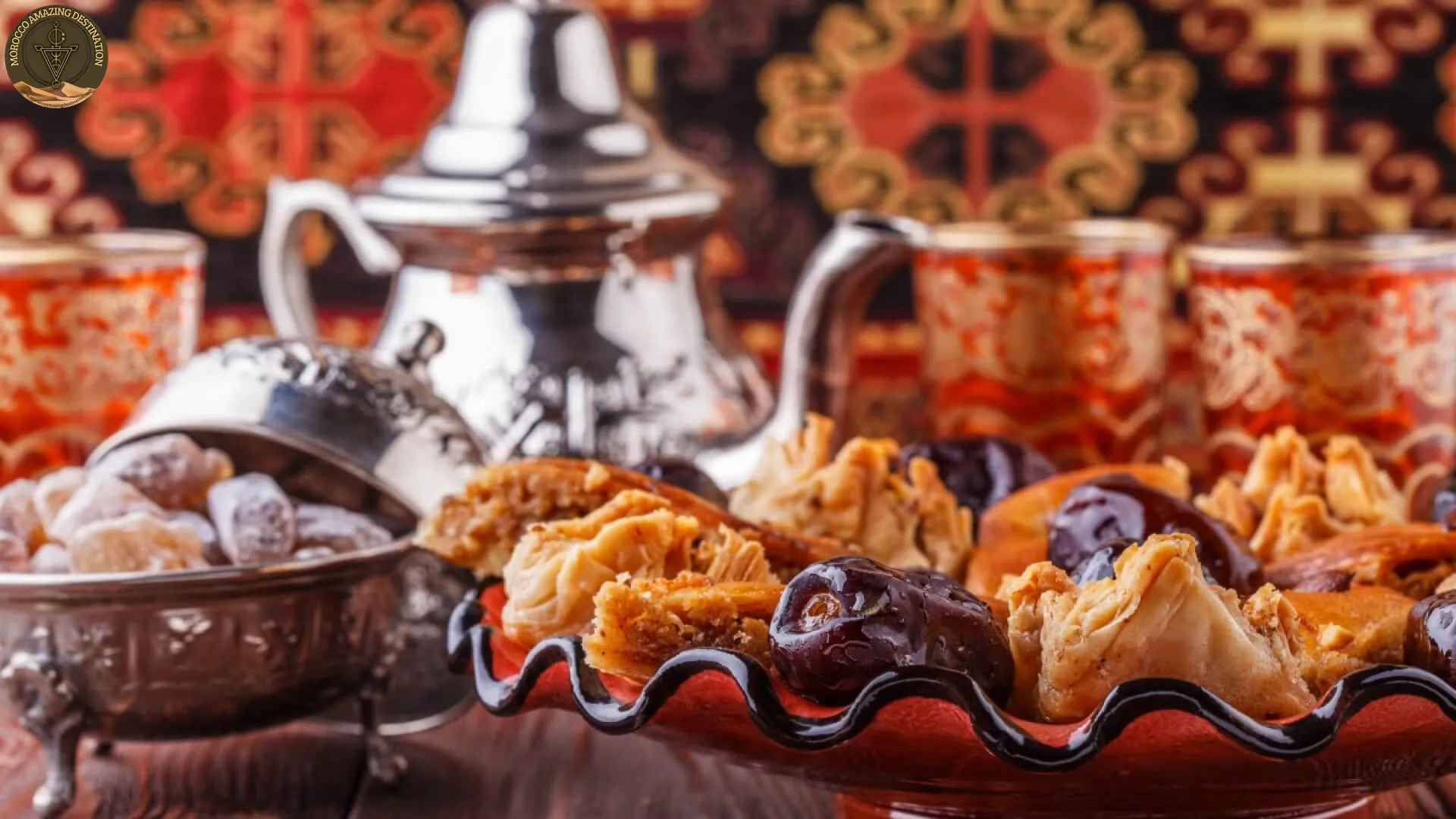
Somewhere between the first phone call and the last plate of olives, someone reaches for a metal pot with a long curved spout. The Moroccan mint tea ceremony looks effortless, and it follows a sequence that barely changes: tea, mint, sugar, a short rinse, a high pour, three small glasses.
It comes down to the kit, the brew, the pour, who takes the pot, and how the recipe shifts from the Rif to the Sahara. For addresses, our city tea house guides cover where to sit and what to order.
What the Moroccan Mint Tea Ceremony Involves
The kit is modest and mostly metal. A teapot with a curved spout and domed lid sits on a round tray, the siniyya, next to a box of dry tea, sugar and fresh mint. The glasses are small tumblers, often with gilt rims, and clear enough to show the colour of the brew.
- The pot’s long spout lets the tea fall in a thin stream instead of splashing.
- The siniyya tray carries the pot, the glasses and the tea box in one lift.
- The gold band on each glass marks the level to stop at, roughly halfway.
A glass filled to the brim cannot be held by the rim without burning your fingers, so the band tells the host when to stop pouring. Trays and pots are hammered and engraved objects in their own right, and the trade belongs to a Fès metalwork tradition centred on Place Seffarine. Morocco is the world’s largest importer of Chinese green tea, and gunpowder accounts for around 70 percent of the tea sold in the country.
Brewing It: Gunpowder, Mint and the Rinse Pour
Anyone who wants to learn how to brew Moroccan mint tea can follow four moves, in this order.
- The pot is scalded with boiling water, then gunpowder tea goes in at about one heaped teaspoon per person plus one for the pot.
- A splash of boiling water is swirled round the leaves and thrown away after under a minute, which takes the harsh edge off them.
- A generous bunch of fresh spearmint and the sugar go in, the pot is filled with boiling water and left for two to three minutes, sometimes brought back to the boil.
- The tea is mixed by pouring a glass and returning it to the pot two or three times, then tasted and corrected.
Nothing is stirred with a spoon, and milk is never added. The pot is corrected before anyone is served. Mint for the pot often comes from around Meknès.
Pouring from Height: Foam, Three Glasses and Desert Hospitality
The pot goes up, the arm extends, and the tea falls in a thin stream. The drop aerates the liquid, cools it slightly and builds the fine foam that marks a well-made pot.
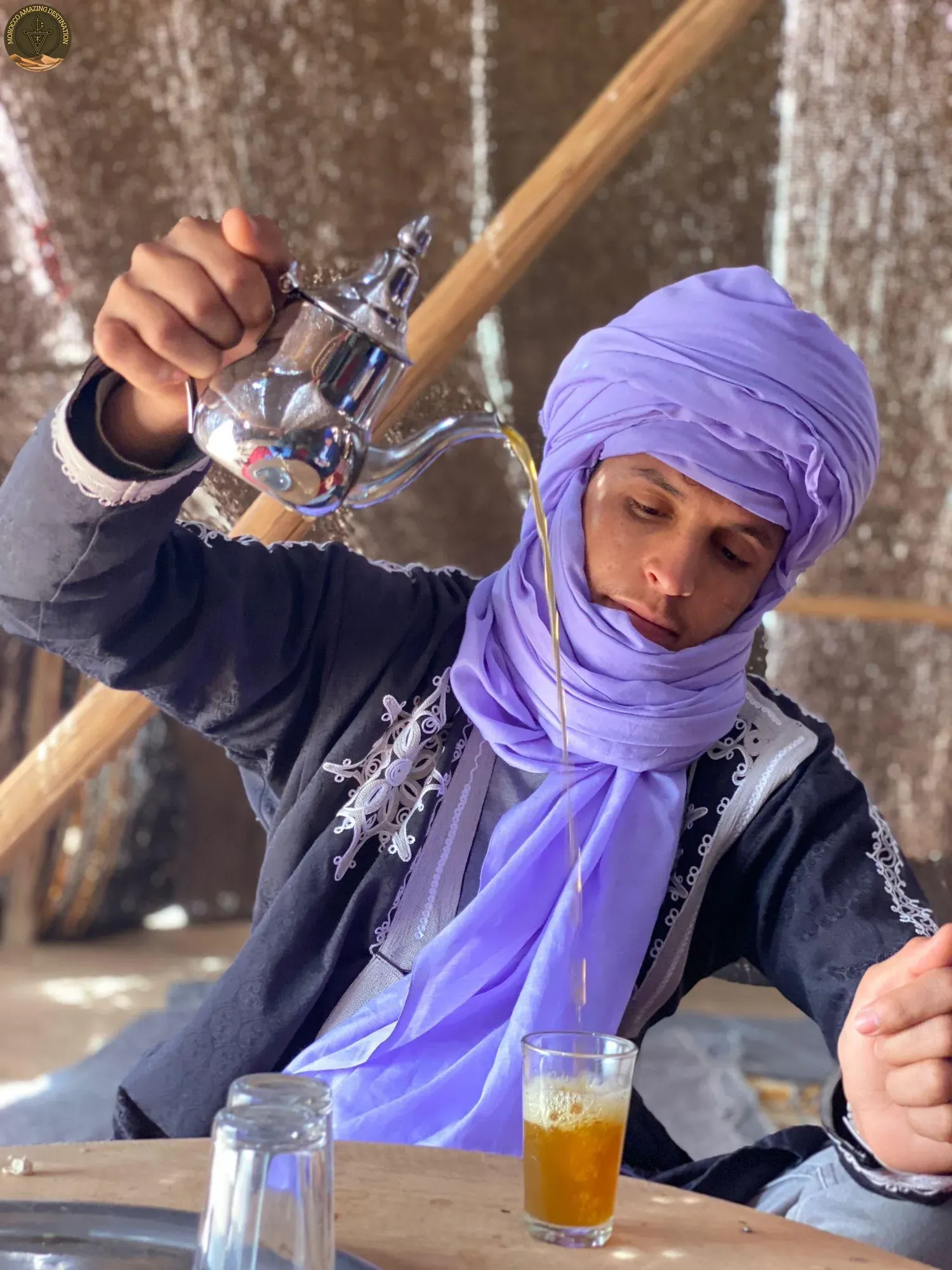
The leaves stay in the pot for the whole session, so the first glass is lighter and the last is stronger. Three glasses is the norm, and more is fine. Tea is drunk hot, in small sips, without blowing on the surface.
In a desert camp the same pot rises above a circle of glasses inside a tent, and the tea arrives with the same foam.
Who Pours, and How to Accept the Glass
Moroccan tea etiquette is mostly a matter of accepting what is offered. Take the glass with your right hand, drink while it is hot, and do not refuse. Serving tea made before the guest arrived, or out of their sight, is the worse of the two mistakes.
Who pours varies by household. Traditionally the host or the senior man of the house takes the pot. In many modern homes whoever is hosting pours, women included, and men more often take over at large gatherings. At weddings a mature woman known for her tea, sometimes a specialist brought in for the day, may be chosen in advance, with sandalwood burning and a few drops of rose or orange-blossom water sprinkled over guests.
Tea comes before business, which is why a merchant in the souk offers a glass to someone who is only browsing. Visitors may hear the drink called Berber whiskey; the nickname is a visitor’s term rather than a local name. Accepting the offer commits you to nothing.
From Sweet North to Bitter Sahara
Sugar is what changes most by region. The north takes its tea sweeter; the south leans leaner and more bitter, with a longer infusion. Fès brews a lighter cup, and Amazigh households in the High Atlas add several herbs for something stronger.
Winter changes the recipe. When mint is scarce or expensive, shiba, tree wormwood, brings a pronounced bitterness, and lwiza, lemon verbena, adds a lemon note; sage, marjoram and thyme also appear. Orange-blossom water is common in spring, some places add pine nuts, and saffron turns up occasionally in the far south.
Saharan and Tuareg tea is a separate style: Chun Mee rather than gunpowder, little or no mint, long boiling, and a very strong cup.
For the addresses and the terraces, see our guides to tea houses in Marrakech and tea houses in Fes. Both of our Sahara routes build tea into the day: the 10-Day Morocco Tour from Marrakech stops in the medina and at the desert camp, and the 8-Day Tour from Tangier to Merzouga and Imperial Cities shares a glass with nomad families on day three.
We can customize a tour to match your needs - design your perfect itinerary.
If you found this helpful, add us as your preferred source on Google.
Frequently Asked Questions
What is the Moroccan mint tea ceremony?
It is the sequence a host follows to make and serve gunpowder green tea with fresh mint and sugar: scald the pot, rinse the leaves, steep, then pour from height into small glasses, usually three of them.
How do you brew Moroccan mint tea?
Scald the pot, add about one heaped teaspoon of gunpowder tea per person plus one for the pot, rinse with boiling water and discard that water, then add a generous bunch of spearmint and sugar, fill with boiling water and steep for two to three minutes.
Why is Moroccan tea poured from high?
The fall aerates the tea and builds the fine foam that signals a well-made pot. It also cools the liquid slightly, so the glass can be drunk soon after it is filled.
Is it rude to refuse mint tea in Morocco?
Yes. Refusing a glass reads as a slight, and serving tea made before the guest arrived is worse. In a souk, accepting a merchant's offer is polite and does not oblige you to buy anything.
Ready for an Adventure?
Have questions? Feel free to contact us using the form below. We're here to help!