
· Travel · 5 min read
Accessible Travel in Morocco: Wheelchair-Friendly Guide
Accessible travel in Morocco works with the right bases. Flat cities, adapted hotels and private transport, plus honest limits.
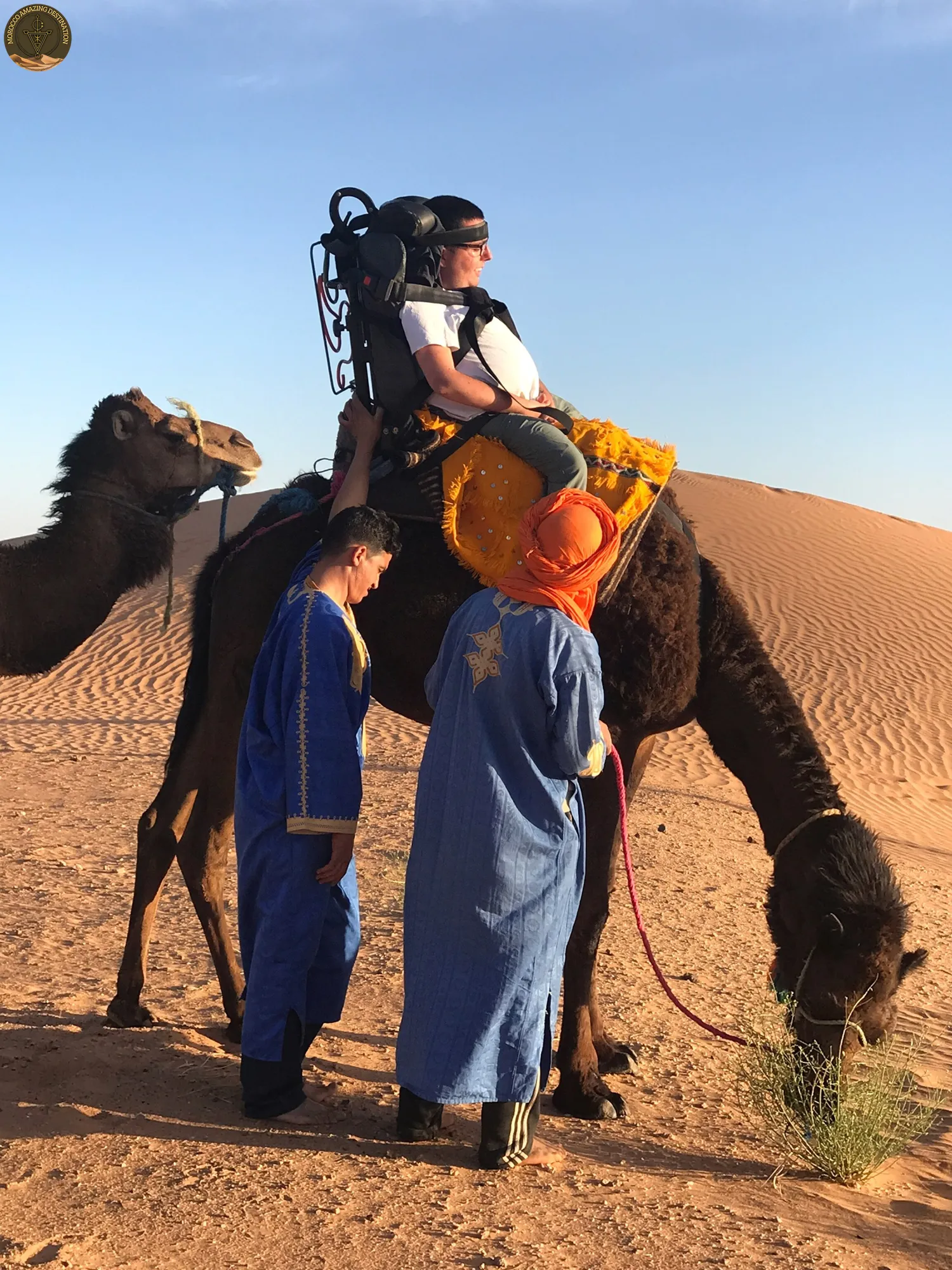
If you use a wheelchair, accessible travel Morocco visitors trust starts with choosing flat ground. Morocco changes street by street, so the city you base in matters more than the country as a whole. The honest answer is that wheelchair accessible Morocco exists in modern districts, while old medinas stay difficult.
In this guide, we break down the easiest bases, the big cities, and the realistic limits. We also cover hotels, transport, and how to visit them on a private accessible tour.
Start with the easiest bases: Agadir and Rabat
Agadir is the simplest place to begin. The city was rebuilt on a modern grid, so boulevards stay wide and level and the seafront promenade runs for kilometres. Many beachfront hotels were built with lifts, wider doors and adapted bathrooms, and the beach area has easier access points than most Moroccan coasts.
Rabat works well as a second easy base. Administrative avenues are broad, the tram network gives low-floor boarding on modern lines, and large open squares need little climbing. The Mausoleum plaza and the corniche area suit slow rolling days, with parking and cafes close by.
- Agadir seafront: flat promenade, resort hotels with lifts, and wider market aisles in Souk El Had.
- Rabat centre: low-floor trams, broad Ville Nouvelle streets, and level squares around major monuments.
- What to skip: the slopes of Kasbah des Oudaias and older medina lanes in both cities.
Marrakech and Casablanca without the hard parts
Marrakech splits into two realities. The Gueliz and Hivernage districts are flat, with modern hotels, wide pavements and malls that follow familiar access standards. The medina is a different story, with cobbles, crowds, narrow passages and mopeds, so short guided sections work better than full-day walking.
Casablanca follows the same pattern on a larger scale. The Hassan II Mosque esplanade is vast, paved and level, which makes the exterior visit comfortable. Central boulevards and the Ain Diab corniche roll easily, while the old medina and market alleys stay tight and uneven.
- Marrakech easy picks: Jemaa el-Fnaa edges when crowds are thin, Majorelle Garden paths with partial access, and new-town restaurants.
- Casablanca easy picks: mosque esplanade, Habous district edges by car, and the flat corniche walk.
- Plan around crowds: early mornings cut both heat and pushing through packed lanes.
Where to be realistic: Fes, Chefchaouen and the Sahara
Fes el-Bali is the hardest major stop for Morocco wheelchair access. The old city is car-free, steep in places, and crossed by steps and uneven lanes that no vehicle can reach. Travellers who love history can still enjoy Fes from the Ville Nouvelle and the panoramic viewpoints. Short flat sections with a guide work well, without entering the deep medina.
Chefchaouen sits on a hillside, so its famous blue lanes climb and step upward. Essaouira is kinder, with one long planned main street that stays fairly level, though side lanes turn cobbled. For the desert, Agafay near Marrakech gives firm stone ground reachable by vehicle, while Merzouga sand needs case-by-case confirmation.
- Fes: use viewpoints, crafts quarters by car, and a short guided flat section only.
- Chefchaouen: enjoy lower squares and the main lane, and skip the upper climbs.
- Desert choice: Agafay by vehicle is simplest; ask us to verify any Merzouga camp first.
Stays, transport and day-to-day logistics
Large modern hotels give the best odds for an adapted room. Look for a lift, step-free entry, wider doors, a roll-in shower with grab bars, and space beside the bed for transfers. Most riads cannot match this, since they stack rooms around stairs with no lift. Only accept a riad when the ground-floor room is confirmed with photos.
City buses and shared grand taxis do not work for wheelchairs. A private adapted vehicle is the standard answer, with a ramp or lift, tie-downs and room for your chair dimensions. Trams and the Al Boraq high-speed line have step-free features, but assistance needs pre-booking. Stations vary, so treat them as extras rather than the backbone of the trip.
- Hotel checklist: lift, ground-floor option, bathroom photos, bedside space, and distance from vehicle drop.
- Vehicle checklist: ramp or lift type, tie-down points, folded and unfolded chair size, and luggage room.
- Airport routine: free assistance on many routes when requested at booking and confirmed 48 hours ahead, with batteries and medicines in cabin bags.
Travellers who also want a slower rhythm may like our comfort-first guide for travellers over 60. It covers pacing, rest stops and low-stairs stays from a different angle.
How to plan a private accessible itinerary
Build the route around two or three flat bases instead of moving every night. Fewer hotel changes mean fewer transfers, fewer stairs to solve, and more energy for the sights that matter. Keep driving days short, hold one full rest day on longer trips, and let the driver wait near each stop so the chair stays close.
Our 14-Day Morocco Tour from Casablanca adapts well because it spreads the country over two weeks with a private driver throughout. The 8-Day Morocco Tour: Marrakech, Sahara and Essaouira suits a shorter loop. It ends with flat coastal time, plus Agafay as the simpler desert option.
We can customize a tour to match your needs - design your perfect itinerary
If you found this helpful, add us as your preferred source on Google.
Frequently Asked Questions
Is Morocco wheelchair accessible?
Parts of Morocco work well for wheelchair users, mainly modern districts in Agadir, Rabat and Casablanca with flat streets and adapted hotels. Old medinas with steps, cobbles and slopes remain difficult, so base choice and private transport matter most.
Which cities in Morocco are easiest for wheelchair users?
Agadir is the easiest base with its flat layout, seafront promenade and modern hotels. Rabat and the newer parts of Casablanca and Marrakech come next, with wide boulevards and step-free squares. Fes and Chefchaouen are the hardest because of steep lanes and stairs.
Can wheelchair users visit the Sahara desert in Morocco?
A full dune camp in Merzouga needs direct confirmation, since sand and camp layouts vary. The stone desert of Agafay near Marrakech is usually the most realistic desert experience by vehicle, with firm ground and shorter transfers.
What should I confirm with hotels and transport before booking Morocco?
Ask for lift access, step-free entry, wider doors, a roll-in shower with grab bars, and a ground-floor room with photos. For transport, confirm ramp or lift, tie-downs, chair dimensions, and airport assistance booked at least 48 hours ahead.
- accessible-travel-morocco
- wheelchair-accessible-morocco
- morocco-accessible-hotels
- accessible-transport-morocco
- morocco-reduced-mobility
Ready for an Adventure?
Have questions? Feel free to contact us using the form below. We're here to help!