
· Travel · 6 min read
Oualidia Oyster Farms: Which Parks Accept Visitors
Visit the Oualidia oyster farms: how the lagoon parks work, when the season runs, what to eat and how to fit it into the El Jadida to Safi drive.
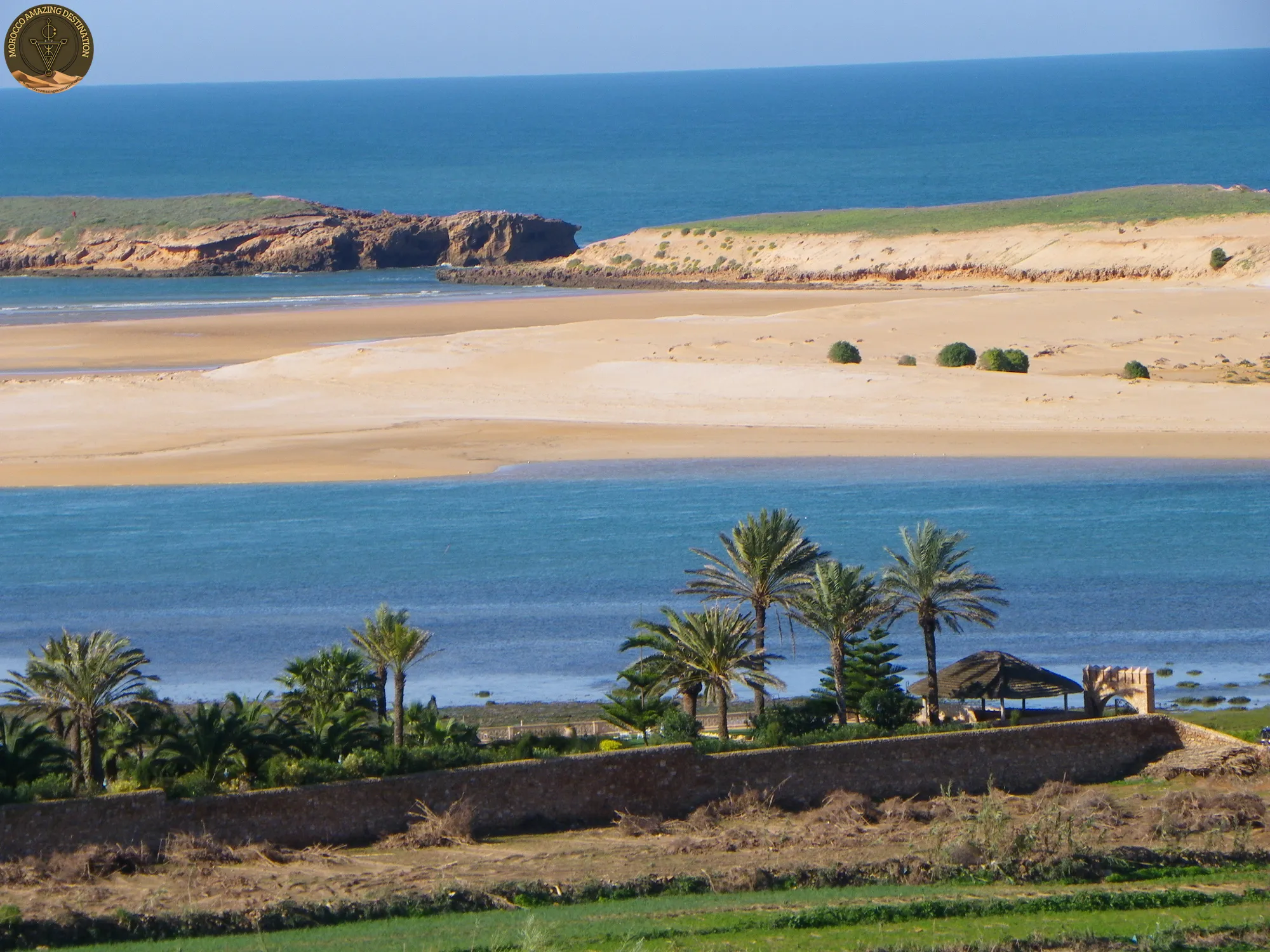
Oualidia’s oysters grow in a shallow tidal lagoon held behind a sandbar, and the work there runs on the tide. At low tide the beds surface as rows of wooden stakes and trestles. At high tide they disappear, and the oysters feed on whatever the Atlantic pushes through the inlets. A visit to the oualidia oyster farms works better planned against a tide table.
This guide covers the three ways to see the farms at work, how the lagoon is farmed, when the season runs, and how the stop fits the El Jadida to Safi drive.
Oualidia Oyster Farms: Which Parks Open to Visitors
Seven oyster concessions work the lagoon, and people refer to them by number. The numbering shifts as operators change, so confirm the current one with your hotel or the boatmen before you set out. Almost every visit falls into one of three patterns.
- The whitewashed shacks along the corniche shuck oysters to order by the unit or the dozen, with lemon and Tabasco, and take no booking.
- A traditional rowboat crosses to the parks in about 15 minutes, where several concessions keep a shore table or pontoon and serve six oysters per person, sometimes with a glass of white wine.
- A handful of farms run proper tours by reservation only, tied to low tide and weather, and include a look at the seawater purification station.
Allow 60 to 90 minutes for the crossing, the walk over wet ground and the tasting. Book ahead in July, August and the December holidays, when Moroccan families fill the lagoon. There is no shade, and staff work in French or Arabic.
How the Lagoon Farms Work: Tides, Trestles and Spat
The lagoon is a tidal basin refreshed twice a day, marked at low water by stakes, ropes and bed frames. Oysters in Oualidia grow in the intertidal zone, where the tide feeds them and low water exposes the beds. Once they reach size, they are graded by calibre, from 0 at the largest to 5 at the smallest, then purified in clean seawater and packed.
Farming began here in the 1950s with stock and know-how from Marennes-Oléron in France, which is why the local oyster is the same Pacific species grown elsewhere in Morocco. One park also traces its origins to 1950 and a founder from the Vendée.
The difference from the national crop is time and water temperature. Dakhla now produces roughly 80 percent of Morocco’s oysters, using sterile triploid stock that reaches market size in about nine months and sells all year. Oualidia’s cooler water stretches growth to as long as 21 months, for a firmer, more iodine-forward oyster in far smaller volumes. That slow growth underpins the claim you will hear, that these are the best oysters in morocco.
Oyster Season in Oualidia: Best Months and Shutdowns
The old rule about months with an R is a rough guide. Local stock is diploid, so warm late-summer water triggers spawning and turns the flesh milky. The oualidia oyster season runs from autumn through spring, when the meat is firm and the flavour clean. Summer is the weakest time to eat them and the busiest time to visit.
Summer brings a separate problem. Moroccan authorities suspend harvesting and sales when biotoxin or bacteria counts spike. A lagoon-wide ban has been ordered before for the classified shellfish zone at Oualidia, after the national fisheries research institute found abnormal marine biotoxin levels, and lifted again once the water cleared. Heavy rain brings a second kind of closure, washing bacteria into the lagoon.
Official consumer advice is simple: buy packaged product carrying sanitary labels from authorised outlets. Shellfish sold loose in bulk comes with no safety guarantee, whatever the seller says on the sand.
Oualidia Seafood: What to Eat With Your Oysters
Order them raw first, with lemon, Tabasco and bread. Restaurants also gratinate them, and the rest of the plate is grilled fish, clams, sea snails and, in season, sea urchins. Recent reports put a dozen at about 60 to 100 MAD at the parks and shacks, and six at 90 to 105 MAD in a park restaurant. Treat any figure as a reference point, because calibre and season move it.
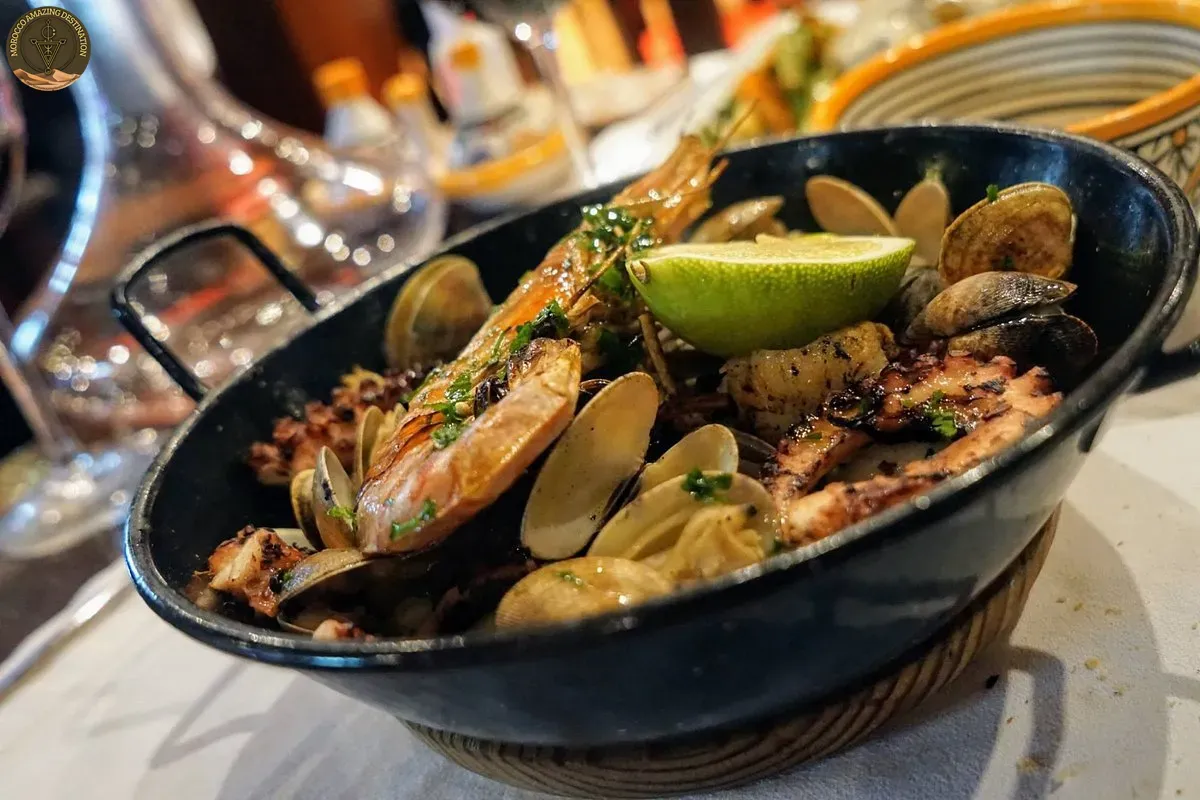
Eat where the oysters are opened in front of you, and choose licensed parks and established restaurants over a cooler on the sand. Anyone pregnant, living with a liver condition or immunocompromised should avoid raw shellfish altogether.
- Skip shellfish in the days after heavy rain, when runoff can raise bacteria in the lagoon.
- Look for packaged product with sanitary labels, which is what the authorities advise buying.
- Ask for them gratinated or grilled if raw shellfish gives you pause.
An Oyster Stop on the El Jadida to Safi Drive
Oualidia sits between El Jadida, 75 to 85 km north and about 1 h 15 to 1 h 30 away, and Safi, 60 to 68 km south and roughly an hour beyond that. The A1 motorway now has an Oualidia interchange, so you can leave the autoroute directly instead of the slower, prettier coast road. From Casablanca allow 2 to 2.5 hours, and from Marrakech 2.5 to 3.5 hours.
A farm stop fits a half-day without strain. Arrive about an hour before low tide, so the beds are already emerging when you reach the shore. Cross to a park, walk the rows, taste six oysters shucked in front of you, then eat a fish lunch on the corniche before you drive on. Add an hour for the lagoon beach or the kasbah viewpoint.
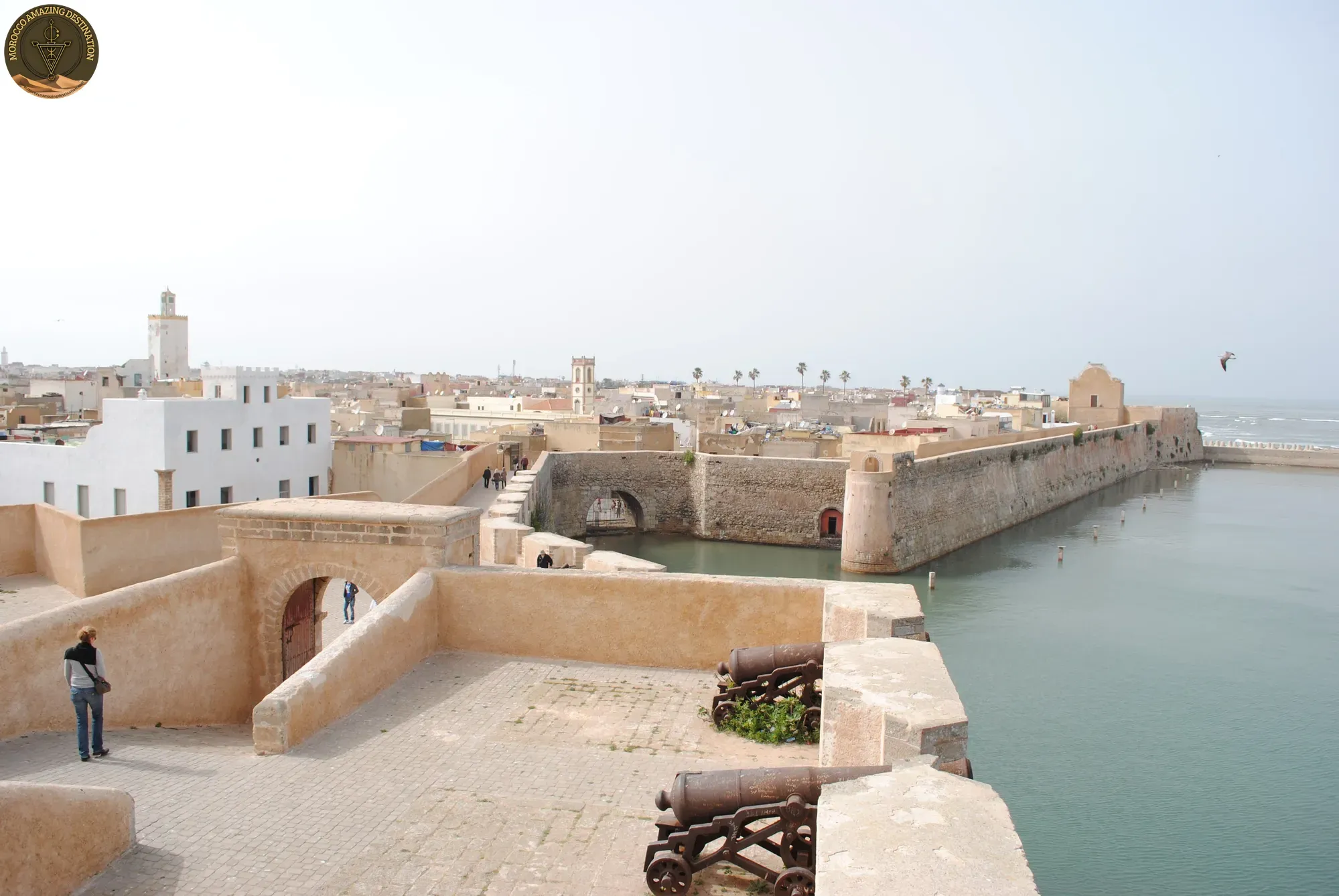
If you are breaking the journey, the wider Oualidia holidays guide covers the lagoon, the beaches and where to sleep. El Jadida’s UNESCO-listed Portuguese city, Mazagan, is worth an hour before you head south.
Check the tide before you leave the motorway, book ahead in busy weeks, and treat the farm visit as the reason to break the coastal drive.
The 15-Day Grand Cultural Tour: Explore Morocco from Tangier already runs its Atlantic leg through Safi and El Jadida, so an oyster lunch drops into the day without rerouting.
We can customize a tour to match your needs - design your perfect itinerary
If you found this helpful, add us as your preferred source on Google.
Frequently Asked Questions
Can visitors tour the oyster farms in Oualidia?
Yes, in three ways. Shacks on the village corniche sell and shuck oysters without any booking, rowboats cross to the parks where some concessions serve tastings on a shore table, and a few farms take visitors on reservation-only tours that depend on low tide and weather.
When is the oyster season in Oualidia?
Autumn through spring, when cooler water keeps the flesh firm. Local oysters spawn in warm late-summer water and turn milky, and Moroccan authorities can suspend harvesting across the lagoon when biotoxin or bacteria levels rise.
How much do oysters cost in Oualidia?
Recent reports put a dozen at about 60 to 100 MAD at the parks and corniche shacks, and six oysters at 90 to 105 MAD in a park restaurant. Prices move with calibre and season, so treat them as reference points.
Is it safe to eat oysters in Oualidia?
Buy from licensed parks and established restaurants, eat where the oysters are shucked in front of you, and follow the official advice to choose packaged product with sanitary labels. Pregnant travellers and anyone immunocompromised should avoid raw shellfish.
Ready for an Adventure?
Have questions? Feel free to contact us using the form below. We're here to help!