· Travel · 6 min read
Overnight Camel Trek Merzouga: Complete Desert Camp Guide
Discover the overnight camel trek Merzouga experience — sunset ride, Berber camp night, sunrise return and tips for Erg Chebbi.
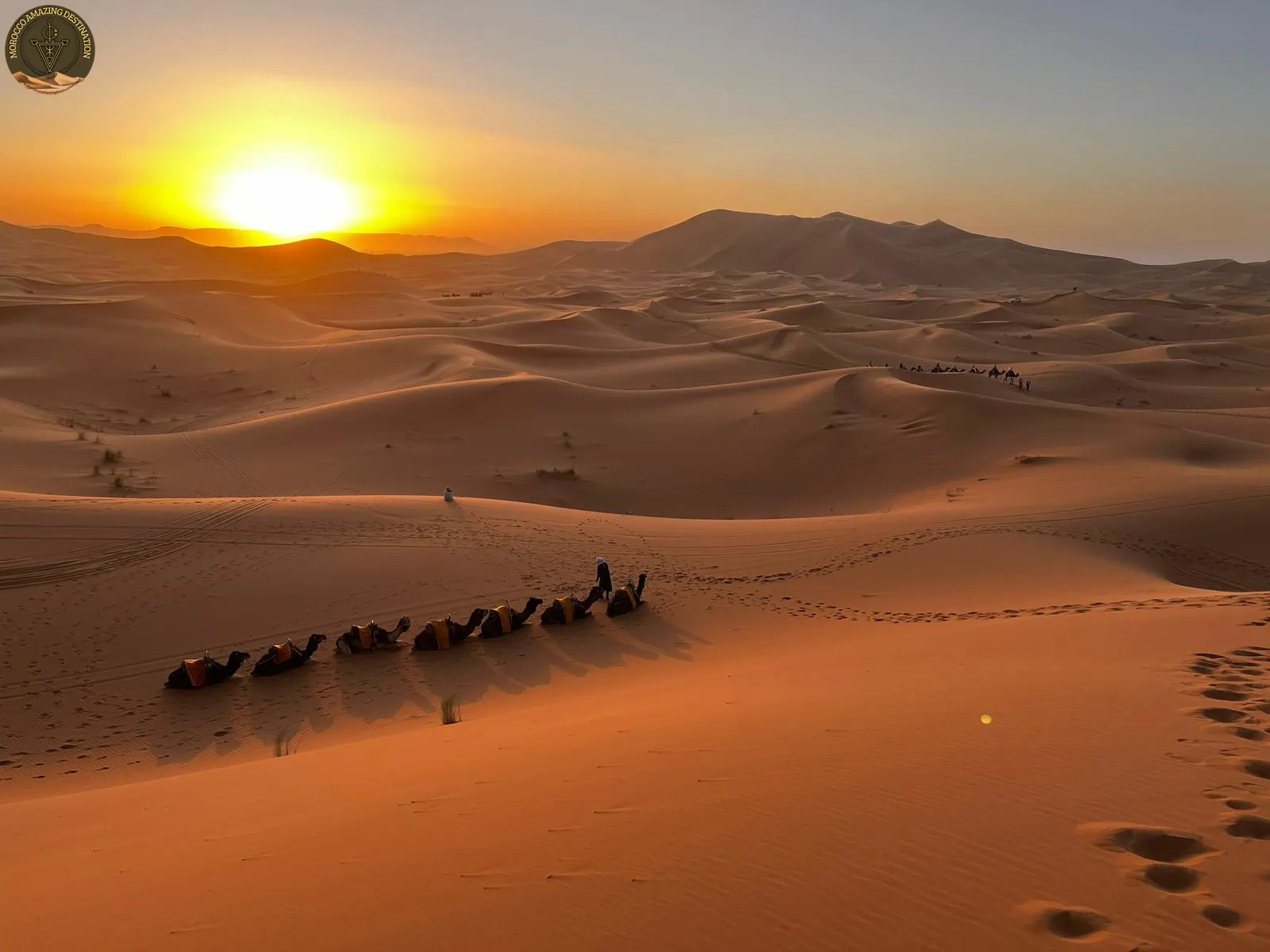
The dunes glow gold as your caravan sets off into silence. An overnight camel trek Merzouga is the classic way to sleep in the Sahara without roughing it — a short, guided ride at sunset, a warm Berber camp under bright stars, and a sunrise return over Erg Chebbi.
In this guide, we will break down how the trek flows, what your desert camp night feels like, and how to plan timing, packing and transport with ease.
What an Overnight Camel Trek in Merzouga Really Is
An overnight camel trek Merzouga is a one-night experience that connects the village of Merzouga with a camp tucked among the dunes of Erg Chebbi. The Erg stretches about 28 km long and 5 to 7 km wide, with dunes rising up to around 150 m. It feels remote, yet it sits just beyond the village.
The format is simple and seamless. You leave luggage and your vehicle in secure storage at a Merzouga hotel, then depart about two hours before sunset with one camel per person led by a local guide. The pace is slow, about 4 to 5 km/h, with a gentle lurch as the camel stands. Most guests choose one night. A second night makes sense if you want a full free day for slow wandering and deeper quiet. Many guests fit the night into a longer private route between Marrakech and Fes, using Merzouga as the Sahara highlight.
What is typically included:
- Camel and guide: one dromedary per person, led on foot
- Camp stay: private tent, dinner, breakfast, mint tea and water
- Evening ritual: campfire, Berber drums, stargazing
- Logistics: secure parking and luggage storage in Merzouga
The Sunset Ride Across the Erg Chebbi Dunes
The ride itself takes 1 to 1.5 hours, with a pause on a high dune for photos as the light turns pink and gold. Sandboards are often available for a few playful slides. Guides handle the animals and keep the line steady, so you can relax and look around.
This is also where a merzouga overnight camel trek shows its charm. There is no rush, no engine noise, just soft steps on sand and wide horizons. Guides often help with photos and point out the best crest for golden light. You will notice how quickly the air cools once the sun dips.
Highlights on the way:
- Sunset pause: a high crest with panoramic views over the Erg
- Photo moments: long shadows, rippled sand, distant hamadas
- Sandboarding: short runs that are easy to try, even for beginners
You can also choose a merzouga desert camp camel trek by 4x4 if you travel with small children, have mobility concerns, or simply prefer not to ride. The camp experience is identical.
Inside the Camp: Standard vs Luxury for Your Desert Night
Evening at camp is calm and communal. Dinner is served in a shared tent — often tagine or grilled meats, salads, bread and mint tea — followed by drums around the fire and some of the clearest stargazing in Morocco. Tents are private whether you pick standard or luxury.
The difference is comfort and location. A standard camp offers cozy tents with shared toilets and thick blankets for chilly nights. A luxury camp adds ensuite toilets, hot showers, real beds, winter heating and a deeper position among the dunes for more silence and darker skies. Both feel hand-picked and well run when organized with a local team.
Choosing your camp:
- Standard: great value, shared facilities, warm blankets, authentic mood
- Luxury: ensuite, hot shower, proper beds, deeper dunes, extra quiet
- Location: deeper camps are calmer and better for stars; nearer camps save time
A camel trek merzouga overnight stay suits many travelers, but expectations help. There is limited power — usually solar with a few sockets — and little to no phone signal. That is part of the appeal. Tea is served often, blankets are ready in your tent, and staff keep the fire going. Bring layers, as nights can feel very cold, especially in winter.
Sunrise, Breakfast and the Ride Back to Merzouga
Mornings start early. You wake before dawn for sunrise over the dunes, then have breakfast at camp — bread, eggs, jams, coffee and tea. The return to Merzouga takes about one hour by camel, or you can request a 4x4 transfer back while your camel caravan follows.
Back in the village you collect luggage, freshen up with a quick shower at the hotel, and continue your route. Many travelers link the night with a road trip. From Marrakech you cross the High Atlas via the Tizi n’Tichka pass, pause at the UNESCO World Heritage site of Ait Benhaddou, then drive through Dades and Todra gorges before reaching Merzouga — about 560 km in 9 to 10 hours split over two days. From Fes the drive follows the Ziz Valley and takes about 7 to 8 hours.
Morning flow at a glance:
- Sunrise watch: step onto a nearby crest in the cool air
- Breakfast: simple, warm and served in the dining tent
- Return: camel ride back or optional 4x4, then hotel showers
When to Go, What to Pack and How to Reach the Dunes
The most comfortable window for this experience is from October to April, with March to May and September to November as a sweet spot for warm days and cool nights. Summer is very hot by day; winter nights can drop to around 0 to 8°C. Shoulder seasons balance light, temperature and quiet.
Pack light for one night and bring layers. A small backpack is enough — your main luggage stays in Merzouga. Desert light is strong and sand gets everywhere, so simple protection makes a big difference.
Packing essentials:
- Layers: warm fleece or down jacket for night and sunrise
- Sand protection: scarf, sunglasses, small headlamp for camp paths
- Power and comfort: power bank, lip balm, reusable water bottle
Wondering about animal welfare? Reputable local handlers keep treks short, limit loads to one guest per camel, and rest animals regularly. They use proper saddles and water stops. If you have concerns, ask about rest schedules and load limits, or choose the 4x4 option — the camp night, meals and stargazing remain the same.
Ready to add the Sahara to your route without hassle? The overnight trek fits neatly into private, tailor-made itineraries that handle driving, hand-picked stays and timing so you arrive for that perfect sunset. Your private driver manages the road, so you can focus on the dunes.
For a seamless road trip from the south, consider the 3-Day Trip from Marrakech to Merzouga, which includes the High Atlas, Ait Benhaddou and your desert camp night. Coming from the north, the 2-Day Desert Tour from Fes to Merzouga is the quickest way to reach Erg Chebbi with a private driver.
We can customize a tour to match your needs — design your perfect itinerary
If you found this helpful, add us as your preferred source on Google.
Frequently Asked Questions
How long is the camel ride to the camp?
About 1 to 1.5 hours at a gentle 4-5 km/h pace, with a pause on a high dune for sunset. The return the next morning takes around one hour. A 4x4 transfer is also available if you prefer not to ride.
What is included and not included in the overnight stay?
Typically included are one camel per person with guide, overnight in a private tent, dinner and breakfast, mint tea, bottled water, campfire with drums and stargazing. Not included are lunch, drinks beyond tea and water, tips, and entrance fees on the road to Merzouga.
Standard vs luxury camp — which should I choose?
Standard camps have comfortable tents with shared facilities and warm blankets. Luxury camps offer ensuite toilets, hot showers, proper beds, heating in winter and deeper dune locations for extra quiet and darker skies.
Can I do it without riding a camel and is it family-friendly?
Yes. Families and guests with mobility concerns can reach the camp by 4x4 and enjoy the same dinner, campfire and sunrise. Children can share a camel with an adult or ride in the vehicle.
Ready for an Adventure?
Have questions? Feel free to contact us using the form below. We're here to help!