· Travel · 6 min read
Spanish Influence in Morocco: What to See in the North
Spanish still fills the streets of Tangier and Tetouan. See where to hear it, taste it and walk it on a short northern loop.
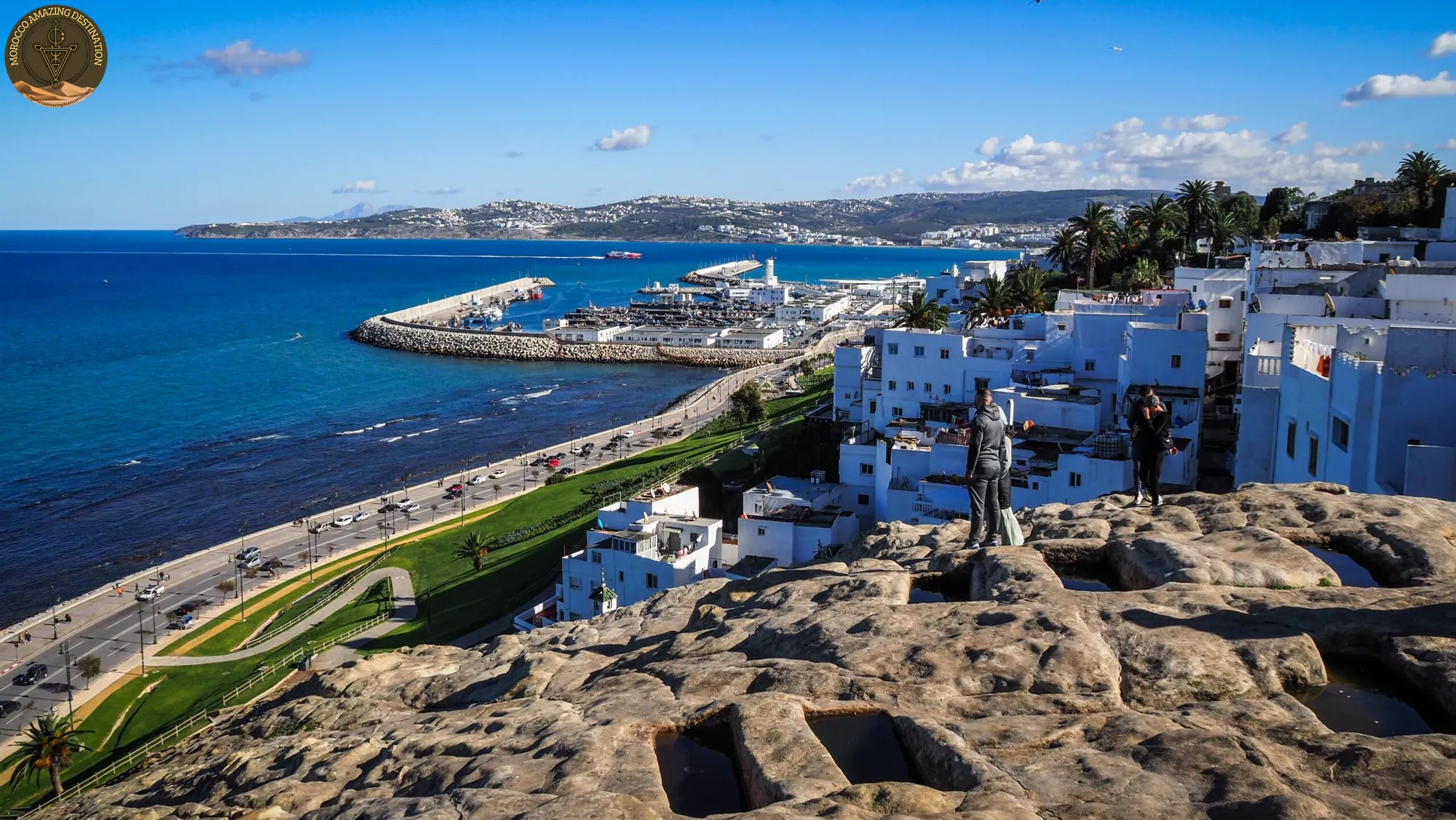
Order a coffee on a Tangier square and the waiter may answer in Spanish before you finish pointing at the menu. That small exchange sums up the spanish influence in morocco: you meet it in the street, on the plate and in the music, not only in museums.
In this guide, we will break down where to notice it first, what to taste, what to listen for, and how you can visit it all on a short northern loop.
Where you notice it first - street life in Tangier and Tetouan
Start in Tangier, where Spanish works as a daily second language across the north. You hear it in the Grand Socco, in taxis and in small shops near the port. Signs and menus often mix Spanish words with Arabic, and visitors manage fine with a few Spanish phrases. Ferries reach Spain in about an hour, so weekend visitors and family ties keep the exchange alive.
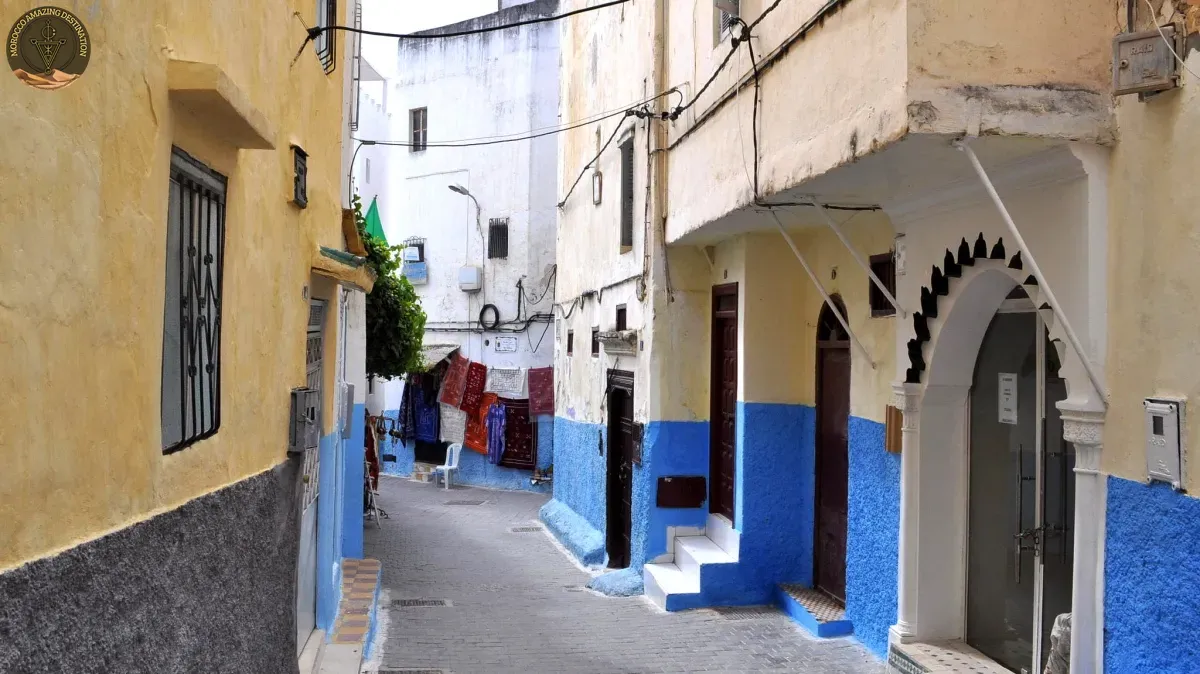
Tetouan leans further into Spanish habits. In the evening the wide avenues fill with the paseo, the slow stroll before dinner, and terrace cafes stay busy late. Families walk, friends meet for coffee, and much of the city seems to spend the evening outside.
Coffee says a lot too. In tea country, the north keeps a serious cafe habit, with strong cups, glass counters of pastries and football on the screen. Sit down mid-morning and you hear the same mix of Spanish and Arabic at every nearby table.
Words and sounds - Spanish on the street and Andalusian music
Daily Spanish is only the surface. Northern Jewish families once spoke Haketia, a Spanish-based tongue with Arabic and Hebrew threads, and its proverbs and songs still appear in cultural programs. Market Spanish itself carries old words that have faded across the strait. Taxi drivers switch between languages without thinking, and that easy switching shows how close the two shores feel here.
The deeper sound is al-Ala, the Andalusi classical music built on long nuba suites. Tetouan keeps one of the main schools of this tradition, with orchestras and a conservatory passing the repertoire to young players. Only part of the old cycle of suites survives, which makes a live concert worth planning around. Ask a local guide what plays during your stay, since programs follow the season.
If you catch a concert, expect oud, violin, percussion and unhurried singing. Songs move in slow cycles, and the audience listens the way people listen to classical music elsewhere.
What to taste - churros, bocadillos and pastilla
Morning tables show spanish food in morocco at its clearest. Churros with thick chocolate sit on northern breakfast menus, and bocadillo sandwiches fill corner bars all day. Maakouda potato cakes in crusty bread recall the tortilla, and plaza coffee culture runs strong even in tea country.
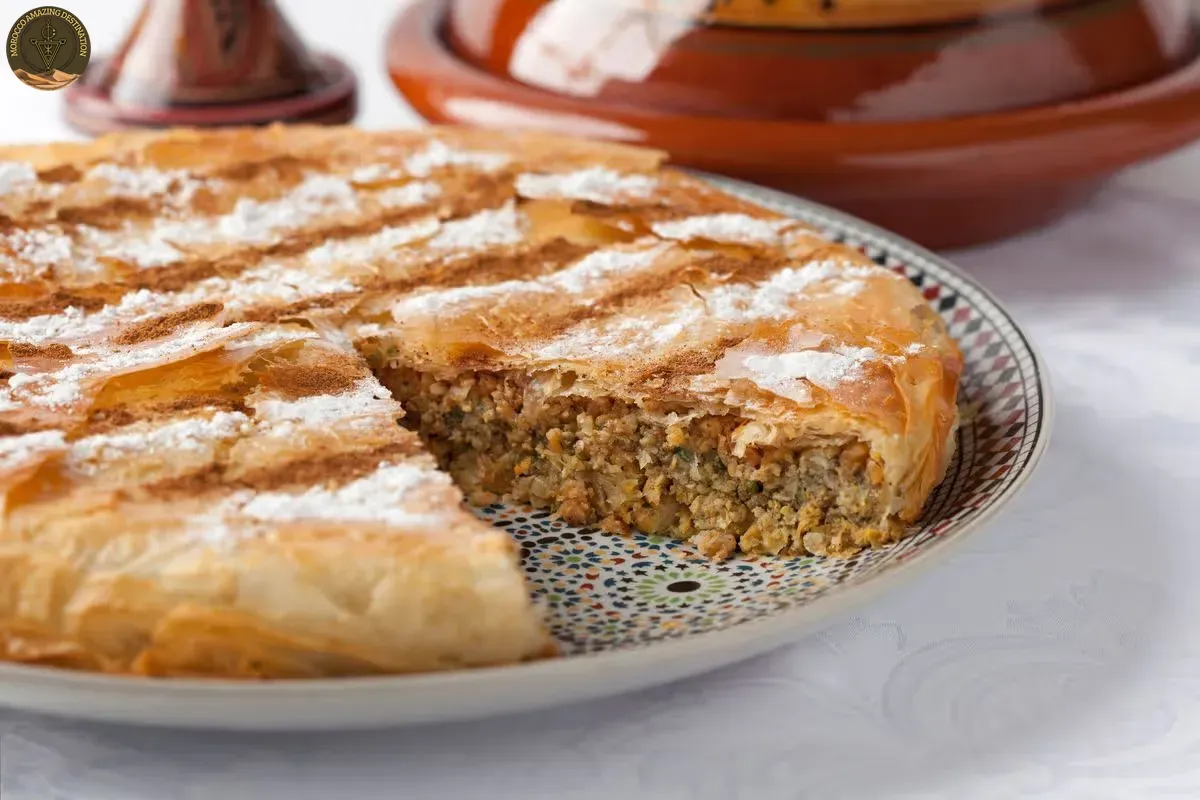
The festive centrepiece is pastilla, a thin pastry pie of slow-cooked chicken or pigeon with egg and onion, almonds, cinnamon and a dust of sugar. Many cooks trace it to Andalusi families who crossed the strait, though historians still debate the exact path. On the coast, order the seafood version, made with fish and shellfish under the same crisp shell.
What to order:
- Churros con chocolate: the classic northern breakfast, best eaten standing at the counter.
- Bocadillos: filled baguettes from corner bars, quick and cheap at midday.
- Pastilla: order ahead in smaller restaurants, since each pie takes time to prepare.
White facades and art deco - Tetouan churches and Ensanche
Tetouan is the best place to read spanish architecture in morocco in a single walk. The whitewashed Andalusi medina, rebuilt by refugee families centuries ago, stands beside the straight grid of the Spanish-planned Ensanche. One holds workshops, fountains and mosques, the other holds low white blocks along broad avenues.
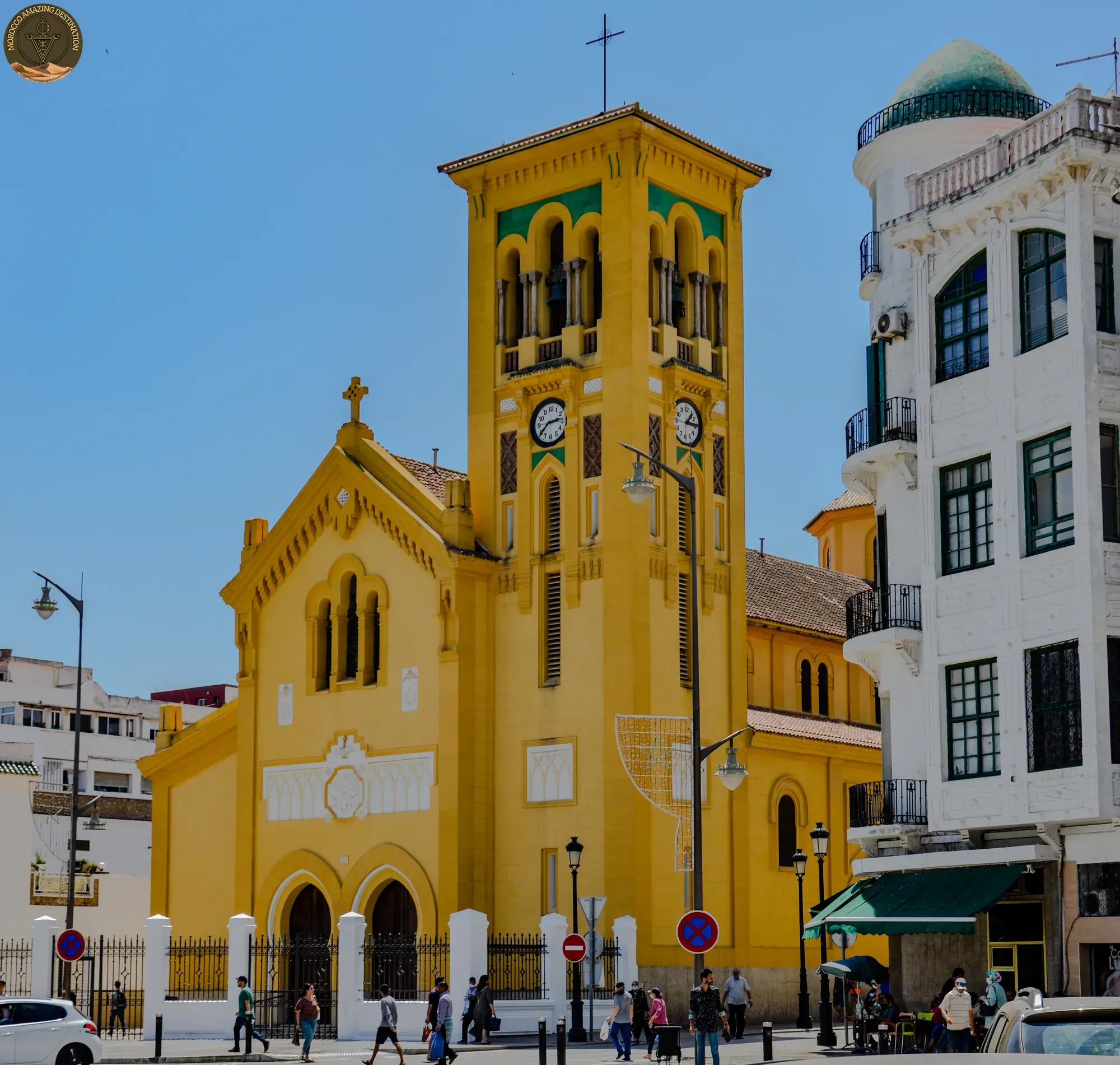
Look up in the Ensanche for wrought-iron balconies, curved art deco corners and neo-Moorish arches on schools, offices and churches. Our Lady of Victory and the restored Spanish theatre belong to the same era. The medina carries a UNESCO listing, so the two districts read as two chapters of one city. Guides in Tetouan enjoy pointing out which corner held a bakery, a school or a cinema, and those small stories turn a walk into a history lesson.
Details to notice:
- Wrought-iron balconies: the signature of northern houses and Ensanche blocks alike.
- Art deco facades: curved corners and geometric reliefs along the main avenues.
- Neo-Moorish public buildings: arches and tilework with a clear Spanish hand.
How to plan a northern loop - Tangier, Asilah and Chefchaouen
Four towns cover the full picture in a few days. Tangier brings port energy and the Grand Socco at dusk, Asilah adds whitewashed walls and murals by the sea, and Chefchaouen shows the blue mountain town raised by Andalusi refugees. Tetouan sits between them and deserves a full day for the medina and the Ensanche. Give Asilah a slow afternoon: walk the sea walls, look for the old Spanish traces near the gates, then eat grilled fish by the port before driving on.
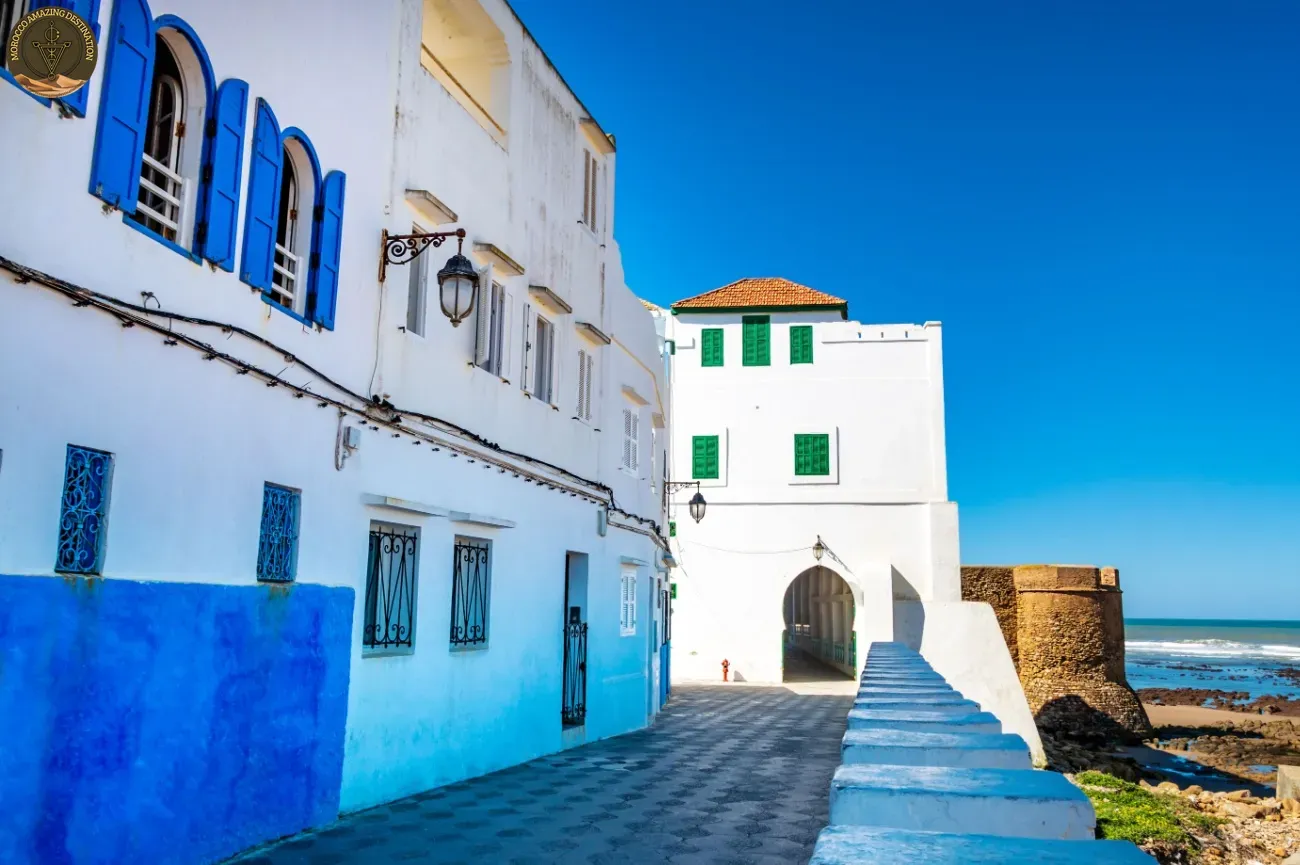
Roads between these towns are short, so a private driver keeps the loop relaxed. Walk each medina with a local guide, since the Spanish layer hides behind ordinary doors. For the colonial background behind these streets, read our guide to Morocco’s colonial past.
A simple loop:
- Tangier: two nights, with the medina and the Grand Socco at dusk.
- Asilah and Tetouan: one day each, sea walls first and then the two-city walk.
- Chefchaouen: one night in the blue lanes before heading toward Fes.
Travellers who slow down get the most from the north. Order in Spanish, sit through a concert, compare a churro with a chebakia. Private transport makes the difference here: distances are short but buses eat the day, while a driver lets you stop in Tetouan between Asilah and Chefchaouen without repacking or waiting. Our 5 Days Tour to Chefchaouen and Imperial Cities from Tangier runs from Tangier through Chefchaouen and the imperial cities, and the 8-Day Tour from Tangier: Chefchaouen, Fes, Merzouga Desert and Imperial Cities adds Fes and the Merzouga dunes.
We can customize a tour to match your needs - design your perfect itinerary
If you found this helpful, add us as your preferred source on Google.
Frequently Asked Questions
Is Spanish spoken in Morocco?
Yes, mainly in the north. Many people in Tangier and Tetouan use Spanish every day in shops, taxis and cafes, alongside Arabic and French.
What Spanish food should I try in northern Morocco?
Start with churros and chocolate, bocadillo sandwiches and strong plaza coffee. For something festive, order pastilla, the sweet-savoury pie many cooks link to Andalusi roots.
Where is Spanish architecture most visible in Morocco?
In Tetouan, where a whitewashed Andalusi medina stands beside the Spanish-planned Ensanche, with art deco facades, wrought-iron balconies, churches and a restored theatre.
How did this Spanish influence begin?
Families, musicians and builders crossed the strait in both directions for centuries, and a Spanish administration ran the northern zone for part of the last century.
Ready for an Adventure?
Have questions? Feel free to contact us using the form below. We're here to help!