
· Travel · 7 min read
What Time Is It in Morocco? Your Complete Guide to Morocco Time Zone & Daylight Saving
Everything you need to know about time in Morocco: time zone, daylight saving, Ramadan exception, and the upcoming permanent GMT change in September 2026.
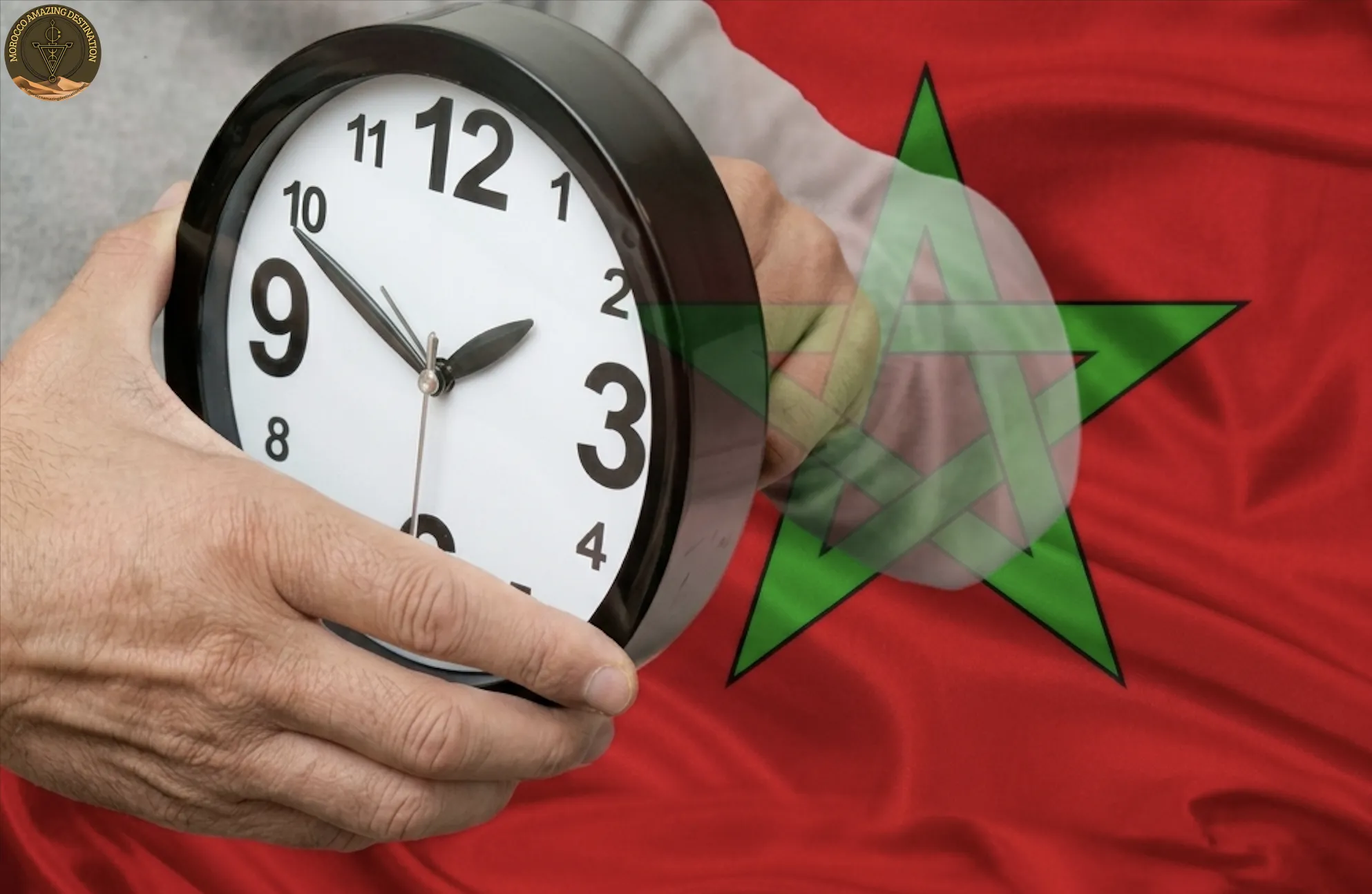
Planning a trip to Morocco and wondering what time is it in Morocco? You are not alone. Morocco’s time zone is unlike most countries — it follows a unique system that has confused even seasoned travelers. Understanding the Morocco time zone is essential for booking flights, coordinating tours, and staying in touch with family back home.
Here is the quick answer: Morocco operates on Western European Time (WET), which is UTC+0, also known as GMT. But things get interesting when you look at daylight saving and Ramadan.
And here is the big news: starting September 20, 2026, Morocco will permanently abolish daylight saving time and stay on GMT year-round. This guide covers everything you need to know — before and after the change.
Morocco Time Zone at a Glance: GMT/UTC+0
Morocco sits geographically on the same longitude as the United Kingdom and Portugal. It makes sense, then, that the country follows GMT (Greenwich Mean Time), also known as Western European Time (WET, UTC+0). Unlike most African nations that are ahead of Europe, Morocco shares its baseline time with London and Lisbon.
Why does this matter for travelers? If you are flying from Madrid, Paris, or Rome, you will actually gain an hour when you land in Morocco during the European summer. Your body clock benefits from the difference rather than suffering from it.
Key facts about Morocco’s time:
- Standard time: GMT / UTC+0
- Summer time (until September 2026): GMT+1 (UTC+1)
- Ramadan exception: Morocco reverts to GMT+0 during the holy month
- Permanent change: From September 20, 2026, Morocco stays on GMT year-round
The End of Daylight Saving Time in Morocco: What Changes on September 20, 2026
For years, Morocco has followed a daylight saving schedule similar to Europe: clocks go forward one hour in spring and back one hour in autumn. The twist? The clock would also go back at the start of Ramadan and forward again when the holy month ended.
This system, designed to shorten the fasting day during Ramadan, created a rhythmic but confusing pattern. The Moroccan government has now decided to simplify things entirely.
On September 20, 2026, Morocco will permanently stay on GMT (UTC+0).
Why is Morocco abolishing daylight saving time?
The decision aims to:
- Simplify daily life for Moroccans who juggle international business
- Eliminate confusion for travelers, airlines, and tour operators
- Align the country with its natural solar time
What this means for travelers
After September 2026, you will never need to wonder whether Morocco has changed its clocks. The country will remain on the same time 365 days a year. This is excellent news for anyone planning a trip: flight schedules, tour pickups, and check-in times will be consistent regardless of the season or Ramadan.
Time Difference Between Morocco and Major Countries
Understanding the time difference with Morocco helps you plan calls home, manage jet lag, and avoid missed flights. Here is how Morocco compares to major departure countries:
Morocco vs. Italy, Spain, France, and Germany
| Season | Before Sept 2026 | After Sept 2026 |
|---|---|---|
| European Summer (April–October) | Morocco is 1 hour behind | Morocco is 1 hour behind |
| European Winter (October–March) | Same time | Same time |
| During Ramadan | Morocco is 2 hours behind | Always 1 hour behind (summer) / Same time (winter) |
- From Italy to Morocco: subtract 1 hour in summer, 0 in winter. After 2026: subtract 1 hour in summer, 0 in winter.
- From Spain to Morocco: Spain is always 1 hour ahead in summer (including after 2026).
- From France to Morocco: same as Italy — 1 hour behind in summer.
- From Germany to Morocco: 1 hour behind in summer.
Morocco vs. the United Kingdom
The UK and Morocco share the same base time zone. However:
- UK summer (BST, March–October): UK is 1 hour ahead of Morocco
- UK winter (GMT, October–March): Same time
- After September 2026: During UK summer, the UK will remain 1 hour ahead; during UK winter, both share the same time — just as before. The abolition only removes the Ramadan-related changes.
Morocco vs. United States and Canada
- Eastern Time (New York, Toronto): Morocco is 5 hours ahead (4 hours during short DST overlap periods)
- Central Time (Chicago): Morocco is 6 hours ahead
- Pacific Time (Los Angeles): Morocco is 8 hours ahead
Pro tip: If you are traveling from the US, you will likely arrive in Morocco in the morning or early afternoon. This helps you adjust quickly to the local rhythm.
Ramadan and the Time Change: A Tradition Coming to an End
One of the most unique aspects of time in Morocco has been its relationship with the holy month of Ramadan. Since Muslims fast from sunrise to sunset, the Moroccan government traditionally suspended daylight saving time during Ramadan. This made the fasting day end one hour earlier, easing the observance.
How it worked before 2026:
- Spring: clocks go forward to GMT+1
- Start of Ramadan: clocks go back to GMT+0
- End of Ramadan: clocks go forward again to GMT+1
- Autumn: clocks go back to GMT+0
This meant up to four clock changes per year — a logistical puzzle for everyone.
After September 2026, all of this disappears. Morocco will stay on GMT regardless of Ramadan. If you are traveling during the holy month, you will no longer need to worry about surprise clock changes affecting your itinerary.
How Morocco’s Time Zone Affects Your Trip Planning
Knowing what time it is in Morocco is not just trivia — it directly impacts your travel experience.
Flight arrivals and jet lag
Most European flights to Morocco take between 2 and 4 hours. Because Morocco shares or is just 1 hour behind European time, jet lag is minimal. This makes Morocco an ideal short-haul destination for European travelers.
From North America, the time difference is more significant, but arriving during daylight hours helps your body adjust faster.
Tour schedules and desert excursions
Moroccan tours typically start early. Desert excursions from Marrakech often depart at 7:00 or 8:00 AM local time. If you are arriving from Europe during summer and forget to adjust your watch, you could miss your pickup by a full hour.
Always double-check your phone’s automatic time zone setting when you land. Most modern smartphones update correctly, but some carriers can be slow to register the change — especially during Ramadan transitions.
Prayer times and daily rhythm
Moroccan daily life revolves around the five Islamic prayer times, which shift slightly throughout the year based on the sun’s position. Shops may close briefly during Friday midday prayer. Restaurants in medinas often pause service around sunset prayer during Ramadan.
Understanding this rhythm helps you plan your day better and shows respect for local customs.
Calling home
Before calling family or colleagues back home:
- From Morocco to Italy/Spain/France in summer: you are 1 hour behind. Call before your evening if they go to bed early.
- From Morocco to the UK in summer: you are 1 hour behind.
- From Morocco to the US East Coast: you are 5 hours ahead. Morning in Morocco is the middle of the night in New York.
Practical Travel Tips for Dealing with Morocco Time
- Set your watch to local time immediately upon landing. Do not rely on mental math throughout your trip.
- Confirm tour departure times in local Moroccan time. Some booking platforms display times in your home time zone.
- Download a world clock app like World Time Buddy to quickly check time differences.
- During Ramadan (before September 2026), check whether the clock change has already taken effect.
- After September 2026, you can relax — Morocco will always be on GMT, no surprises.
Ready to Experience Morocco?
Now that you know exactly what time it is in Morocco — and how it will change in the near future — you are ready to plan your adventure. Understanding the local time zone helps you book the right flights, show up for tours on time, and stay connected with loved ones back home.
Whether you are exploring the souks of Marrakech, hiking the Atlas Mountains, or sleeping under the stars in the Sahara, knowing the local time means one less thing to worry about.
Morocco is a country where time moves at its own rhythm — and soon, it will keep the same hour all year round.
Explore Our Morocco Tours
Ready to experience Morocco for yourself? Here are two of our most popular tours to help you make the most of your time:
3-Day Trip from Marrakech to Merzouga — A whirlwind desert adventure through the High Atlas Mountains, Ait Benhaddou Kasbah, and the golden dunes of Erg Chebbi. View tour →
4-Day Morocco Desert Tour from Marrakech — Take your time exploring Ait Ben Haddou, the Dades Valley, and Merzouga’s majestic dunes with an extra day of immersion. View tour →
If you found this helpful, add us as your preferred source on Google.
Frequently Asked Questions
What is the time zone in Morocco?
Morocco follows Western European Time (WET), which is UTC+0/GMT. From September 2026, Morocco will permanently stay on GMT year-round, abolishing daylight saving time.
Does Morocco observe daylight saving time?
Currently Morocco uses GMT+1 during summer, but daylight saving time will be permanently abolished starting September 20, 2026. After this date, Morocco will remain on GMT year-round.
How does Ramadan affect Morocco's time?
During Ramadan, Morocco suspends daylight saving time and reverts to GMT+0 so that the fasting day ends earlier. This tradition will become irrelevant once DST is abolished in September 2026.
What is the time difference between Morocco and Europe?
Morocco is 1 hour behind Italy, Spain, France, and Germany during European summer. During European winter, Morocco and most of Europe share the same time. After September 2026 (DST abolition), this difference remains constant year-round.
- time-in-morocco
- morocco-time-zone
- morocco-daylight-saving
- time-difference
- morocco-ramadan-time
- morocco-travel
- travel-tips
- travel-guide
- first-time-visitors
- morocco-travel-planning
Ready for an Adventure?
Have questions? Feel free to contact us using the form below. We're here to help!