
· Travel · 5 min read
Tinmal Mosque Guide: Birthplace of an Almohad Empire
Visit Tinmal Mosque, the Almohad birthplace in the High Atlas. History, architecture and day-trip logistics for a smooth tailor-made visit.
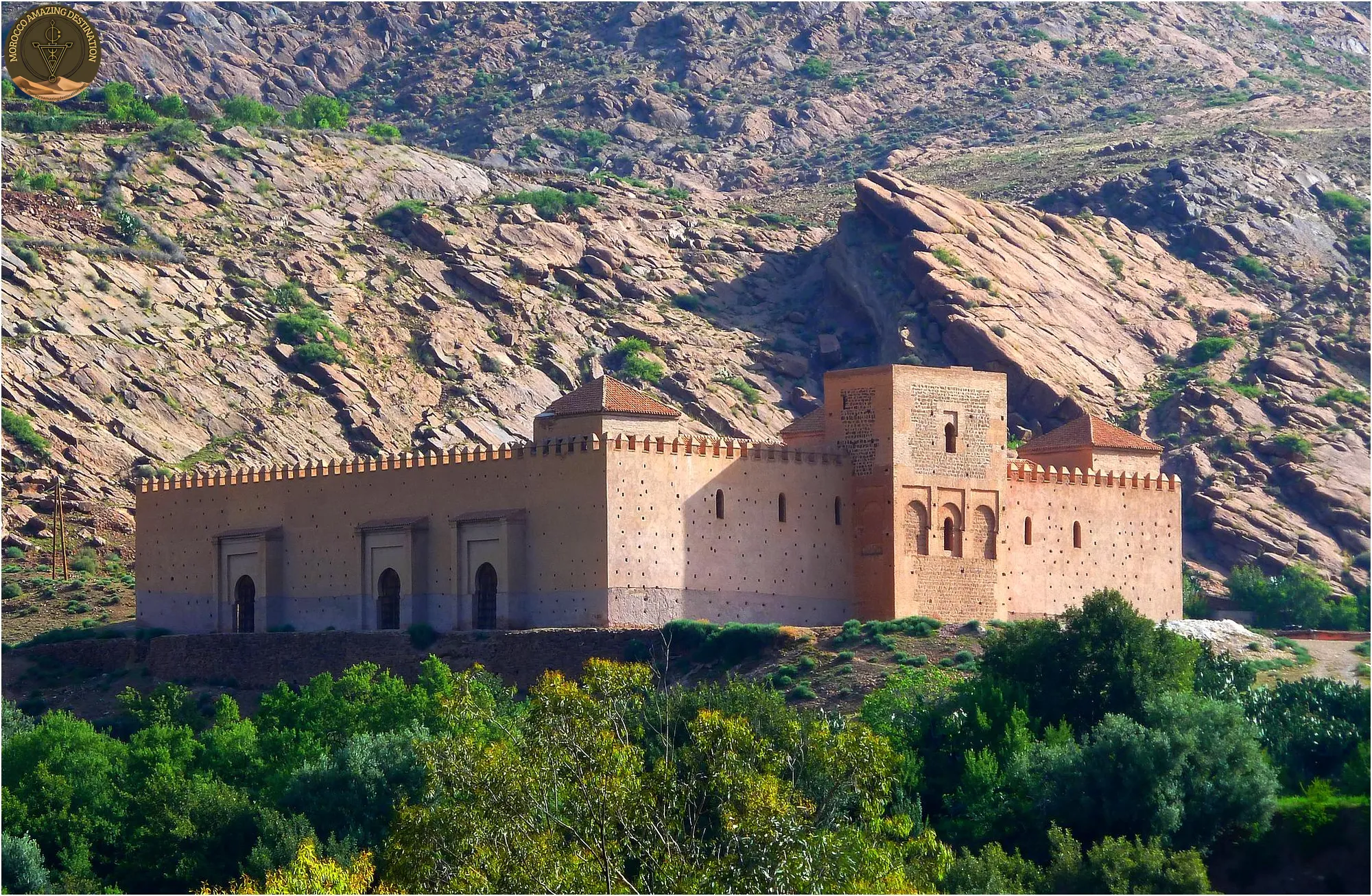
Tinmal Mosque sits in a quiet High Atlas valley, far from the crowds of Marrakech, and it tells the story of an empire that once ruled from Spain to the Sahara. It belongs to a small group of historic mosques in Morocco preserved as monuments you can walk into, with austere brick walls outside and graceful arches within.
In this guide, we break down what makes it different, the five dates behind it, the architecture in plain words, and how you can visit it on a High Atlas day.
What makes Tinmal different in one minute
An Almohad mosque in Morocco rarely opens its doors to visitors, and that is what sets Tinmal apart. Most working mosques admit worshippers only, while Tinmal stands inactive, kept as a historic monument with a caretaker who shows travellers around for a small tip.
The setting adds to the pull. Terraced fields climb the Nfis valley around the village of Tinmel, the air smells of walnut and woodsmoke, and the mosque rises from the slope like a fortified box. You come for the stones and stay for the silence.
If you want the wider picture first, read Islamic places to visit in Morocco, which places Tinmal among mosques, madrasas and mountain shrines across the country.
Birthplace of an empire: five dates linking Tinmal and Marrakech
The Tinmel Mosque history starts with a preacher. Ibn Tumart, a theologian from the Sous, rejected Almoravid rule and found refuge in this valley, where his followers took the name Almohads, the people of unity.
- Around 1121 to 1125: Tumart settles in Tinmel and preaches the doctrine of unity. The village becomes the movement’s base and first capital.
- 1130: Tumart dies and is buried at Tinmel. His tomb draws pilgrims and gives the site lasting weight.
- 1147: Almohad armies take Marrakech. Power shifts to the new capital, and Tinmel keeps its role as a place of memory and pilgrimage.
- Around 1148: Abd al-Mu’min raises the present mosque beside the tomb. Some chronicles point to 1153 to 1154, so guides say circa 1148, the same campaign that produced the Kutubiyya in Marrakech.
- 2023: The Al Haouz earthquake strikes kilometres away and damages roughly three quarters of the building. Restoration work resumed around 2025 with state funding.
For the national context behind these numbers, see how many mosques there are in Morocco and what makes each era distinct.
Almohad architecture in plain words
The plan is a rectangle of about 48 by 43 meters, with nine aisles running toward Mecca. A wider transverse aisle crosses in front of the prayer niche, forming a T shape that pulls your eye straight to the mihrab.
- The T-plan: nine naves plus a cross aisle before the qibla wall. It organises a large crowd without columns blocking the view.
- The mihrab: a horseshoe-arched niche framed by layered arches, with carved stucco kept restrained and almost no inscriptions.
- The domes: three small muqarnas domes, honeycomb vaults counted among the oldest of their kind in the western Islamic world.
- The minaret anomaly: the tower rises above and behind the mihrab on a base of about 9.5 by 5.5 meters, instead of standing in a corner. It now ends truncated, which gives the skyline its odd, cut-off look.
- The plain shell: brick and earth mortar outside, seven doorways, barely any decoration. The austerity was the point, a visual sermon against Almoravid luxury.
Stand in the middle aisle and look toward the niche. Light filters through small openings, dust hangs in the beams, and the geometry does the talking.
Visiting now: honest Atlas restoration status and road logistics
A day trip from Marrakech to Tinmal is straightforward but slow, and honesty matters here more than hype. The building suffered badly in the earthquake, and the interior cannot be guaranteed in any given week.
- Road: about 100 km south of Marrakech on the R203 over the Tizi n-Test pass, through Asni and Ijoukak. The road is paved but narrow with tight switchbacks.
- Time: allow 2 to 2.5 hours each way, never the 1.5 hours some old pages claim. Leave around 8 am to keep the light and the calm.
- Transport: a private driver or taxi is the realistic option, since no public transport serves the valley directly.
- On site: allow 30 to 60 minutes, dress with shoulders and knees covered, keep voices low near the tomb area, and keep a small tip ready for the caretaker.
- If it is closed: treat the valley as the visit. Walk the esplanade, photograph the exterior, take mint tea in Ijoukak, and check locally a few days before about interior access.
Exteriors and the esplanade stay viewable through the works, so the drive still pays off even when the doors stay shut.
Pair it with a High Atlas day, tailor-made
Tinmal works best inside a wider mountain loop rather than as a dash there and back. The classic pairing runs Marrakech to Asni for the Saturday souk, up the Nfis valley to Tinmel, then back through Ijoukak and Ouirgane, with mint tea on a terrace above the reservoir.
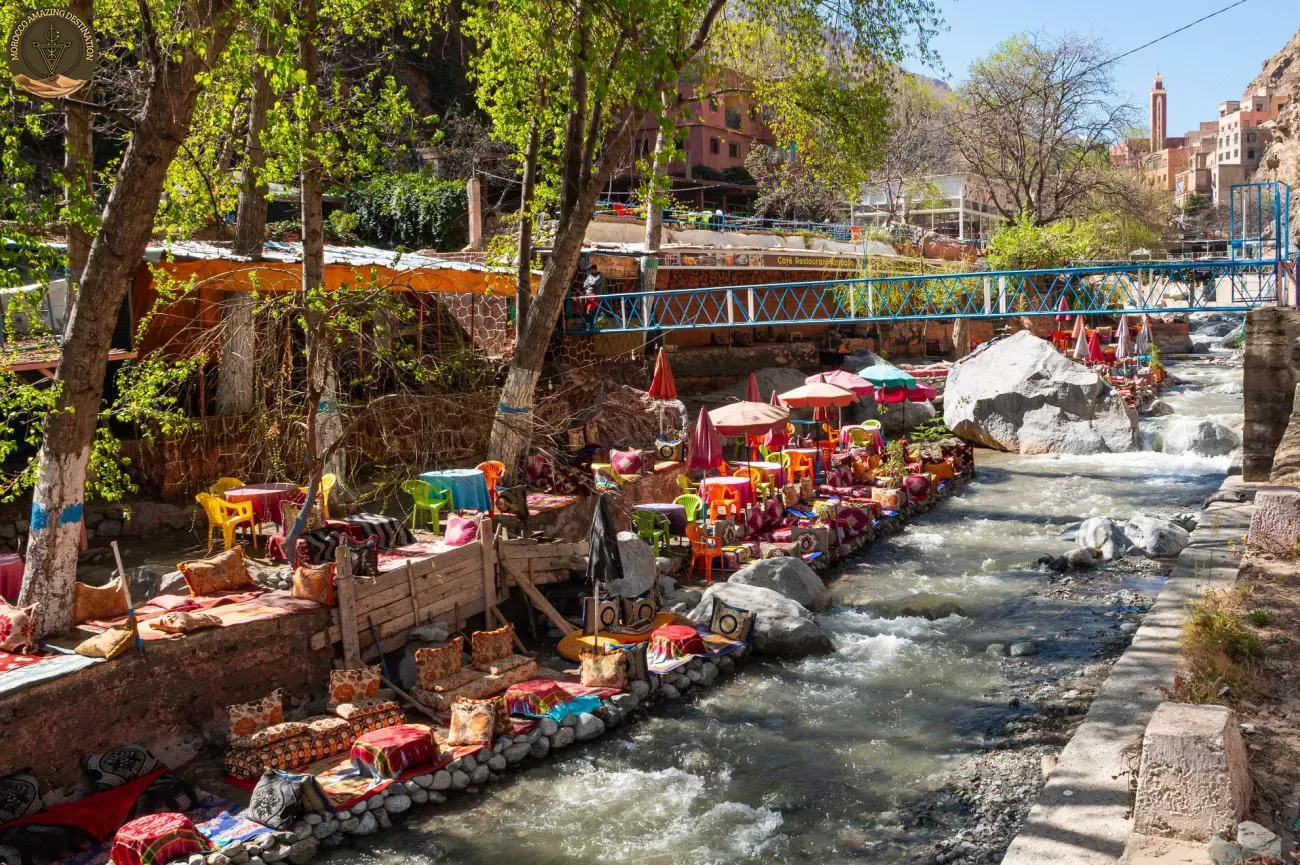
Families often split the day in two, mosque and valley in the morning, a short riverside walk after lunch, while photographers chase the late light on the pass. A local driver handles the timing, the narrow bends and the question of whether the interior opened that week, so nobody in the car has to guess.
Travellers who want the Atlas plus the deep south continue to the 4-Day Morocco Desert Tour from Marrakech, which crosses the High Atlas toward Ait Benhaddou, the Dades Valley and Merzouga with hand-picked stays. For a slower arc through imperial cities and desert, the 10-Day Morocco Tour from Marrakech folds Atlas scenery into a full circuit with a private vehicle and local guides.
We can customize a tour to match your needs - design your perfect itinerary
If you found this helpful, add us as your preferred source on Google.
Frequently Asked Questions
Can non-Muslims visit the Tinmal Mosque?
Yes, Tinmal was preserved as an inactive monument and was historically open to visitors of all faiths, usually with a local caretaker and a small tip. Since the 2023 earthquake damaged the building, interior access is unreliable, so check locally a few days before you go.
How badly was Tinmal Mosque damaged in the 2023 earthquake?
Early surveys estimated around 75 percent of the structure was damaged when the Al Haouz earthquake struck close by. State-funded restoration resumed around 2025, the exterior and esplanade can be viewed, and interior visits depend on the works schedule.
Who built the Tinmal Mosque and when?
Ibn Tumart settled in Tinmel around 1121 to 1125, died there in 1130 and was buried on the site. Abd al-Mu'min, the first Almohad caliph, built the present mosque beside the tomb around 1148 as part of the same building campaign as the Kutubiyya in Marrakech.
How do I get from Marrakech to Tinmal?
Tinmel village sits about 100 km south of Marrakech in the Nfis valley, reached by the R203 over the Tizi n-Test pass via Asni and Ijoukak. Allow 2 to 2.5 hours each way with a private driver, leave early in the morning, and combine it with Atlas villages on the return.
Ready for an Adventure?
Have questions? Feel free to contact us using the form below. We're here to help!