· Travel · 5 min read
What to Drink in Morocco: Coffee, Juice and Herbal Tea
What to drink in Morocco: nous-nous coffee, pressed orange and avocado juice, lben and raib, and the herbal infusions to order at the right hour.
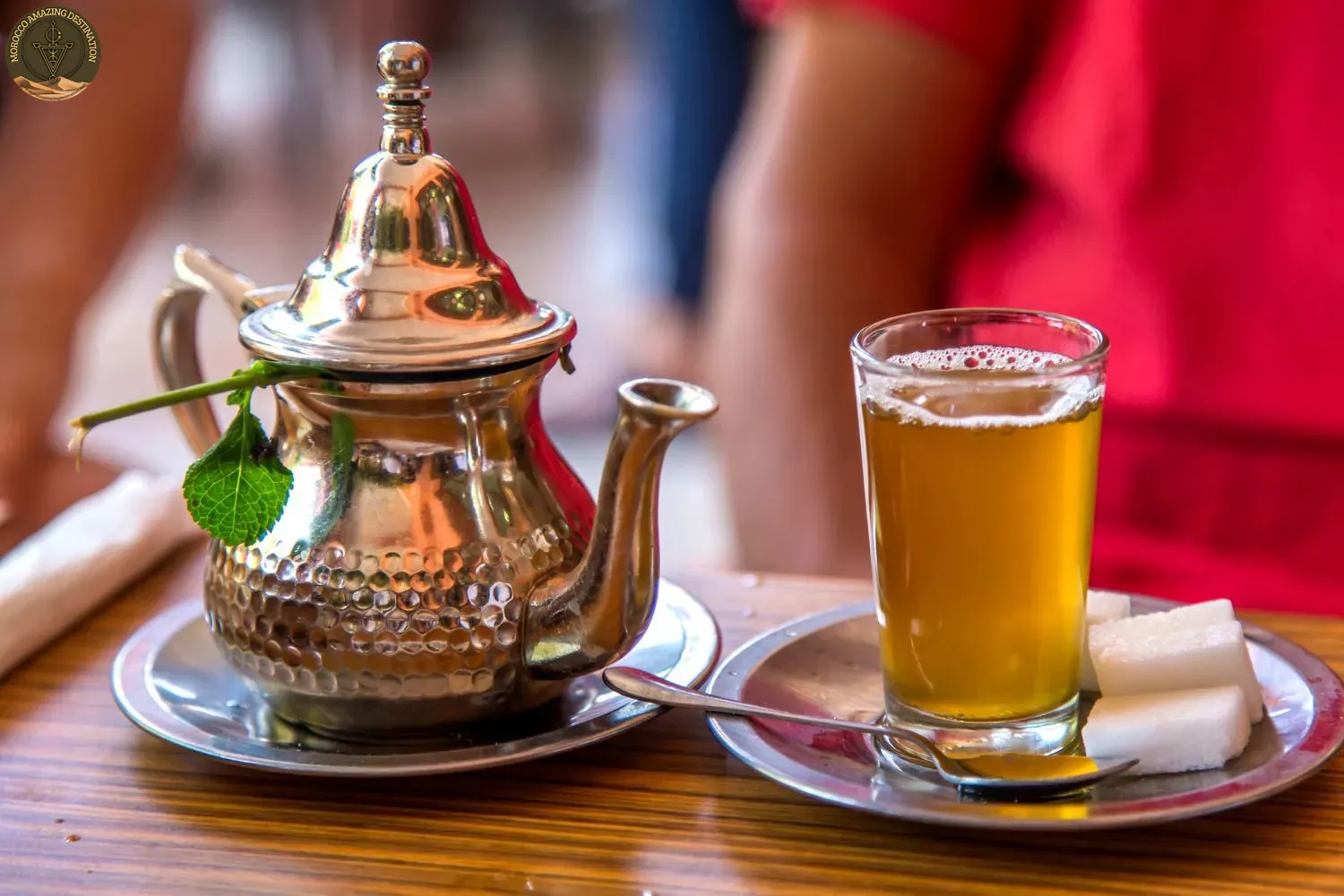
Coffee opens the Moroccan day and tea closes the conversation. A handful of drinks covers the country, each with its own hour. Once you know the short list, what to drink in Morocco comes down to what you feel like at four in the afternoon rather than what is safe.
This guide runs through the Moroccan drinks you will meet on a normal trip, in the order the day brings them, with the words to order each one. It stays national: the city cafe and tea house guides are linked rather than repeated, and alcohol and water get their own posts.
Mint Tea Is the Start, Not the Story
Mint tea is the first glass most visitors are handed, and it arrives as hospitality. Gunpowder green tea steeps with a bunch of fresh mint and sugar, and it comes in small glasses, hot, at almost any hour: on arrival, after lunch, in a shop while you decide, at a camp after dinner. It is polite to accept, and accepting commits you to nothing.
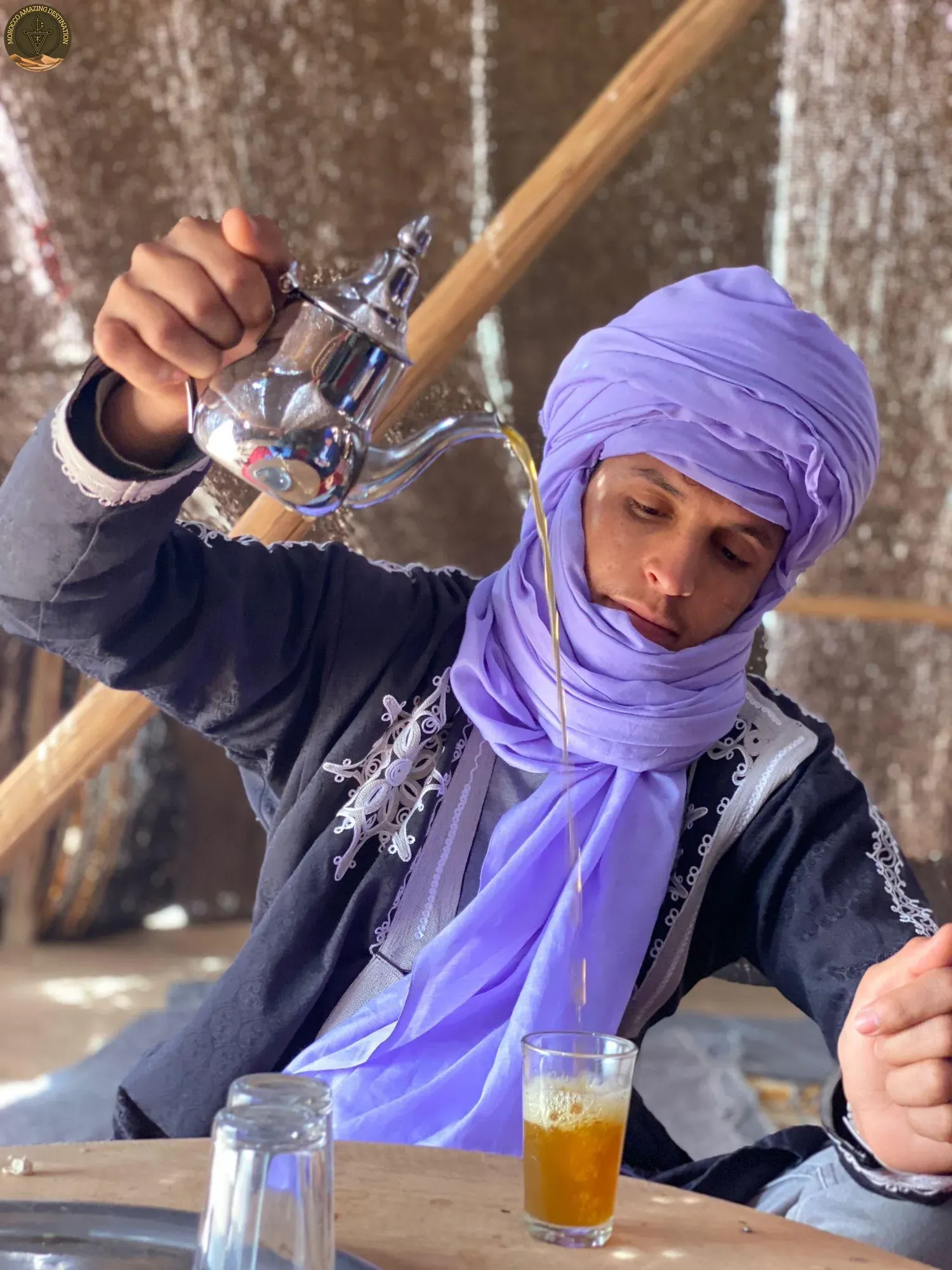
Where to drink it is a separate question, and our guides to tea houses in Marrakech and tea houses in Fes cover the terraces and the prices. The brewing, the high pour and the three glasses belong to the mint tea ceremony, which is worth watching at least once.
Coffee, Cafes and Nous-Nous: The Everyday Order
Coffee is the working drink here, and the default order is nous-nous coffee: half espresso, half hot frothed milk, served in a small glass. The name comes from nuss, the Darija word for half. It arrives mid-morning and again after lunch, drunk on the spot at a counter or on a terrace.
At the counter, three words do most of the work.
- A casse is espresso with a splash of milk rather than half a glass.
- A noir is straight espresso, small and strong.
- Qahwa m’attra is the home brew, made with cinnamon, ginger, cardamom, black pepper and sometimes nutmeg.
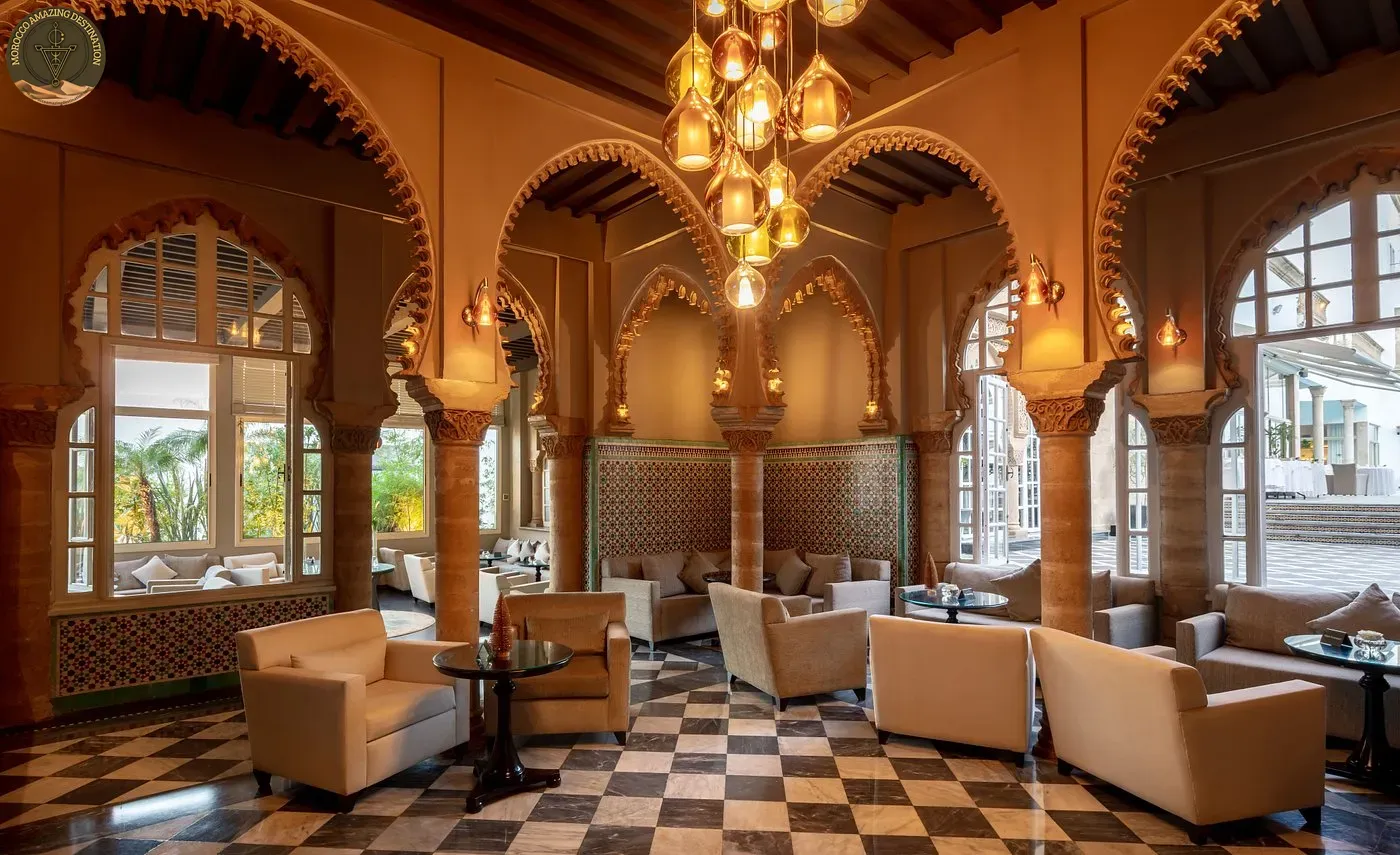
Cafe terraces were long a male habit, though mixed crowds are normal in Gueliz, Agdal and central Casablanca, and nobody looks twice at a couple or a solo traveler ordering a second glass.
Juice Stalls, Orange Season and the Word Jus
Juice stalls stand in squares and markets, and most of them press oranges to order in front of you. The fruit is local. Beni Mellal sends early navels from November, the Souss and the Haouz carry the season through to spring, and Morocco counts among North Africa’s largest citrus producers. A glass of orange juice in season tastes of nothing but orange.
Order jus and you may not get juice at all. In Morocco the word often means a blended shake, and the signature is avocado: thick, sweet, made with milk and sometimes orange blossom water. Ask for the royal version and it comes topped with crushed almonds, dates and honey, and it turns up on Ramadan tables all the same.
For safety, buy from a busy stall where the fruit is peeled and pressed in front of you, and ask for no ice when the water behind it is unclear.
Lben, Raib and Almond Milk: The Dairy Side
Two fermented milk drinks sit beside couscous and rarely travel far from it. Lben is the thin, tangy liquid left after churning butter, poured cold and drunk in long swallows. Raib is thicker and set, spoonable rather than sippable, and sometimes sweetened.
Neither is the kind of thing visitors go looking for. A national survey of Moroccan dairy puts 20 to 30 percent of the country’s milk in the hands of small shops that make lben and raib and little else, so the small cup bought over a counter is the same drink a family pours at home.
The celebratory one is sharbat louz, also called hlib louz: ground almond, sugar and orange blossom water, poured over ice at weddings and at iftar in Ramadan. It has horchata’s occasion and texture without horchata’s ingredients.
Herbal Infusions and What to Order When
Moroccan herbal tea is the evening drink, and each name is a different glass. Louiza is lemon verbena, pale and lemony, the standard caffeine-free order. Salmia is sage, savory and wintry. Chiba is wormwood, bitter and warming, used in winter when mint is scarce or to sharpen a pot. Fliou is pennyroyal, strong enough that it is used sparingly.
Most of these herbs are folded into the same gunpowder green tea base, and a pure infusion is the exception rather than the rule. Ask for the herb alone and you get a clean cup with no caffeine.
- Verbena after dinner, when you want something warm and still want to sleep.
- Sage on a cold morning, or after a heavy lunch.
- Wormwood when the pot needs a bitter edge, usually in winter.
Traveling with children makes the hot drinks the easy ones. Tea and coffee arrive steaming, pasteurized milk is easy to ask for, and a herb-only glass carries no caffeine.
Alcohol sits outside all of this. Morocco produces beer and wine, sells them in licensed shops, hotels and restaurants, and leaves them out of the everyday drinks above. Our guide to alcohol in Morocco covers the rules and where to buy.
For water, sealed bottles are the usual choice, and our guide to whether tap water is safe to drink in Morocco covers the detail.
Both of our routes build this drinking day into the itinerary. The 12-Day Morocco Grand Tour runs from Casablanca through Chefchaouen, Fes, the Sahara and Essaouira, and the 8-Day Morocco Tour: Marrakech, Sahara Desert and Essaouira covers the same arc in a shorter loop.
We can customize a tour to match your needs - design your perfect itinerary
If you found this helpful, add us as your preferred source on Google.
Frequently Asked Questions
What do Moroccans drink every day?
Coffee leads the working day, usually a nous-nous, with mint tea at the hospitality moments. Pressed orange or avocado juice turns up through the day, lben and raib turn up beside couscous, and herbal infusions close the evening.
What is nous-nous coffee?
It is half espresso and half hot frothed milk in a small glass. The name comes from nuss, the Darija word for half. A casse takes only a splash of milk, and a noir takes none.
Which Moroccan herbal teas are worth ordering?
Louiza, lemon verbena, is the pale caffeine-free standard. Salmia, sage, is savory and wintry, chiba, wormwood, is bitter and warming, and fliou, pennyroyal, is strong enough to order sparingly.
Is it safe to drink juice and milk drinks in Morocco?
Buy juice from a busy stall where the fruit is peeled and pressed in front of you, and skip the ice when the water behind it is unclear. Hot tea and coffee are the safe default, and pasteurized milk is fine.
Ready for an Adventure?
Have questions? Feel free to contact us using the form below. We're here to help!