· Travel · 9 min read
What to See in Morocco: The Ultimate Guide to Morocco's Best Attractions
Discover what to see in Morocco: from Marrakech's souks to the Sahara. A complete guide to Morocco's best attractions, cities, and hidden gems.
Are you dreaming of labyrinthine medinas, towering sand dunes, and cities painted in shades of blue and red? If you are researching what to see in Morocco, you have landed in the right place. Few countries on Earth pack as much diversity into their borders as this North African gem. From the snow-capped peaks of the Atlas Mountains to the endless golden waves of the Sahara, Morocco is a destination that rewards the curious traveller at every turn.
This guide walks you through the most unforgettable places to visit in Morocco — whether you are a first-time visitor sketching out an itinerary or a returning explorer hunting for deeper discoveries. Let us dive into the best things to do in Morocco and why this kingdom deserves a spot at the very top of your travel list.
Marrakech: The Red City
No conversation about Morocco attractions starts without Marrakech. Known as the Red City for its terracotta-hued walls and buildings, Marrakech is a sensory feast.
What to See in Marrakech
- Jemaa el-Fnaa: The throbbing heart of the city transforms from a daytime juice-bar hub into a nocturnal carnival of storytellers, snake charmers, and sizzling food stalls. The energy here is unlike anything else on Earth.
- Bahia Palace: A 19th-century masterpiece of Moroccan craftsmanship, with intricately carved cedar ceilings, zellige tilework, and serene courtyard gardens.
- Majorelle Garden: Once owned by Yves Saint Laurent, this cobalt-blue botanical sanctuary offers a cool escape from the medina’s intensity.
- Koutoubia Mosque: The city’s iconic landmark — its 77-metre minaret is visible for miles and sets the architectural blueprint for much of the Islamic world.
- The Souks: Lose yourself in the maze of spice-scented alleyways where artisans sell everything from hand-stitched leather babouches to hammered brass lanterns.
Travel tip: Rise early to experience Jemaa el-Fnaa before the crowds. The morning light over the square and the distant Atlas Mountains is postcard-worthy.
Fes: The Spiritual and Cultural Capital
If Marrakech is Morocco’s beating heart, Fes is its soul. Home to the world’s oldest continuously operating university — Al Quaraouiyine — and a UNESCO-listed medina that feels frozen in the 9th century, Fes is a must-see for culture lovers.
What to See in Fes
- Fes el-Bali (Old Medina): Over 9,000 narrow alleys weave through this pedestrian-only labyrinth. Getting lost here is not a possibility — it is a certainty, and it is half the fun.
- Chouara Tanneries: The sight of workers standing in vast stone vats of dye, surrounded by mountains of softening leather, has barely changed in a thousand years. Bring a sprig of mint for the strong smells.
- Bou Inania Madrasa: A jewel of Marinid architecture, with exquisite stucco work, carved wood, and a tranquil internal courtyard.
- Mellah (Jewish Quarter): A window into Morocco’s rich Jewish heritage, with a beautifully restored 17th-century synagogue.
Chefchaouen: The Blue Pearl
Tucked into the Rif Mountains of northern Morocco, Chefchaouen is arguably the most photogenic place to visit in Morocco. Every wall, staircase, and doorway is washed in varying shades of blue — from powder sky to deep indigo.
What to Do in Chefchaouen
- Wander the cobbled lanes with your camera at the ready. Early morning offers the softest light and the fewest people.
- Hike to the Spanish Mosque for panoramic views, especially at sunset when the blue city glows against the green mountains.
- Climb to the Ras el-Maa waterfall just outside the medina walls, where locals gather to wash clothes and socialise.
- Shop for unique handicrafts — Chefchaouen’s woven blankets and wool garments are some of the best in the country.
Chefchaouen does not have blockbuster monuments. Its magic lies in the slow rhythm, the mountain air, and the quiet beauty of simply being there.
The Sahara Desert: Erg Chebbi and Merzouga
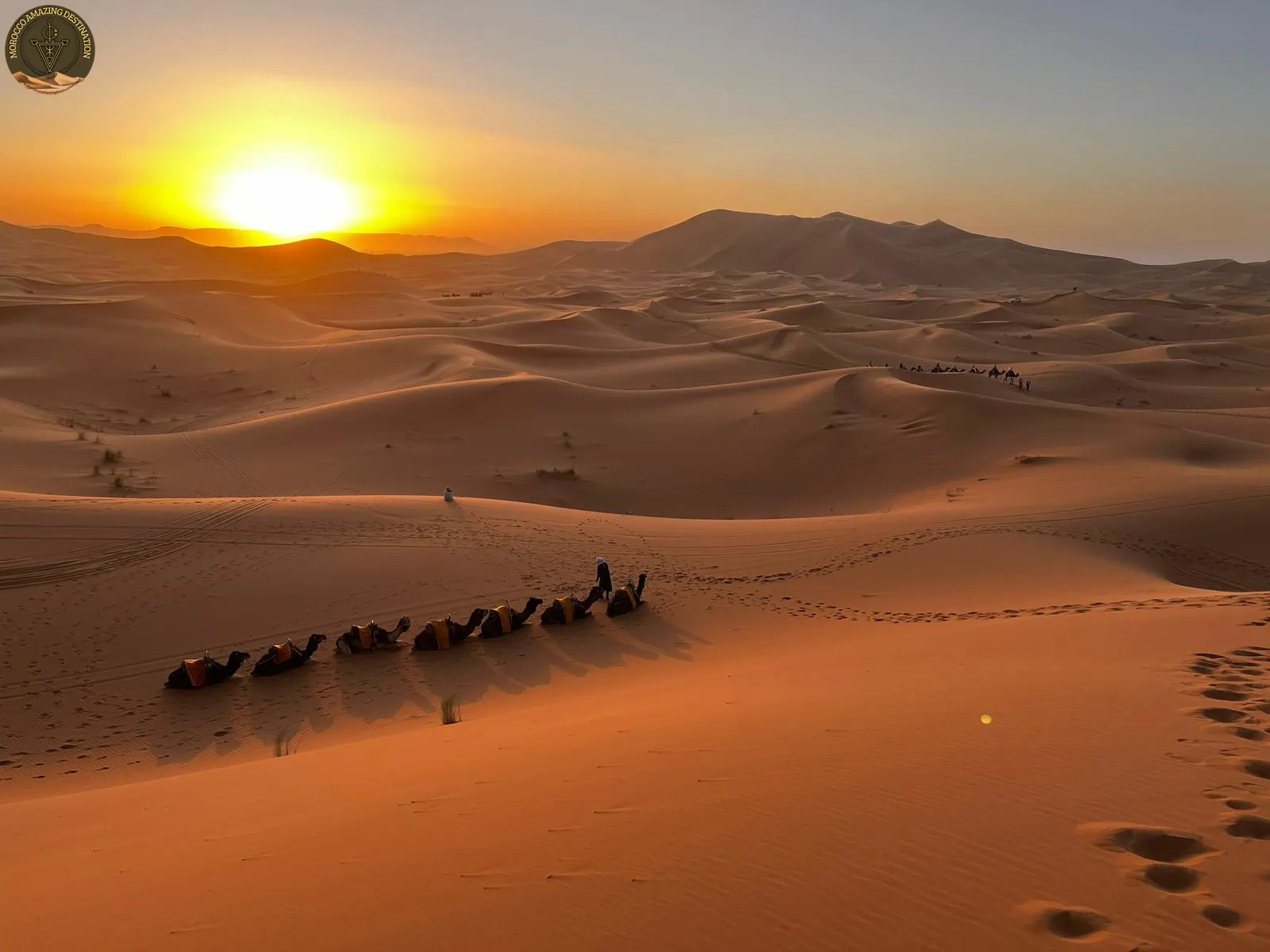
Ask anyone what to see in Morocco and the Sahara Desert will top the list. The vast golden dunes of Erg Chebbi near the town of Merzouga deliver that iconic desert experience: rolling sand seas that shift colour from amber to crimson as the sun moves across the sky.
Experiencing the Sahara
- Camel trekking: Ride a dromedary into the dunes at sunset. The pace is slow, the silence profound, and the stars that follow are unforgettable.
- Desert camping: Spend the night in a traditional Berber camp. Expect tagine dinners around a campfire, drumming under the Milky Way, and a sunrise that paints the dunes in gold.
- Sandboarding: For the adventurous, surfing down the steep dune faces is a rush worth trying.
- 4x4 excursions: For a faster-paced exploration, a 4x4 tour lets you visit nomadic settlements and fossil-rich areas in the surrounding desert.
The Sahara is not just a place — it is a feeling. The scale, the silence, and the hospitality of the Berber people leave a permanent mark on every traveller.
The Atlas Mountains: Berber Villages and Alpine Vistas
Stretching diagonally across Morocco, the Atlas Mountains are an outdoor enthusiast’s paradise. The range splits into the High Atlas (home to North Africa’s tallest peak, Jebel Toubkal at 4,167 metres), the Middle Atlas, and the Anti-Atlas.
Best Experiences in the Atlas Mountains
- Trekking: From day hikes in the Ourika Valley to multi-day expeditions summiting Toubkal, there is something for every fitness level.
- Berber villages: Visit traditional mud-brick settlements like Imlil and Aroumd, where locals welcome travellers with steaming glasses of mint tea and stories of mountain life.
- Ait Benhaddou: This UNESCO-listed ksar (fortified village) sits on the old caravan route between the Sahara and Marrakech. You have seen it in films like Gladiator and Game of Thrones — in real life, it is even more dramatic.
- Todra Gorge and Dades Valley: Sheer limestone cliffs rising 300 metres create a natural corridor through the mountains, popular with rock climbers and photographers.
Essaouira: The Windy City of the Atlantic
On Morocco’s Atlantic coast, Essaouira offers a breezy counterpoint to the intensity of the inland cities. Whitewashed walls, blue-shuttered windows, and a relaxed fishing port give this UNESCO-listed town a distinctly Mediterranean feel.
What to See in Essaouira
- The Skala de la Ville: 18th-century seafront ramparts lined with bronze cannons, offering sweeping ocean views.
- The port: Watch blue wooden boats unload the morning catch. The adjacent fish grills serve some of the freshest seafood you will ever eat — choose your fish, and they will grill it in front of you.
- The medina: Easily navigable and far less chaotic than Marrakech or Fes, it is perfect for relaxed browsing of thuya wood workshops and art galleries.
- Windsurfing and kitesurfing: Essaouira’s consistent trade winds have made it a world-class destination for wind sports.
The Imperial Cities: Meknes and Rabat
Beyond Marrakech and Fes, Morocco’s other imperial cities deserve their place on your list of Morocco attractions.
Meknes is often overlooked, which is precisely its charm. The sprawling Bab Mansour gate is one of North Africa’s most beautiful, and the nearby Roman ruins of Volubilis offer a breathtaking glimpse into the country’s ancient past. The mosaic floors preserved here are among the finest in the Roman world.
Rabat, Morocco’s coastal capital, combines modern elegance with deep history. Key sights include:
- Hassan Tower: An unfinished 12th-century minaret standing above the remains of a vast mosque.
- Kasbah of the Udayas: A peaceful blue-and-white fortress neighbourhood at the mouth of the Bou Regreg river.
- Mohammed V Mausoleum: A masterpiece of modern Moroccan architecture and the resting place of the beloved king.
Hidden Gems and Natural Wonders
Beyond the headliners, Morocco rewards those who venture off the beaten path:
- Ouzoud Waterfalls: Cascading 110 metres through olive groves in the Middle Atlas. You can hike down to the base, take a boat ride into the spray, and spot the resident Barbary apes.
- Dades Valley and Todra Gorge: Often visited en route to the Sahara, these dramatic landscapes deserve a dedicated stop — particularly the serpentine switchback road known as the “Road of a Thousand Kasbahs.”
- Akchour Waterfalls: Near Chefchaouen, these turquoise pools and cascades offer a refreshing hiking escape.
- Legzira Beach: On the southern Atlantic coast, famous for its natural rock arches sculpted by the ocean — especially stunning at sunset.
The Best Time to Visit Morocco
Timing your trip well makes all the difference:
- Spring (March to May): Ideal. Wildflowers blanket the valleys, the weather is warm without being hot, and the landscapes are at their greenest.
- Autumn (September to November): Equally pleasant. The summer crowds have dispersed, and temperatures are comfortable for both city sightseeing and desert camping.
- Summer (June to August): Extremely hot inland and in the desert. Coastal cities like Essaouira and Tangier offer a refreshing alternative.
- Winter (December to February): Mild days but cold nights, especially in the desert and mountains. Snow in the High Atlas opens up a small ski season.
How to Get Around Morocco
Getting between Morocco’s top sights is part of the adventure:
- Private driver or guided tour: The most comfortable and time-efficient option, especially for desert routes where public transport is limited.
- Train: ONCF operates reliable services connecting Marrakech, Casablanca, Rabat, Fes, and Tangier — the Al Boraq high-speed line between Casablanca and Tangier is Africa’s fastest train.
- Bus: CTM and Supratours cover the entire country with air-conditioned coaches at budget-friendly prices.
- Rental car: Gives you total flexibility, though driving in medinas is not for the faint-hearted. Stick to the main roads between cities.
Plan Your Moroccan Adventure
Knowing what to see in Morocco is the first step — the second is turning those dreams into an itinerary. Whether you are drawn to the chaos and colour of Marrakech, the timeless medina of Fes, the blue-washed streets of Chefchaouen, or the silent majesty of the Sahara, Morocco delivers an experience that lingers long after you return home.
The country’s compact geography means you can cross from ocean to mountains to desert in a matter of days — yet the cultural richness could fill a lifetime of exploration. The warmth of the Moroccan people, the depth of the mint tea poured from high above the glass, and the call to prayer echoing across ancient squares — these are the moments that define a journey here.
Ready to experience the best of Morocco? Explore our carefully crafted tours that combine the country’s most spectacular attractions into seamless, unforgettable journeys.
Tour From Marrakech To Merzouga | 5-Day Trip from Marrakech to Merzouga: Journey through the High Atlas Mountains, visit the UNESCO-listed Ait Benhaddou, explore the Dades Valley and Todra Gorge, and spend a magical night in a Berber desert camp under the stars at Erg Chebbi. This tour covers the very best of southern Morocco in five unforgettable days.
Morocco 7-Day Imperial Cities and Desert Tour: The ultimate introduction to Morocco. Visit Rabat, Meknes, Fes, and Marrakech — plus experience the Sahara Desert at Merzouga. This week-long itinerary balances cultural immersion in the imperial cities with the thrill of camel trekking and desert camping.
If you found this helpful, add us as your preferred source on Google.
Frequently Asked Questions
What is the best time to visit Morocco?
The best time to visit Morocco is during spring (March to May) and autumn (September to November), when temperatures are pleasant and ideal for exploring both cities and the desert.
How many days do I need to see Morocco's top attractions?
To comfortably cover Morocco's main highlights including Marrakech, Fes, the Sahara Desert, and Chefchaouen, plan for at least 7 to 10 days. A 2-week trip allows for a more relaxed pace.
Is Morocco safe for tourists?
Yes, Morocco is generally very safe for tourists. Exercise the usual precautions you would in any travel destination — watch your belongings in crowded areas, dress modestly, and respect local customs.
Do I need a guide to visit the Sahara Desert?
While some sites can be explored independently, a local guide is highly recommended for desert excursions. Guides know the terrain, ensure your safety, and provide cultural insights that enrich the experience.
- morocco-what-to-see
- best-places-to-visit
- morocco-travel
- things-to-do
- marrakech
- chefchaouen
- sahara-desert
- atlas-mountains
- imperial-cities
- essaouira
- fes
- travel-guide
Ready for an Adventure?
Have questions? Feel free to contact us using the form below. We're here to help!